



Xi'an Huilin Bio-Tech Co., Ltd. is one of the leading manufacturers and suppliers of sodium caseinate powder in China. With abundant experience, we are committed to providing high quality natural products with competitive price. Please feel free to wholesale bulk pure sodium caseinate powder for sale here from our factory.
Xi'an Huilin Bio-tech Co., Ltd. supplies sodium caseinate in bulk, with the specification, the packaging and the batch documentation agreed before the order is placed.
Sodium Caseinate Powder - Water-Soluble Milk Protein
Sodium Caseinate Powder is a water-soluble milk protein at 90% protein or more on the dried basis, CAS 9005-46-3, used for emulsification and water binding in food systems. It is produced by precipitating casein from bovine milk at its isoelectric point, washing the curd, and neutralising it with sodium hydroxide to give a spray-dried powder that disperses in water as a colloidal solution.
Casein is not a single protein. It is a family - αs1-, αs2-, β- and κ-casein - and that mixture is what gives sodium caseinate its commercial value. Each of these proteins carries both hydrophobic stretches and hydrophilic groups, among them clusters of phosphoserine residues. The result is a protein that behaves like a surface-active agent: it migrates to an oil–water interface, lowers the interfacial tension, and forms a film around the oil droplet that keeps it from coalescing.
This is the reason the product is bought. Not for the protein figure on its own, but for what a protein with that structure does in a system: it emulsifies fat without a small-molecule emulsifier, it binds water, it films and it holds a foam. The protein figure sets the ceiling on how much of that functionality a given dose delivers.
Specification
| Item | Specification | Test Method |
| Protein (on the dried basis) | ≥90.0%, N × 6.38 | Kjeldahl |
| Moisture | ≤6.0% | Gravimetric – 105 °C |
| Ash | ≤6.0% | Gravimetric – 550 °C |
| Fat | ≤2.0% | Solvent extraction |
| Lactose | ≤1.0% | HPLC |
| pH (5% solution) | 6.0–7.0 | pH meter |
| Viscosity (15% solution, 25 °C) | Reported on the Certificate of Analysis | Rotational viscometer |
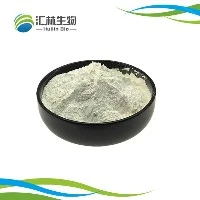
| Appearance | White to light cream powder; bland odour | Visual |
| Solubility | Disperses and dissolves in water to form a colloidal solution; insoluble in ethanol | As per monograph |
| Particle size | ≥95% through 80 mesh | Sieve analysis |
| Lead | ≤1 mg/kg | ICP-MS |
| Arsenic | ≤1 mg/kg | ICP-MS |
| Total plate count | ≤10,000 CFU/g | Pour plate |
| Yeasts and moulds | ≤100 CFU/g | Pour plate |
| Escherichia coli | Absent per g | / |
| Salmonella | Absent per 25 g | / |
| Listeria monocytogenes | Absent per 25 g | / |
The data above is for reference only. Please request the latest Certificate of Analysis (COA) for batch-specific data.
Product Identity and Labelling
Sodium caseinate is a food ingredient, not a food additive. It carries no E number, and it is not a colour, a sweetener or a preservative. It is a milk protein and is regulated as such.
Two consequences follow for anyone putting it on a label:
• Allergen declaration. Milk is on the mandatory allergen lists in the EU and in the United States. Any finished product containing this material has to declare milk, whether the material appears as sodium caseinate or under another name.
• Protein declaration. The protein figure used for labelling is calculated with the dairy factor, N × 6.38, applied to the Kjeldahl nitrogen result. That convention is why a 90% figure is quoted rather than a purity figure.
Documentation to support import requirements in your market is available on request. We do not publish certificate lists on this page, because what a buyer needs depends on the destination and on the category the finished product falls into.
Why Sodium Caseinate Survives Heat
This is the property that decides most formulations, and it is the one most often left out of a specification sheet.
Whey protein denatures when heated. Above roughly 70 °C its globular structure opens, the molecules aggregate, and the result is a gel or a sediment. Sodium caseinate does not behave that way. Casein is a disordered, flexible protein with no stabilising disulfide network to lock it into a globular shape, and its phosphoserine clusters give it colloidal stability. Heated in a neutral system, it stays in solution and keeps its emulsifying capacity.
Three practical uses follow from that:
• Sterilised and UHT neutral beverages. A protein that gels on heating cannot go through a steriliser. This one can, within a defined time and temperature window that has to be established on the actual formulation.
• Coffee whiteners and non-dairy creamers. The product has to survive both the coffee's heat and its acidity without feathering, and the emulsified fat has to stay emulsified in the cup.
• Processed meat. The protein binds water and fat through cooking, which is why it is used where yield and slice integrity matter.
The limit is pH, not temperature. Casein's isoelectric point is about 4.6, and below that the protein precipitates. Sodium caseinate belongs in neutral systems, roughly pH 6 to 7. For an acidic ready-to-drink product, below pH 4.6, this is the wrong protein - that is territory for whey protein or a pectin-stabilised system.
Why Choose Huilin for Sodium Caseinate
1. The specification is agreed before the order. Tell us the application and the destination market, and we confirm the protein figure, the viscosity range and the packaging before you commit to a volume.
2. Small volumes are the point. A 25 kg minimum order lets a customer run a trial or supply a niche line without buying a tonne. If a formulation is not yet proven, this is the cheapest way to prove it.
3. Repacked and labelled at our end. Material is supplied in 25 kg bags from stock, with packaging and labelling agreed at quotation stage.
4. Stock, not a shipping schedule. Material is supplied from stock rather than against a production lead time, which keeps a trial order to days rather than weeks.
5. The specification is the product. Protein, moisture, ash, pH, viscosity and particle size are released against the table above, and the COA reports each item with its method.
6. Export and supply experience. More than 15 years of export experience, with shipments arranged on FOB, CIF, EXW or DDP terms from Shanghai, Ningbo or Guangzhou.
Sodium Caseinate, Whey Protein and Soy Protein Isolate
Three proteins that appear on the same enquiry and behave very differently in a process.
| Item | Sodium Caseinate | Whey Protein Concentrate | Soy Protein Isolate |
| Protein source | Bovine milk, casein fraction | Bovine milk, whey fraction | Soybean |
| Protein content | ≥90% on the dried basis | Typically 35–80% | ≥90% on the dried basis |
| Behaviour on heating | Stays soluble; does not gel within its working window | Denatures and gels above roughly 70 °C | Heat stable |
| Emulsifying capacity | High | Moderate to high | Moderate |
| Water binding | High | Low to moderate | Moderate |
| Behaviour below pH 4.6 | Precipitates | Soluble | Soluble |
| Allergen | Milk | Milk | Soy |
| Typical reason to buy | Emulsification, water binding, heat stability in neutral systems | Solubility and clarity in acidic beverages | Plant-based positioning, cost |
• Choose sodium caseinate when the system is neutral and has to survive heat, or when fat has to be emulsified and water bound without a small-molecule emulsifier.
• Choose whey protein when the product is acidic and has to stay clear, or when a high biological value protein is being declared on a label.
• Choose soy protein isolate when the brief is plant-based, or when cost per kilogram of protein is the deciding factor.
Benefits of Sodium Caseinate Powder in Production and Formulation
• Emulsification without an added emulsifier. The protein adsorbs at the oil–water interface on its own, which keeps the ingredient list shorter than a system built on mono- and diglycerides.
• Heat tolerance in neutral systems. It can pass through a sterilisation or UHT step within its working window without gelling, which is what makes it viable in shelf-stable neutral beverages.
• Water binding through cooking. In processed meat the protein holds water and fat through the cook, which protects yield and slice integrity.
• Film formation and surface gloss. It films on drying, which is why it appears in coatings and in applications where surface appearance matters.
• A defined viscosity. Viscosity is reported on the COA, so a customer can set a pump and a filling line against a number rather than against a sample.
• Neutral taste and colour. Bland odour and a white to light cream colour mean the protein does not impose a flavour or a tint on the finished product.
Sodium Caseinate Applications
• Coffee creamers and non-dairy creamers: as the protein that emulsifies the fat and survives the brew.
• Ice cream and frozen desserts: for water binding, overrun and resistance to heat shock.
• Bakery and confectionery: for structure, crumb and surface finish, and in coatings.
• Processed meat and poultry: for water and fat binding through cooking, improving yield and slice integrity.
• Neutral nutritional beverages and RTD products: as a heat-stable protein for sterilised systems.
• Fermentation and culture media: as a soluble nitrogen source in media formulations.
Final application performance depends on the pH of the system, the process temperature and residence time, the shear applied, the addition level and hydration time, the ionic environment, the packaging and the storage conditions, as well as on the specification of the material supplied.

Sodium Caseinate FAQs
Q: Is sodium caseinate the same as casein?
A: No. Casein is the protein as it is precipitated from milk at pH 4.6, and in that form it is insoluble in water. Sodium caseinate is that curd washed and neutralised with sodium hydroxide, which converts the protein into a water-dispersible form. The protein is the same; the solubility, the pH and the behaviour in a formulation are not. Acid casein is sold as an insoluble commodity, sodium caseinate as a soluble ingredient, and they are not interchangeable.
Q: Why does sodium caseinate tolerate heat, when whey protein does not?
A: Because casein has no globular structure to lose. Whey proteins are folded, and heat unfolds them - the unfolded molecules aggregate and form a gel. Casein is already an open, flexible, disordered protein, stabilised colloidally by its phosphoserine clusters rather than by a folded shape, so heating in a neutral system does not trigger the same collapse. It is not unlimited: a long enough hold at a high enough temperature will still hydrolyse and brown the protein, so the window has to be established on the real formulation.
Q: Can sodium caseinate be used in an acidic beverage?
A: Not below pH 4.6. That is the isoelectric point of casein, and at or below it the protein loses its colloidal stability and precipitates. This is why acidic ready-to-drink products are built on whey protein or on a pectin-stabilised system instead. Between pH 6 and 7 the material is stable and that is where it is designed to work.
Q: What is the difference between sodium caseinate and calcium caseinate?
A: The cation. Sodium caseinate is neutralised with sodium hydroxide, calcium caseinate with calcium hydroxide. Calcium caseinate is less soluble and disperses rather than dissolves, gives a higher viscosity and a more opaque, milky body, and is often chosen for nutritional products where a calcium contribution is wanted. Sodium caseinate is the more soluble of the two and is the usual choice for emulsification in neutral beverages.
Q: Why is the protein figure 90% and not higher?
A: Because the figure is crude protein, calculated as Kjeldahl nitrogen multiplied by 6.38 - the dairy factor - and not a purity figure. Sodium is part of the molecule: neutralising casein with sodium hydroxide adds sodium to the powder, and the ash figure reflects it, so a share of the mass is not protein. The 6.38 factor is a convention for dairy protein, not a measurement of protein content in the absolute sense.
Q: Is it suitable for high-protein RTD beverages?
A: It is suitable for neutral high-protein RTDs, where heat stability and a clean flavour are the constraints. At high protein loadings the viscosity rises and the system can gel over time, so the practical ceiling has to be established on the real formulation rather than taken from a specification sheet. For acidic high-protein products, whey protein isolate is the usual starting point.
Q: What is the allergen position?
A: The material is derived from bovine milk and contains milk protein. Milk is a mandatory declarable allergen in the EU and in the United States, and any finished product containing sodium caseinate has to carry a milk declaration regardless of how the ingredient is named on the label.
Q: What documents come with each batch?
A: A Certificate of Analysis reporting the test results and the test methods for each item. Documentation to support import requirements in your market is provided on request, confirmed against the destination and the product category before shipment.
Sodium Caseinate Supplier
Xi'an Huilin Bio-tech Co., Ltd. supplies Sodium Caseinate Powder (CAS 9005-46-3) in bulk from 25 kg, with the specification, the packaging and the batch documentation agreed before the order is placed. Send us your application, the protein figure and viscosity range your formulation needs, your destination market and your volume; we will confirm availability, the specification sheet, the COA and the shipment arrangement. Shipments are arranged on FOB, CIF, EXW or DDP terms from Shanghai, Ningbo or Guangzhou.
For inquiries, quotations, or sample requests, please contact: sales@huilinbio-tech.com
The information on this page is provided for evaluation by qualified technical and regulatory personnel. Regulatory status and permitted uses must be confirmed against the regulation that applies to your product and your market.
Hot Tags: sodium caseinate powder, China, suppliers, manufacturers, factory, wholesale, buy, price, bulk, pure, natural, high quality, in stock, for sale


