




D-Isoascorbic Acid Powder (Erythorbic Acid, E315) - Food Grade Antioxidant
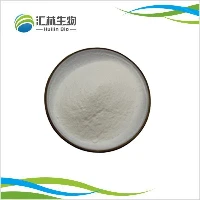
D-Isoascorbic Acid (Erythorbic Acid, E315), CAS 89-65-6, is the food grade antioxidant supplied as a white to slightly yellow crystalline powder, with an assay ≥99% on the dried basis. It is a stereoisomer of ascorbic acid, freely soluble in water, and is used in food and beverage manufacture where antioxidant activity is required without vitamin C activity.
Xi'an Huilin Bio-tech Co., Ltd. supplies food grade Erythorbic Acid for cured meat and poultry processors, beverage manufacturers, frozen and processed seafood producers, bakery and fats-and-oils producers, and food ingredient distributors and importers, with documented test results and market-specific documentation support.
Specification
| Item | Specification | Test Method |
|---|---|---|
| Assay (on the dried basis) | ≥99% | Titration with 0.1 N iodine - 1 mL ≡ 8.806 mg C₆H₈O₆ |
| Identification | Gives the reaction of ascorbate; reduces potassium permanganate and decolourises 2,6-dichlorophenol-indophenol | As per monograph |
| Description | White to slightly yellow crystalline solid, darkening gradually on exposure to light | Visual |
| Solubility | Freely soluble in water; soluble in ethanol | As per monograph |
| Melting range | Approximately 164–172 °C, with decomposition | Capillary method |
| Specific optical rotation [α]25/D | Between −16.5° and −18° | Polarimetry |
| Loss on drying | ≤0.4% | Gravimetric - reduced pressure, silica gel, 3 h |
| Sulfated ash | ≤0.3% | Gravimetric |
| Lead | ≤2 mg/kg | Atomic absorption spectrometry |
| Arsenic | As per agreed specification - the current JECFA monograph specifies lead only | Atomic absorption spectrometry |
Grade and Regulatory Status
What makes the material food grade is the specification, not the chemical identity. Food grade erythorbic acid is produced and controlled against a food monograph, and it is tested against a defined contaminant package - loss on drying, sulfated ash, heavy metals - with the results and test methods reported on the batch COA.
Grade and regulatory basis
- EU: E 315, erythorbic acid - food additive entry with its own purity criteria.
- International: INS 315, with the JECFA monograph as the reference specification.
- United States: erythorbic acid is regulated as a food additive; confirm the current entry and permitted uses for your application.
- Function class: antioxidant.
Regulatory status is reference information. Your responsible person or food safety team still needs current regulation for the target market and a formula-level assessment, and permitted use levels must be checked against the regulation that applies to your product.
Why Choose Huilin for Soy Protein Isolate Supply

- Specification Confirmed Before Order - tell us your market and the specification you need, and we confirm the assay, the loss on drying and the contaminant package before you commit.
- Identity Verified on the COA - the COA reports assay and specific rotation, so the material can be verified as erythorbic acid rather than an ascorbic acid grade.
- Sample Before Bulk Order - samples are available for evaluation, and the specification applied to the sample is the specification applied to the commercial batch.
- Complete Documentation - COA with test results and test methods per batch, plus TDS and SDS; non-animal-origin, allergen and GMO statements are issued with the batch documentation, and any further document is confirmed against your market requirement.
- Export and Supply Experience - more than 15 years of export experience, with shipments arranged on FOB, CIF, EXW or DDP terms from Shanghai, Ningbo or Guangzhou.
How Erythorbic Acid Works as an Antioxidant
- Reducing agent. Erythorbic acid is readily oxidised, and it is this readiness to give up electrons that protects the other components of a formulation from oxidation.
- Oxygen scavenger. It reacts with dissolved oxygen, which limits the oxidative degradation of colour, flavour and lipids during processing and storage.
- Reversible redox system. The erythorbic acid / dehydroerythorbic acid couple is reversible, so the molecule can act repeatedly rather than being consumed in a single step.
- Why the specification matters for performance. Assay, loss on drying and exposure to light all affect how much available reductant a kilogram of material delivers. Material that has taken up moisture, or that has darkened in storage, carries less.
Erythorbic Acid vs Ascorbic Acid
| Erythorbic Acid | L-Ascorbic Acid | |
| Relationship | A stereoisomer of ascorbic acid (the D-form) | The naturally occurring form |
| Vitamin activity | None - it does not act as vitamin C | Vitamin C |
| CAS | 89-65-6 | 50-81-7 |
| Food additive number | E 315 / INS 315 | E 300 / INS 300 |
| Specific optical rotation | Between −16.5° and −18° | Positive - confirm against the monograph of the grade |
| Antioxidant activity | Yes | Yes |
| Chosen when | antioxidant activity is required and vitamin C activity is not | the label claims vitamin C, or vitamin C is required for the intended function |
- Choose Erythorbic Acid when your formulation needs antioxidant activity and the label does not claim vitamin C.
- Choose L-Ascorbic Acid when the label claims vitamin C, or when vitamin C itself is required for the intended function.
What Should You Check When Buying Food Grade Erythorbic Acid?
| Check | What to Confirm |
|---|---|
| Identity | The specific optical rotation and the identification test - these are what separate erythorbic acid from an ascorbic acid grade |
| Assay and basis | The assay value, and that it is reported on the dried basis rather than as-is |
| Loss on drying | The limit and the drying condition used, because the assay basis depends on it |
| Heavy metals | Which metals the specification covers. The current JECFA monograph specifies lead (≤2 mg/kg) only - if your market requires arsenic, confirm whether it is tested and to which limit |
| Appearance on arrival | Colour and flowability, because the material darkens gradually on exposure to light |
| Functional fit | Whether your formulation needs antioxidant activity only, or vitamin C activity as well |
| Documentation | COA with test methods, TDS, SDS, and the allergen, GMO and non-animal-origin statements your QA and customs broker require |
Food Grade Erythorbic Acid Sample Evaluation
Evaluate the material on a sample before you commit to a commercial volume. The specification used for the sample is the specification applied to the commercial batch.
- Sample Request - state your application, the specification you need and your target market.
- Specification Confirmation - agree the assay, the loss on drying and the heavy metal package before the sample is dispatched.
- COA and TDS Review - review the COA, including assay, specific rotation and test methods, alongside the technical data sheet.
- Formula Trial - run your own bench or pilot trial and confirm the addition level and the point of addition your process requires.
- Bulk Order - confirm quantity, packing and shipment terms; commercial batches are delivered with a COA.
Erythorbic Acid Applications
- Cured meat and poultry products: used as an antioxidant in curing systems, in combination with nitrite, where it also accelerates the development of cured colour.
- Beverages: used as an antioxidant in soft drinks, juices and powdered beverage mixes.
- Frozen and processed seafood: used to control oxidative changes during frozen storage and processing.
- Fruit and vegetable preparations: used as an antioxidant and to protect colour.
- Bakery, fats and oils: used as an antioxidant where the regulation for your market permits it.
Final application performance depends on the formulation, the addition level, the processing conditions, the pH of the finished product, the packaging and the storage conditions, as well as on the specification of the material supplied.
Erythorbic Acid FAQs
Q: What is D-isoascorbic acid?
A: D-Isoascorbic acid is a food grade antioxidant supplied as a white to slightly yellow crystalline powder, with an assay of not less than 99% on the dried basis. It is a stereoisomer of ascorbic acid and is used in food and beverage manufacture where antioxidant activity is required. The additive number is E 315 in the EU and INS 315 internationally.
Q: Is D-isoascorbic acid the same as erythorbic acid?
A: Yes. D-Isoascorbic acid and erythorbic acid are the same substance - the names are used interchangeably in trade and in specifications. Isoascorbic acid and D-araboascorbic acid are further synonyms for the same material, and the CAS number 89-65-6 identifies it. Where a specification or a quotation uses any of these names, confirm the CAS number so that both sides are describing the same grade.
Q: What is the difference between erythorbic acid and ascorbic acid?
A: They are stereoisomers: closely related molecules with the same formula, C₆H₈O₆, that differ in configuration. Both are antioxidants, but erythorbic acid has no vitamin C activity, so it cannot be used to make a vitamin C claim. It is chosen where antioxidant activity is needed and vitamin C activity is not.
Q: Does erythorbic acid have vitamin C activity?
A: No. Vitamin C activity is limited to L-ascorbic acid. Erythorbic acid provides antioxidant activity but does not act as vitamin C, which is why the two are not interchangeable on a label that claims vitamin C.
Q: What is the assay, and on what basis is it reported?
A: The assay is not less than 99%, reported on the dried basis, determined by titration with 0.1 N iodine. Because the result is calculated on the dried basis, the loss on drying has to be read together with the assay - a material with higher moisture carries less material per kilogram than the assay alone suggests.
Q: What are the heavy metal limits, and is arsenic tested?
A: The JECFA monograph for erythorbic acid specifies lead, not more than 2 mg/kg, and it does not set a separate arsenic limit. If your market or your incoming inspection requires arsenic data, tell us the limit you apply and we will confirm whether it is covered and reported per batch.
Q: Why does the material have to be protected from light?
A: Erythorbic acid darkens gradually on exposure to light, and moisture uptake works in the same direction: both reduce the amount of available reductant per kilogram. Keep containers closed and store the material away from light, and check the appearance of the material on arrival as part of your incoming inspection.
Erythorbic Acid Supplier
Xi'an Huilin Bio-tech Co., Ltd. supplies food grade Erythorbic Acid (D-Isoascorbic Acid, E 315) for bulk orders, with custom specifications, samples, documented test results and market-specific documentation support. Send us your application, the specification you need, your target market and your volume; we will confirm availability, the specification sheet, the COA and the shipment arrangement.
For inquiries, quotations, or sample requests, please contact: sales@huilinbio-tech.com
Hot Tags: d-isoascorbic acid powder, China, suppliers, manufacturers, factory, wholesale, buy, price, bulk, pure, natural, high quality, in stock, for sale


