
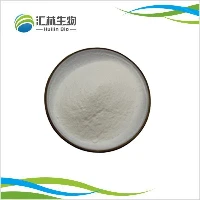


Xi'an Huilin Bio-Tech Co., Ltd. is one of the leading manufacturers and suppliers of potassium carbonate powder in China. With abundant experience, we are committed to providing high quality natural products with competitive price. Please feel free to wholesale bulk pure potassium carbonate powder for sale here from our factory.
Food Grade Potassium Carbonate Powder (E501) - Acidity Regulator for Food and Beverage
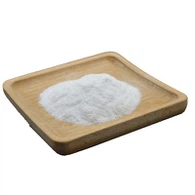
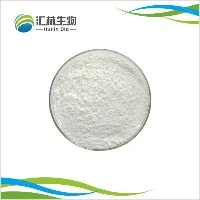
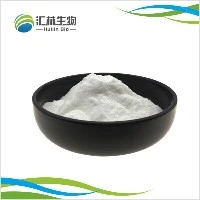
Food grade Potassium Carbonate (K₂CO₃, E501), CAS 584-08-7, is supplied as a white crystalline powder with an assay ≥99.0% on a dried basis. It is freely soluble in water and is used in food and beverage manufacture as an acidity regulator and raising agent.
Xi'an Huilin Bio-tech Co., Ltd. supplies food grade Potassium Carbonate Powder for food and beverage manufacturers, bakery and confectionery producers, contract manufacturers and private-label brands, and food ingredient distributors and importers, with documented test results and market-specific documentation support.

Physical and Chemical Properties
| Property | Value |
|---|---|
| Assay (as K₂CO₃, on a dried basis) | ≥99.0% |
| Molecular Formula | K₂CO₃ |
| Molecular Weight | 138.21 g/mol |
| Chemical Name | Potassium carbonate (the potassium salt of carbonic acid) |
| Origin | Synthetic inorganic salt, produced by standard commercial synthesis; non-animal-origin |
| Appearance | White, free-flowing crystalline powder |
| Melting Point | 891 °C |
| Boiling Point | Decomposes on heating; no boiling point at atmospheric pressure |
| Density | Approximately 2.43 g/cm³ at 25 °C |
| Solubility | Freely soluble in water (approximately 111 g/100 mL at 25 °C); insoluble in alcohol |
| pH | Alkaline - approximately pH 11.5 in a 0.1 M solution at 25 °C |
| Hygroscopicity | Hygroscopic - absorbs moisture and atmospheric CO₂ |
| Crystal Structure | Ionic crystal (monoclinic) |
Values shown are characteristic of the material and are not batch test results. Batch-specific results and test methods are stated on the COA.
Grade and Regulatory Status
What makes the material food grade is the specification, not the chemical identity. The substance is the same as the industrial grade; food grade material is produced and controlled against a food monograph, and it is tested against a defined contaminant package - heavy metals, microbiology, loss on drying - with the results and test methods reported on the batch COA. Industrial and technical grades are specified against different requirements and are not interchangeable for food use. That is why food grade potassium carbonate is bought against a grade and a regulatory basis rather than a single purity figure.
Grade and regulatory basis
- EU: food additive E501, function class acidity regulator / raising agent.
- US: potassium carbonate is affirmed as GRAS as a direct food substance under 21 CFR 184.1619.
- Specification basis: food grade material is specified against the monograph your market applies - for example the FCC monograph or the EU E501 specification. Confirm which monograph your market requires; the applicable limit is agreed in the specification before order.
Regulatory status shown here is reference information. Confirm it against your market's current regulation and your own compliance route - your responsible person or regulatory consultant remains responsible for the final determination.
Why Choose Huilin for Food Grade Potassium Carbonate Supply
- Grade Identification Before Order - we confirm that the material offered is food grade, and we state the assay and the basis it is reported on, before you commit.
- Specification Against Your Market - the E501 or FCC parameters and the document set are agreed against your destination market, not assumed from a generic specification.
- Sample Before Bulk Order - samples are available for evaluation, and the specification applied to the sample is the specification applied to the commercial batch.
- Complete Documentation - COA with test results and test methods per batch, plus TDS and SDS. Non-animal-origin, allergen and GMO statements are confirmed against your market requirement.
- Export and Supply Experience - more than 15 years of export experience, with shipments arranged on FOB, CIF, EXW or DDP terms from Shanghai, Ningbo or Guangzhou.
How Potassium Carbonate Behaves in Formulation
- Alkaline reaction in water. The carbonate ion hydrolyses: CO₃²⁻ + H₂O ⇌ HCO₃⁻ + OH⁻. A 0.1 M solution reaches approximately pH 11.5 at 25 °C. The material is moderately alkaline - not comparable in strength to sodium hydroxide.
- Carbonate buffer system. The HCO₃⁻ / CO₃²⁻ pair buffers the system around pH 10.3. This is why small additions shift pH without overshooting as sharply as a strong base would.
- Potassium without chloride or sulfate. It supplies potassium without introducing chloride or sulfate ions - relevant where the formula must be chloride-free or where sulfate is restricted.
- Hygroscopic behaviour. The material absorbs moisture from the air and forms hydrates, which causes caking. In the presence of moisture it also absorbs atmospheric CO₂ and gradually converts to potassium bicarbonate: K₂CO₃ + H₂O + CO₂ → 2KHCO₃. That conversion changes both the weight and the assay, so containers must be resealed after each opening.
|
Potassium Carbonate (K₂CO₃) vs Potassium Bicarbonate (KHCO₃)Potassium carbonate is not potassium bicarbonate, and not a sodium salt. The three are frequently confused because all are white, water-soluble alkaline powders, yet they are different substances with different alkaline strength and different potassium content.
Potassium content figures are calculated from the formulas and are shown for comparison. Confirm both products against the specification sheet of the material you are evaluating.
|
What Should You Check When Buying Food Grade Potassium Carbonate?
| Check | What to Confirm |
|---|---|
| Grade | That the material offered is food grade, and that the grade stated on the COA matches the grade in your formula file - industrial and technical grades are not interchangeable for food use |
| Assay and basis | The assay value and whether it is reported on a dried basis or as-is - the two are not interchangeable |
| Regulatory basis | Which monograph your market applies, and the limit that follows from it |
| Contaminant package | The heavy metals and microbiology items your incoming inspection requires, and whether they are tested per batch |
| Moisture and packaging | Loss on drying, and the packaging format - the material is hygroscopic, so both affect what arrives |
| Documentation | COA with test methods, TDS, SDS, and the allergen, GMO and non-animal-origin statements your market asks for |
| Shelf life | The shelf life and the storage condition the COA and specification are issued against |
Food Grade Potassium Carbonate Applications
- Food and beverage manufacture: used as an acidity regulator to adjust pH.
- Cocoa and chocolate: used as an alkalising agent in cocoa powder processing.
- Bakery: used as a raising agent where the applicable market regulation permits it.
- Potassium fortification: used where potassium is required without introducing chloride or sulfate.
Final application performance depends on the formulation, the grade and assay supplied, the processing conditions, the pH of the finished product, the limit your market applies to the use, and the target specification.
FAQ: Frequently Asked Questions
Q: What is food grade potassium carbonate?
A: Food grade potassium carbonate is potassium carbonate (K₂CO₃) produced and controlled against a food monograph so that it can be used as a food additive - E501 - as an acidity regulator and raising agent. It is supplied as a white crystalline powder, typically with an assay ≥99.0% on a dried basis. The grade and the assay are stated on the specification sheet and repeated on the batch COA, so both can be checked against your own specification before order.
Q: What is the difference between potassium carbonate (K₂CO₃) and potassium bicarbonate (KHCO₃)?
A: They are different salts. Potassium carbonate is the stronger base of the two and carries approximately 56.6% potassium; potassium bicarbonate is milder, carries approximately 39.1% potassium, and releases carbon dioxide on heating.
Q: What is the assay, and on what basis is it reported?
A: The food grade assay is ≥99.0% reported on a dried basis. The batch-specific result, together with the test method, is stated on the COA. Confirm the basis your supplier uses matches the basis used at your incoming inspection - dried basis and as-is are not interchangeable.
Q: Is potassium carbonate the same as E501?
A: Yes. E501 is the EU food additive entry for potassium carbonate, with the function class acidity regulator / raising agent. Potassium bicarbonate is listed separately as E501(ii).
Q: What are the heavy metal limits, and are they tested per batch?
A: The limits are fixed in the specification agreed for your market and order, and the results are reported on the batch COA with the test method. Send us the limits your incoming inspection applies and we will confirm whether they are covered per batch.
Q: Why must potassium carbonate be kept sealed?
A: The material is hygroscopic. It absorbs moisture from the air and forms hydrates, which causes caking. In the presence of moisture it also absorbs atmospheric CO₂ and gradually converts to potassium bicarbonate (K₂CO₃ + H₂O + CO₂ → 2KHCO₃), which changes both the weight and the assay. Reseal containers after each opening.
Q: What is the shelf life, and what packaging is used?
A: Shelf life is 2 years, stored sealed in a cool, dry place away from moisture and direct sunlight. Packaging for food use is confirmed against your requirement so that the material is protected from moisture; tell us the format you need and we will confirm it with the specification.
Food Grade Potassium Carbonate Supplier
Xi'an Huilin Bio-tech Co., Ltd. supplies food grade Potassium Carbonate Powder (E501) for bulk orders, with the specification, samples, documented test results and market-specific documentation support you need. Send us your application, the specification and limits you require, and your destination market; we will confirm availability, the specification sheet, the COA and the shipment arrangement.
Please contact us at ella.zhang@huilinbio-tech.com.

Hot Tags: potassium carbonate powder, China, suppliers, manufacturers, factory, wholesale, buy, price, bulk, pure, natural, high quality, in stock, for sale