

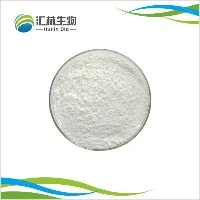
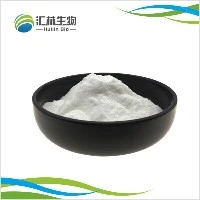
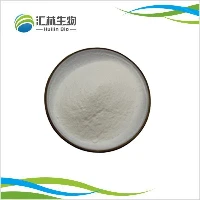


Xi'an Huilin Bio-Tech Co., Ltd. is one of the leading manufacturers and suppliers of tiron powder in China. With abundant experience, we are committed to providing high quality natural products with competitive price. Please feel free to wholesale bulk pure tiron powder for sale here from our factory.
Introduction: What is Tiron?
Tiron, systematically known as disodium 4,5-dihydroxy-1,3-benzenedisulfonate, is a versatile and water-soluble organic compound. Its unique molecular structure features a catechol (ortho-dihydroxybenzene) core with two sulfonate groups, making it an exceptional chelating agent, particularly for transition metal ions like iron (Fe³⁺) and titanium (Ti⁴⁺).
For decades, Tiron has been a cornerstone reagent in analytical chemistry, renowned for forming stable, water-soluble colored complexes with specific metals, enabling their sensitive detection and quantification. Beyond its traditional role, modern research has unlocked its significant potential as a potent, cell-permeable antioxidant in biological systems, effectively scavenging harmful free radicals like hydroxyl radicals and superoxide anions.

Biochemical & Physical Parameters
This table summarizes the essential data for handling and formulating with Tiron Powder.
| Parameter | Value / Description |
|---|---|
| Physical Form | White to light gray-yellow powder |
| Melting Point | > 300 °C |
| Solubility | Highly soluble in water. Up to 1350 g/L reported. Slightly soluble in ethanol. Insoluble in acetone. |
| pH (10 g/L) | ~5.0 |
| Storage Conditions | Store in a sealed container in a cool, dry place at room temperature. |
| Stability | Stable under recommended conditions. Solutions may discolor upon prolonged standing, indicating potential degradation. |
Mechanism of Action: How Tiron Works
The efficacy of Tiron stems from its dual-functional molecular design:
1. Potent Metal Chelation:
The catechol group in Tiron provides two oxygen atoms in an ortho configuration, which forms exceptionally strong, octahedral coordination complexes with metal cations. This chelation is highly selective, especially for Fe³⁺ and Ti⁴⁺, forming deep blue and orange complexes, respectively. This action effectively sequesters ("masks") free metal ions, preventing them from participating in unwanted reactions like Fenton chemistry, which generates damaging free radicals.
2. Direct Free Radical Scavenging:
Independently of metal chelation, the Tiron molecule acts as a direct electron donor. It neutralizes reactive oxygen species (ROS) such as superoxide anions (O₂•⁻) and hydroxyl radicals (•OH), converting them into less harmful molecules. This makes it a valuable tool for studying oxidative stress pathways in biological research.
Key Benefits of Choosing Our Tiron Powder
Primary Applications
Tiron Chemical is a multi-disciplinary tool with critical roles in: 1. Analytical Chemistry:
2. Biochemical & Life Science Research:
3. Industrial Uses:
|

FAQ: Frequently Asked Questions
Q: What is the difference between the reported molecular weights (e.g., 294.2, 314.2, 332.2)?
A: The variation stems from the form of the compound. The basic disodium salt (C₆H₄Na₂O₈S₂) has a molecular weight of 314.20. It is commonly isolated and sold as a monohydrate (C₆H₄Na₂O₈S₂·H₂O), with a Tiron molecular weight of 332.20. The value 294.22 refers to the acid form or an alternative calculation basis.
Q: How should I prepare and store Tiron solutions?
A: Due to its high solubility, Tiron can be easily dissolved in water or buffer. For long-term stability, it is recommended to prepare smaller aliquots of stock solutions and store them at -20°C, preferably under an inert atmosphere like nitrogen to prevent oxidation. Avoid repeated freeze-thaw cycles.
Q: Is Tiron cell-permeable?
A: Yes, one of Tiron's advantages in biological research is its ability to cross cell membranes, allowing it to act on intracellular targets, unlike some other bulky metal chelators like EDTA.
Q: What safety precautions should I take?
A: Tiron is generally considered low toxicity (intraperitoneal LD₅₀ in mice is 6060 mg/kg). However, as with all fine chemicals, it should be handled with care. It is classified as an irritant (Xi). Always wear appropriate personal protective equipment (PPE) including gloves and safety glasses. Refer to the Safety Data Sheet (SDS) for comprehensive handling and disposal information.
Contact Us
Ready to integrate this versatile and reliable reagent into your workflow?
Contact our sales team for a competitive quote, to discuss your specific volume needs, or to request a sample.
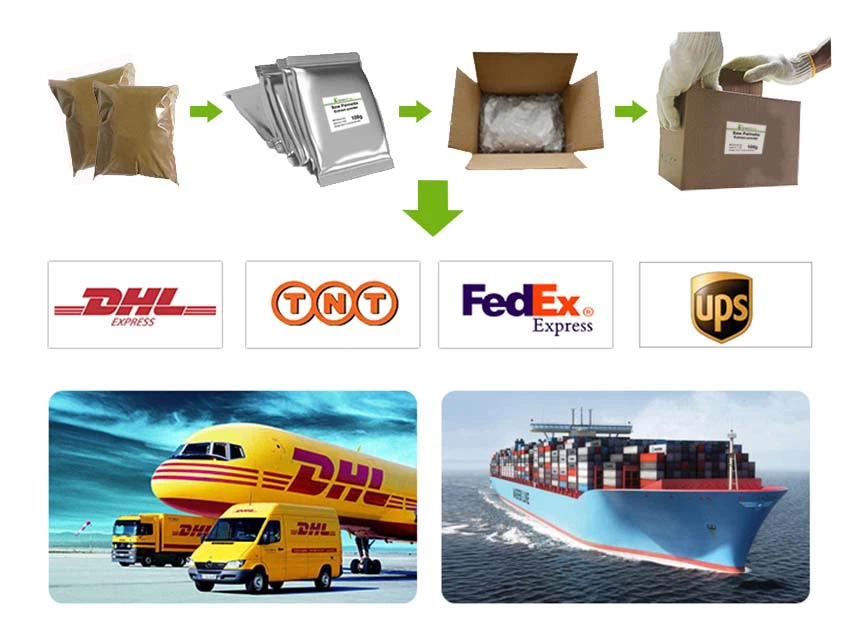
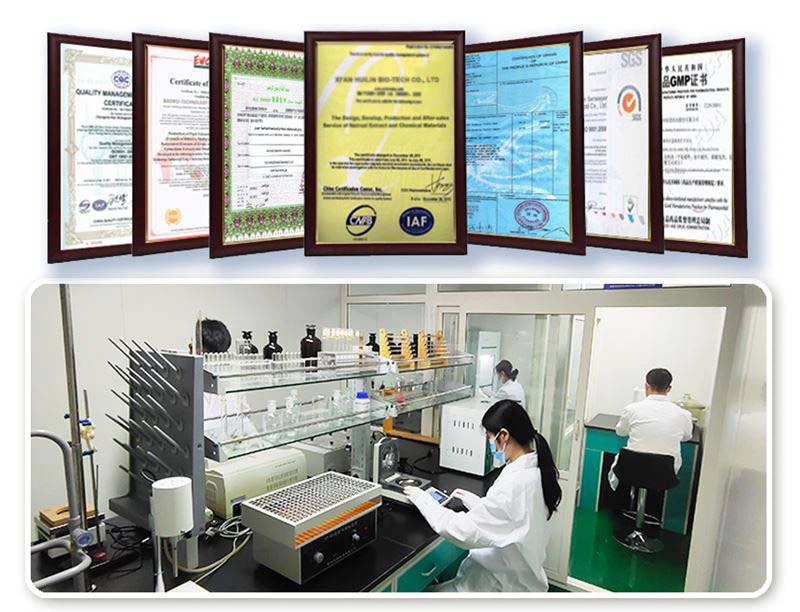
Place your order with confidence, backed by our quality guarantee and reliable global shipping.
Please contact us at ella.zhang@huilinbio-tech.com.

Hot Tags: tiron powder, China, suppliers, manufacturers, factory, wholesale, buy, price, bulk, pure, natural, high quality, in stock, for sale


