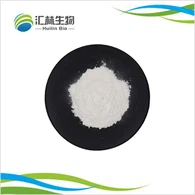

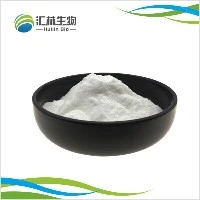
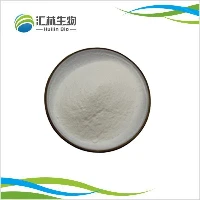


D-Aspartic Acid Powder (DAA) - Food Grade Single D-Enantiomer
D-Aspartic Acid Powder (CAS 1783-96-6) is the D-enantiomer of aspartic acid, a white crystalline powder with assay ≥98.5% on a dried basis. It is supplied as a bulk raw material for supplement and sports nutrition manufacture, amino acid premix and blend production, flavour and food formulation, and chiral synthesis routes where a defined D-configuration is required. The material is supplied as the pure compound, without carrier or excipient.
Xi'an Huilin Bio-tech Co., Ltd. supplies D-Aspartic Acid Powder for dietary supplement and sports nutrition brands, nutraceutical contract manufacturers, amino acid premix and blend producers, fine-chemical and pharmaceutical synthesis buyers, and research laboratories, with batch-specific test results and market-specific documentation support.
Buyers searching for "aspartic acid" are routinely quoted the L-form (CAS 56-84-8) or the racemic DL-mixture (CAS 617-45-8), which are different materials with different CAS numbers and opposite or zero optical rotation. D-Aspartic Acid is the single D-enantiomer, so the specification has to state optical rotation and enantiomeric purity explicitly, not assay alone. If a quotation you are comparing does not carry a CAS number, an assay basis and an optical-rotation range, it is not comparable with this material.
Specification
| Item | Specification | Test Method |
|---|---|---|
| Assay (on the dried basis) | ≥98.5% | Titration, USP <541> |
| Identification | Infrared absorption spectrum conforms to that of a reference standard | Infrared spectrophotometry, USP <197K> |
| Description | White crystalline powder | Visual |
| Solubility | Slightly soluble in water; soluble in dilute acid and alkali solutions; insoluble in ethanol and ether | Descriptive |
| pH (5% solution) | 2.5 – 3.5 | pH meter |
| Specific rotation [α]D20 | −24.8° to −25.8° | Polarimetry, USP <781S> |
| Enantiomeric purity (L-aspartic acid) | ≤1.0% | Chiral HPLC |
| Loss on drying | ≤0.5% | USP <731> (105 °C, 3 h) |
| Residue on ignition | ≤0.1% | USP <281> |
| Particle size | ≥95% through 80 mesh | Sieve analysis, USP <786> |
| Heavy metals (as Pb) | ≤10 ppm | ICP-MS |
| Lead (Pb) | ≤3.0 ppm | ICP-MS |
| Arsenic (As) | ≤1.0 ppm | ICP-MS |
| Total plate count | ≤1,000 CFU/g | USP <2021> |
| Yeast & mold | ≤100 CFU/g | USP <2021> |
| Escherichia coli | Negative | USP <2022> |
| Salmonella | Negative | USP <2022> |
Batch-specific test results are stated in the Certificate of Analysis issued for each lot; the COA is issued with the batch number, the manufacturing date and the test methods applied.
The data above is for reference only. Please request the latest Certificate of Analysis (COA) for batch-specific data.
Final specifications can be confirmed according to application, target market and purchasing requirements.
Grade and Regulatory Status
Grade is set by the specification and the contaminant package, not by the chemical identity; results and methods are stated on the batch COA.
- Grade basis: single D-enantiomer; assay on the dried basis; L-isomer ≤1.0%.
- Additive numbers: supplied as a raw material for further manufacture, not as a listed food additive - no E or INS number appears in our documentation.
- United States: an amino acid is a dietary ingredient under the FD&C Act. It is "new" if it was not marketed in a US dietary supplement before 15 October 1994; there is no authoritative list, so the determination and its documentation rest with the marketer, and a new dietary ingredient needs a premarket notification 75 days before marketing. FDA's ingredient directory lists no entry for this substance (checked 23 September 2026) - the directory is not comprehensive and is not an approval.
- European Union: the EU Novel Food status Catalogue lists no entry for this substance (checked 23 September 2026); confirm the position for the market of sale.
Reference information carrying the check dates shown; the regulatory determination for your market rests with you.
How the D-Enantiomer Is Produced and Verified
- Route of manufacture. Commercial D-aspartic acid is produced by standard synthesis routes from non-animal-origin starting materials, so the material is non-animal-origin and carries no BSE/TSE risk from animal tissue.
- Optical rotation. Polarimetry measures the direction and magnitude of the enantiomeric excess; the D-form rotates negatively, which is why the specification states a negative range rather than an absolute purity figure.
- Chiral separation. Chiral HPLC separates the two enantiomers and quantifies the L-isomer as a percentage of total aspartic acid. This is the controlling test for a single-enantiomer grade.
- Why it matters for the batch. Assay, loss on drying and enantiomeric purity together decide what a kilogram actually delivers: material that has taken up moisture carries less aspartic acid per kilogram than the assay figure alone suggests, and a non-chiral assay method cannot detect an enantiomeric impurity at all.
D-Aspartic Acid vs L-Aspartic Acid vs DL-Aspartic Acid
| D-Aspartic Acid | L-Aspartic Acid | DL-Aspartic Acid | |
| Relationship | The single D-enantiomer | The proteinogenic L-form | Racemic mixture |
| CAS | 1783-96-6 | 56-84-8 | 617-45-8 |
| Chemical name | (R)-2-Aminobutanedioic acid | (S)-2-Aminobutanedioic acid | (RS)-2-Aminobutanedioic acid |
| Molecular formula / weight | C4H7NO4 / 133.10 g/mol | C4H7NO4 / 133.10 g/mol | C4H7NO4 / 133.10 g/mol |
| Specific optical rotation | Negative - between −24.8° and −25.8° | Positive - confirm against the monograph of the grade (USP acceptance +24.0° to +26.0°) | Optically inactive |
| Enantiomeric purity | L-isomer limited to ≤1.0% | Usually not stated on commercial sheets | Not applicable |
| Typical buyer | Supplement and sports nutrition manufacture, chiral synthesis, optical resolution | Food and flavour formulation, amino acid blends | Synthesis where chirality is not specified |
| Chosen when | your specification or route calls for the D-form and stereochemistry is a controlled parameter | your formulation is built on the L-form, or your market permits only the proteinogenic form | chirality is not a specification point in your process |
- Choose D-Aspartic Acid when your specification or synthesis route calls for the single D-enantiomer.
- Choose L-Aspartic Acid when your formulation or route is built on the L-form.
- Choose DL-Aspartic Acid when chirality is not a specification point in your process.
L-Aspartic Acid is available on request under a separate specification. Other amino acids in this range are listed in the Amino Acid category.
Benefits of D-Aspartic Acid Powder in Production and Formulation
- The configuration is stated, not assumed. A single D-enantiomer with a published optical-rotation range and an L-isomer limit can be written into a chiral route or a finished-product specification as a controlled parameter.
- The assay can be recalculated from the documents. Because the assay is reported on the dried basis, the aspartic acid content per kilogram follows from the assay and the loss on drying, without a conversion you have to guess at.
- No carrier fraction to allow for. The material is supplied as the pure compound, so formulation arithmetic and label declarations do not have to reserve a percentage for a carrier or excipient.
- Particle size and premix ratios can be fixed. Standard supply is ≥95% through 80 mesh, and mesh or blend ratios can be agreed against your specification, which removes a size-reduction or blending step from your line.
- A non-animal-origin route keeps declarations simple. Synthesis from non-animal-origin starting materials means no animal-derived material enters the route, so BSE/TSE and allergen declarations do not have to trace an animal supply chain.
D-Aspartic Acid Powder Applications
- Supplement and sports nutrition manufacture: supplied as a bulk powder for capsule, tablet, stick-pack and powder blend production where the D-form is specified.
- Amino acid premixes and blends: available for inclusion in customer-specified premixes, with blend ratio and particle size fixed in the agreed premix specification.
- Chiral synthesis: used as a starting material in fine-chemical and pharmaceutical synthesis routes that require a defined D-configuration, where enantiomeric purity is the controlling specification.
- Laboratory and optical resolution work: supplied for optical-resolution and laboratory-scale projects under the same specification, with smaller pack sizes available on request.
Final application performance depends on the formulation, the addition level, the processing conditions, the packaging and the storage conditions, as well as on the specification of the material supplied. Buyers are responsible for confirming that the intended use complies with the regulations of the destination market.
D-Aspartic Acid Powder FAQs
Q: What is D-Aspartic Acid Powder?
A: D-Aspartic Acid is the D-enantiomer of aspartic acid, with CAS No. 1783-96-6 and molecular formula C4H7NO4 (molecular weight 133.10 g/mol). It is a non-proteinogenic amino acid: the L-form is the one incorporated into proteins, while the D-form is supplied as a defined single enantiomer. Huilin supplies it as a white crystalline powder at assay ≥98.5% on a dried basis, as the pure compound without carrier or excipient. Where a diluted or blended grade is required, it is fixed in a separate premix specification. Note that "aspartate" names the salt or anion form rather than the free acid: salts such as sodium or magnesium aspartate are separate substances with their own CAS numbers and molecular weights, so confirm the CAS number when a quotation or a label uses the salt name.
Q: Is D-aspartic acid the same as L-aspartic acid?
A: No. They are enantiomers - the same molecular formula and molecular weight, but different CAS numbers (1783-96-6 for the D-form, 56-84-8 for the L-form) and opposite optical rotation. Pharmacopoeial monographs for the L-form quote a positive specific rotation (USP acceptance +24.0° to +26.0°), while the D-form rotates negatively. Because the two differ in stereochemistry rather than in assay, a quotation that states only "aspartic acid" cannot be compared with a specified single enantiomer.
Q: What is the difference between D-aspartic acid and DL-aspartic acid?
A: DL-aspartic acid (CAS 617-45-8) is the racemic mixture: it contains the D-form and the L-form in comparable amounts. The two optical forms cancel each other out, so the racemate is optically inactive and shows no measurable rotation, while D-aspartic acid rotates negatively. Practically, the difference is what your specification has to control - a racemate is bought and verified on assay, whereas a single enantiomer is bought and verified on assay plus optical rotation plus an L-isomer limit.
Q: Can D-aspartic acid replace L-aspartic acid in an existing formulation?
A: Only where your finished product does not depend on stereochemistry, or where your own documents define the D-form. Where a formulation was developed and validated against the L-form, substituting the D-form requires re-verification of identity, assay and any chiral specification in your own QC, and the permitted form has to be confirmed against the destination market before the switch is made. This is a buyer-side determination; we supply against the agreed specification and do not substitute one enantiomer for the other.
Q: How is the D-enantiomer distinguished from the L-enantiomer during testing?
A: Two methods are normally used. Polarimetry measures optical rotation and therefore gives the direction of the enantiomeric excess - a negative rotation indicates the D-form. Chiral HPLC separates the two enantiomers and quantifies the L-isomer as a percentage of total aspartic acid, which is the basis of the enantiomeric purity limit in the specification. Non-chiral methods such as titration or standard HPLC measure total aspartic acid only and will not detect an enantiomeric impurity.
Q: Why is the assay reported on the dried basis?
A: A dried-basis figure excludes moisture, so it describes the aspartic acid content of the dry material and stays comparable between lots and between suppliers. An as-is figure moves with the moisture level, which is why the loss on drying has to be read together with the assay. If your incoming inspection calculates content per kilogram, use the same basis as the specification, otherwise the two numbers will not agree.
Q: Can you supply a custom particle size or a blended amino acid premix?
A: Particle size and pack weight can be reviewed against your specification before the order is fixed; the standard supply is ≥95% through 80 mesh in 25 kg drums. Amino acid premixes combining D-Aspartic Acid with other materials are reviewed case by case - send the target ratios, the limiting specification for each component and the sample quantity required, and we will confirm what can be fixed in an agreed premix specification.
Q: Which documents are issued with each shipment?
A: Each shipment is accompanied by a batch-specific Certificate of Analysis (COA) carrying the batch number and the measured results for the agreed specification items. The Technical Data Sheet (TDS) and Safety Data Sheet (SDS) are available before dispatch, and the specification sheet for this product is available on request. Additional declarations - for example a non-animal-origin or allergen statement - should be requested at the quotation stage so they can be prepared against the same batch.
D-Aspartic Acid Powder Supplier
Xi'an Huilin Bio-tech Co., Ltd. supplies D-Aspartic Acid Powder for bulk and wholesale orders, with custom specifications, samples, documented test results and market-specific documentation support. Send us your application, the specification you need, your target market and your volume; we will confirm availability, the specification sheet, the COA and the shipment arrangement.
For inquiries, quotations, or sample requests, please contact: sales@huilinbio-tech.com
Hot Tags: d-aspartic acid powder, China, suppliers, manufacturers, factory, wholesale, buy, price, bulk, pure, natural, high quality, in stock, for sale