


Fructooligosaccharides - Food Grade Short-Chain Fructan
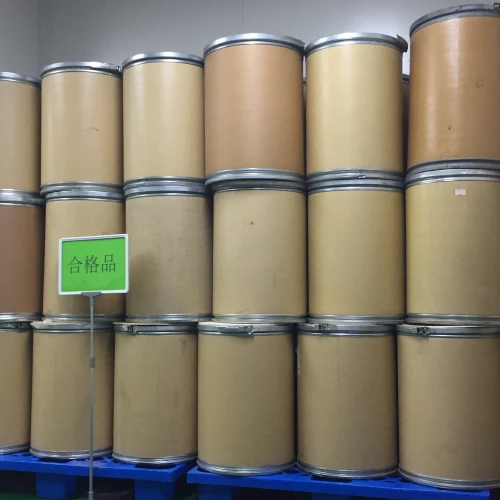
Fructooligosaccharides Powder (CAS 308066-66-2) is a short-chain fructan with ≥95.0% FOS content on a dried basis and a defined GF2 / GF3 / GF4 profile. It is produced by enzymatic transfructosylation of food-grade sucrose, supplied as a freely soluble white to off-white powder, and used as a bulk raw material in the prebiotic fibre ingredient category, for dietary supplement manufacture, functional food and beverage formulation, fibre fortification and sugar reduction. Huilin supplies Fructooligosaccharides Powder in bulk and wholesale quantities, in 25 kg fibre drums with double PE inner liners.
Huilin, based in Xi'an, China, supplies FOS Powder to dietary supplement brands, functional food and beverage manufacturers, nutraceutical contract manufacturers, private-label producers, and ingredient distributors - buyers whose procurement or QA team has to qualify the material against a written specification, and whose label arithmetic depends on the assay basis and the residual-sugar limit. This page documents identity, specification limits, test methods, documents and supply arrangements so that review can be completed without a round of clarifying emails.
Two things separate a comparable FOS quotation from a non-comparable one. First, the production route: FOS made by enzymatic transfructosylation of sucrose is a GF2 / GF3 / GF4 mixture in which each oligomer carries a terminal glucose unit, whereas material sold loosely as "oligofructose" is usually produced by hydrolysis of chicory inulin and carries longer and partly glucose-free chains. The two behave differently in solubility, sweetness and blending. Second, the assay basis and residual sugars: a FOS content figure is only comparable when the dry basis and the moisture limit are stated, and when the glucose / fructose / sucrose residue is declared - because that residue is what remains labelled as sugar in your finished product.
Specification
| Item | Specification | Test Method |
|---|---|---|
| Assay (FOS content, dry basis) | ≥95.0% | HPLC |
| GF2 (1-Kestose) | 35–40% | HPLC |
| GF3 (Nystose) | 40–45% | HPLC |
| GF4 (Fructosylnystose) | 10–15% | HPLC |
| Residual sugars (glucose, fructose, sucrose) | ≤5.0% | HPLC |
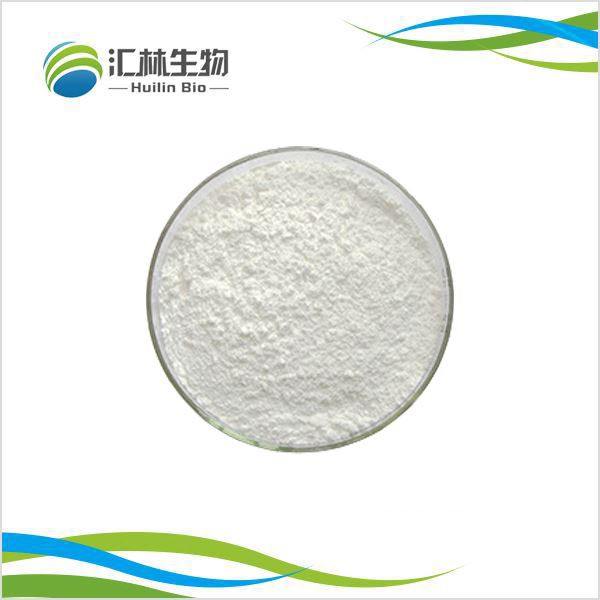
| Appearance | White to off-white powder | Visual |
| Solubility | Freely soluble in water | Descriptive |
| Moisture | ≤5.0% | Gravimetric (105 °C) |
| Ash | ≤0.5% | Gravimetric (550 °C) |
| pH (10% solution) | 4.5 – 7.0 | pH meter |
| Particle size (D50) | 80–150 µm | Laser diffraction |
| Bulk density | 0.45–0.60 g/mL | Bulk density test |
| Heavy metals (as Pb) | ≤1.0 ppm | ICP-MS |
| Lead (Pb) | ≤0.1 ppm | ICP-MS |
| Arsenic (As) | ≤0.1 ppm | ICP-MS |
| Cadmium (Cd) | ≤0.1 ppm | ICP-MS |
| Mercury (Hg) | ≤0.05 ppm | ICP-MS |
| Total plate count | ≤1,000 CFU/g | Plate count |
| Yeast & mold | ≤100 CFU/g | Plate count |
| Escherichia coli | Negative / 10 g | Absence test |
| Salmonella | Negative / 25 g | Absence test |
| Staphylococcus aureus | Negative / 10 g | Absence test |
| Conclusion | Conforms to Specification | - |
The data above is for reference only. Please request the latest Certificate of Analysis (COA) for batch-specific data. Final specifications can be confirmed according to application, target market and purchasing requirements.
Grade and Regulatory Status
Grade is set by the specification and the contaminant package, not by the chemical identity; results and methods are stated on the batch COA.
- European Union - fibre status. Under the EU definition of "fibre" - carbohydrate polymers with three or more monomeric units which are neither digested nor absorbed in the human small intestine - the FOS oligomers meet the polymer threshold, so the FOS fraction is counted as fibre in the Nutrition Declaration, while the residual glucose, fructose and sucrose declared in the specification are counted as sugars. Confirm the declaration basis with your labelling team before the Nutrition Declaration is fixed (EU definition checked 23 September 2026).
- United States - fibre status. FDA's list of isolated or synthetic non-digestible carbohydrates that meet its dietary fibre definition includes "inulin and inulin-type fructans". FOS is an inulin-type fructan (β(2→1) linked), so it falls within that entry and can be counted on that basis in the Dietary Fibre line of a US label. A listing defines a declaration route; it is not a safety approval, and the route should be confirmed with your labelling team (FDA list checked 23 September 2026).
- Additive numbers: supplied as a food ingredient and dietary fibre raw material, not as a listed food additive - no E number or INS number appears in our documentation.
- Other markets: food and supplement ingredient rules differ between markets and change over time; confirm the applicable rule and the permitted use in your destination market before the formulation is fixed.
Reference information carrying the check dates shown; the regulatory determination for your market rests with you.
Why Choose Huilin for Fructooligosaccharides Powder Supply
- Assay basis and oligomer window fixed in writing before the order - FOS content is quoted on a dried basis with the moisture limit stated, and the GF2 / GF3 / GF4 window agreed, so a quotation can be compared line by line against an alternative instead of by the headline assay figure alone.
- The COA reports the composition, not only the assay - FOS content, the individual oligomer fractions and the glucose / fructose / sucrose residue are reported per lot, which is the part your label arithmetic depends on.
- Powder properties agreed against your process - D50 and bulk density are fixed against your filling, tableting or blending line rather than left to the batch, because those two figures decide how the powder runs.
- Route declared, not implied - this is the sucrose transfructosylation product, GF2 / GF3 / GF4 with a terminal glucose unit on each oligomer. We do not substitute chicory-hydrolysed oligofructose for it; where your formulation was developed against the other route, the specification is re-confirmed before the order is placed.
- Food safety certification and export handling - the supply line operates under FSSC 22000 and ISO 22000 food safety management certification; certificates are issued with the quotation on request, the documentation set is issued before dispatch, and FOB, CFR, CIF and EXW terms are available.
How FOS Powder Is Produced and Characterised
- Enzymatic transfructosylation. A β-fructofuranosidase transfers fructose units from food-grade sucrose onto sucrose and onto the growing chain, producing the GF2 (1-kestose), GF3 (nystose) and GF4 (fructosylnystose) oligomers and leaving a terminal glucose unit on each.
- Purification. The reaction liquor is filtered and decolourised on activated carbon, demineralised on ion exchange, concentrated and spray-dried. This stage removes the bulk of the residual glucose, fructose and sucrose and is what sets the heavy-metal and colour profile.
- What the specification actually controls. Three figures decide whether two FOS lots are interchangeable: FOS content on a dried basis, the GF2 / GF3 / GF4 distribution, and the residual-sugar limit. Two lots can both read ≥95.0% and still differ in oligomer distribution, so the assay figure alone is not enough to compare them.
- Route identity. The terminal glucose unit on each oligomer is what distinguishes the sucrose-route product from chains produced by hydrolysis of chicory inulin, which include glucose-free Fm-type oligomers and can extend to a higher degree of polymerisation.
- What the assay does not cover. Moisture, particle size and bulk density are set by the drying and sieving stages, not by the reaction. They are specified separately because they determine how the powder behaves on a filling or blending line.
FOS vs Inulin vs Oligofructose - Which Does Your Formulation Call For
FOS, chicory inulin and oligofructose are all β(2→1) fructans, which is why quotations for one are often compared against another. They are not functionally interchangeable: chain length sets solubility, sweetness and how much viscosity the material contributes.
| Parameter | FOS Powder (this page) | Chicory Inulin Powder | Oligofructose (inulin hydrolysate) |
|---|---|---|---|
| Production route | Enzymatic transfructosylation of sucrose | Hot-water extraction of chicory root | Enzymatic hydrolysis of chicory inulin |
| Degree of polymerisation | 3-5 (GF2, GF3, GF4) | Typically 10-60 | 2-8 |
| Terminal glucose unit | Present on each oligomer | Present on the longer chains | Partly absent - Fm-type chains occur |
| Solubility in water | Freely soluble at high solids | Lower than FOS; long-chain grades gel at higher solids | Freely soluble |
| Relative sweetness vs sucrose | ≈30-60% | Lower than FOS | Same order as FOS |
| Best fit | Formulations wanting a fully soluble, mildly sweet short-chain fructan | Formulations wanting a longer-chain fructan, or a texture / gelling function | Where a chicory-derived short-chain fructan is specified |
| Key verification point | FOS content on dry basis, GF2 / GF3 / GF4 window, residual sugars | Chain-length distribution and extraction route | Hydrolysis route and the Fm / GFn distribution |
- Choose FOS Powder when the formulation needs the fully soluble short-chain fructan - for beverage, stick-pack and capsule formats where a gelling or viscosity contribution is not wanted.
- Choose Chicory Inulin Powder when the formulation wants a longer-chain fructan, or when a texture or gelling function is part of the design - see our Chicory Inulin Powder page.
- Where a specification names oligofructose, confirm which route it was written against before substitution: the hydrolysate route and the transfructosylation route differ on the residual-sugar figure and on whether glucose-free Fm-type chains are present.
Benefits of Fructooligosaccharides in Production and Formulation
- Fully soluble at working solids. FOS dissolves freely in water, so it can be dosed into beverage concentrates and syrups without the gel or viscosity that longer-chain fructans build at higher solids.
- Mild sweetness, so less masking. At ≈30-60% of sucrose sweetness, part of the sugar load can be replaced without a masking or high-intensity sweetener system carrying the whole job.
- A defined oligomer window. The GF2 / GF3 / GF4 distribution is specified as a range, so a reformulated batch repeats the one before it rather than drifting within "≥95%".
- Low residual sugars at the 95% grade. Glucose, fructose and sucrose are limited to ≤5.0%, which keeps the sugar line of the finished label arithmetic predictable.
- Powder properties that match the line. D50 and bulk density are agreed against your filling or blending process, so flow and fill weight do not become a variable you have to chase.
FOS Applications
- Dietary supplement manufacture. Supplied as a bulk raw material for capsule, tablet, stick-pack and powder-blend production, at the 95% grade or against a blend specification agreed with your formulator.
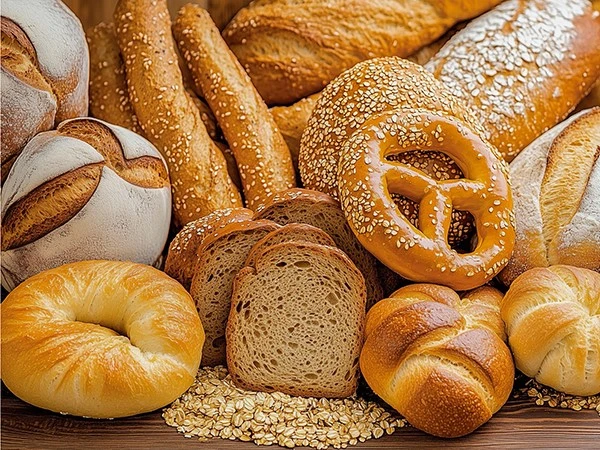
- Functional food and beverage. Used in dairy, bakery, confectionery and beverage systems where a soluble short-chain fructan is specified and a fully dissolved, mildly sweet contribution is wanted.
- Fibre fortification and sugar reduction. Used where a fibre declaration is required on the label, or where part of the sugar load is being replaced; the residual-sugar limit and the declaration basis are fixed in the agreed specification.
- Oligosaccharide blends. Reviewed as part of a blend with other oligosaccharides or with a carrier, against a blend specification that lists the target ratio and the limiting specification for each component.
Final application performance depends on the formulation, processing conditions and target specification. Buyers are responsible for confirming that the intended use complies with the regulations of the destination market.
Fructooligosaccharides FAQs
Q: What is Fructooligosaccharides Powder?
A: Fructooligosaccharides (FOS) are short-chain fructans in which fructose units are linked to a terminal glucose unit through β(2→1) glycosidic bonds, giving the oligomers GF2 (1-kestose), GF3 (nystose) and GF4 (fructosylnystose). The material is a mixture rather than a single molecule, which is why the specification states a FOS content figure together with the GF2 / GF3 / GF4 distribution. CAS No. 308066-66-2. It is supplied as the pure material without carrier or excipient; where a diluted or blended grade is required, that is fixed in a separate blend specification.
Q: What is the difference between FOS and inulin?
A: Both are β(2→1) fructans, but they differ in chain length and therefore in behaviour. FOS as supplied here is a short-chain product: GF2, GF3 and GF4, degree of polymerisation 3 to 5. Chicory inulin is a longer-chain material, typically DP 10 to 60. The practical consequences: FOS is freely soluble at high solids and does not build viscosity the way longer-chain inulin does, and FOS is the sweeter of the two. If your process depends on the texture or gelling behaviour of inulin, FOS will not reproduce it.
Q: Is FOS the same as oligofructose?
A: Not always, and the difference matters at the specification. "Oligofructose" is a trade name applied to short-chain fructans regardless of how they were made. Material produced by enzymatic hydrolysis of chicory inulin contains chains that can lack the terminal glucose unit (Fm-type oligomers) and can extend to DP 8. The product on this page is made from sucrose by enzymatic transfructosylation and consists of GF2, GF3 and GF4, each carrying a terminal glucose. Ask which route a quotation was built on before using the two interchangeably.
Q: How is the FOS content measured, and why is it reported on a dried basis?
A: FOS content is measured by HPLC, which separates and quantifies the individual GF2, GF3 and GF4 oligomers together with the residual glucose, fructose and sucrose. The figure is reported on a dried basis because the powder carries up to 5.0% moisture, and a wet-basis figure would move with the moisture of the particular lot. To work out how much FOS is in a given weight of powder, read the assay together with the moisture limit; the FOS content and the residual sugars also have to sum consistently, which is why both are stated.
Q: Can I replace inulin with FOS in an existing formulation?
A: Only where the inulin was there for its solubility or its mild sweetness. FOS is freely soluble and sweeter, so substituting it usually means re-checking the solids level and the sweetness balance. Where inulin contributes body, viscosity or gelling, FOS will not replace it - the two are not functional equivalents in those systems. Substituting in the other direction faces the same test in reverse.
Q: Which documents are issued with each shipment?
A: Each shipment is accompanied by a batch-specific Certificate of Analysis reporting the measured results for the specification items, with the batch number. The Technical Data Sheet (TDS) and Safety Data Sheet (SDS) are available before dispatch. The supply line operates under FSSC 22000 and ISO 22000 food safety management certification, and certificates are issued with the quotation on request. Where a buyer needs an additional declaration - allergen, BSE/TSE or country of origin - it should be requested at the quotation stage so that it can be issued against the same batch.
Q: Can you supply a custom particle size or a blend?
A: Particle size and pack weight can be reviewed against your specification before the order is fixed; the standard supply is D50 80–150 µm in 25 kg fibre drums. Blends - for example FOS combined with another oligosaccharide or with a carrier - are reviewed case by case: send the target ratio, the limiting specification for each component, and the sample quantity needed, and we will confirm what can be fixed in an agreed blend specification.
Q: Why does the powder colour vary slightly between batches?
A: FOS is produced from sucrose through an enzymatic reaction, then decolourised on activated carbon and demineralised on ion exchange. Small batch-to-batch differences in colour, from white to off-white, come from that purification stage and from the drying temperature, and are normal for this grade - which is why colour is specified as a range rather than as a single value. Where a finished product is colour-sensitive, the range can be tightened in the agreed specification; that has to be fixed before the order because it is set at the purification stage.
ructooligosaccharides Powder Supplier
Huilin supplies Fructooligosaccharides Powder in bulk and wholesale quantities, in 25 kg fibre drums with double PE inner liner, from Xi'an, China. Send your target specification - FOS content and basis, the required GF2 / GF3 / GF4 window, residual-sugar limit, particle size and pack weight - and we will confirm availability, the specification sheet, the COA arrangement, shipping terms (FOB, CFR, CIF or EXW) and the lead time for your requirement.
For inquiries, quotations, or sample requests, please contact: sales@huilinbio-tech.com
Hot Tags: fructooligosaccharides (fos), China, suppliers, manufacturers, factory, wholesale, buy, price, bulk, pure, natural, high quality, in stock, for sale


