

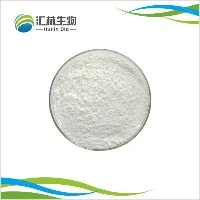
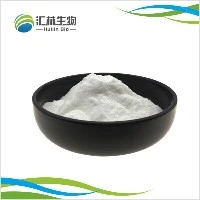
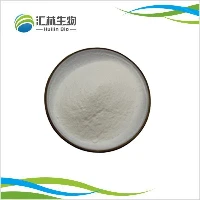


Xi'an Huilin Bio-Tech Co., Ltd. is one of the leading manufacturers and suppliers of d-(+)-cellobiose powder in China. With abundant experience, we are committed to providing high quality natural products with competitive price. Please feel free to wholesale bulk pure d-(+)-cellobiose powder for sale here from our factory.
Introduction
D-(+)-Cellobiose is a naturally occurring disaccharide composed of two D-glucose units linked by a β(1→4) glycosidic bond. It is the fundamental repeating unit of cellulose and does not typically exist in free form in nature. As a pure chemical reagent, it serves as a critical tool in biochemistry and life science research, functioning primarily as a specific substrate for enzymes like β-glucosidase and as a defined carbon source in microbial studies. Our high-purity powder ensures reliable and reproducible results in your most demanding applications.
Physical & Chemical Parameters
| Parameter | Value / Condition | Notes |
|---|---|---|
| Melting Point | 239 °C (dec.) / 153-160 °C | Literature values vary; decomposes upon melting. |
| Density | ~1.76 g/cm³ | -- |
| Refractive Index | 34° (C=8, H₂O) | -- |
| Solubility in Water | Highly soluble (≥ 50 mg/mL, clear solution) | Soluble with mild heating or sonication. |
| Solubility in DMSO | ~3 mg/mL (8.76 mM) | Slightly soluble. |
| Solubility in Ethanol | Insoluble | -- |
| Flash Point | 357.8 °C | Combustible solid. |
| Stability & Incompatibility | Stable under recommended storage. Incompatible with strong oxidizing agents. | -- |
Mechanism of Action
The biological and biochemical significance of D-(+)-Cellobiose stems from its unique structure and role in carbohydrate metabolism.
- As a Specific Enzymatic Substrate: Its core function is as a highly specific natural substrate for β-glucosidase (cellobiase) and cellulase enzymes. These enzymes catalyze the hydrolysis of the β(1→4) glycosidic bond, cleaving cellobiose into two molecules of glucose. This makes it indispensable for:
Enzyme Activity Assays: Quantifying the activity, kinetics, and inhibition of β-glucosidases in research and industrial applications (e.g., biofuel production).
Metabolic Pathway Studies: Tracing the degradation and utilization of cellulose-derived sugars in microbes and biological systems.
- Role as a Prebiotic & Metabolic Modulator: As an indigestible disaccharide for humans, it reaches the colon intact. Certain beneficial gut bacteria (e.g., Bacteroides spp.) possess the necessary β-glucosidases to ferment cellobiose. This fermentation produces short-chain fatty acids (SCFAs), leading to potential prebiotic effects. Research indicates oral administration of cellobiose can ameliorate colitis symptoms by modulating gut microbiota and reducing pro-inflammatory cytokine expression.
- Inducer of Biofilm Dispersal: Some studies suggest that certain D-form sugars and amino acids can act as signaling molecules triggering the disassembly of bacterial biofilms. While more research is ongoing, D-Cellobiose is of interest in this field for studying microbial community dynamics.
Key Benefits & Advantages
- High Purity & Consistency: Guaranteed purity (>98% HPLC) with detailed CoA (Certificate of Analysis), ensuring reliability in sensitive assays and research reproducibility.
- Critical Research Utility: Serves as an essential biochemical tool for enzymology, microbiology, and metabolic research, providing insights into cellulose degradation and gut microbiome function.
- Versatile Solubility: Highly soluble in water, facilitating easy preparation of stock solutions for cell culture media, biochemical buffers, and feeding studies.
- Defined Carbon Source: Provides a clean, specific, and consistent energy source for microbial fermentation and cell culture, especially in studies focusing on carbohydrate metabolism.
Primary Applications
| Industry/Field | Application Examples | Purpose/Role |
|---|---|---|
| Biochemical Research | Substrate for β-glucosidase/cellulase activity and inhibition assays. | To study enzyme kinetics, screen inhibitors, and evaluate cellulolytic activity. |
| Microbiology & Fermentation | Carbon source in defined culture media for bacteria (e.g., Bacteroides). | To cultivate and study microbes capable of degrading cellulose or utilizing cellobiose. |
| Nutrition & Gut Health Research | Intervention in animal models of colitis or metabolic studies. | To investigate its prebiotic potential, impact on gut microbiota, and anti-inflammatory effects. |
| Material Science | Used in synthesizing cellulose-PEG composites or as a molecular standard. | As a monomeric model compound for cellulose chemistry and polymer research. |
| Analytical Chemistry | HPLC or GC standard for carbohydrate analysis. | For quantification and method calibration in sugar analysis. |
Formulation & Handling Guidance
- Solution Preparation: For a 100 mM aqueous stock solution, dissolve 342.3 mg of D-(+)-Cellobiose in 10 mL of deionized water. Gentle warming (≤37°C) or brief sonication may assist dissolution. Sterilize by filtration (0.2 μm) for cell culture use.
- In Vivo Studies: For animal administration, it can be prepared as a homogeneous suspension in vehicles like 0.5% CMC-Na (carboxymethyl cellulose sodium salt).
- Storage of Solutions: Aqueous solutions are stable for approximately 1 month when stored at -20°C. Avoid repeated freeze-thaw cycles; recommend aliquoting.
FAQ: Frequently Asked Questions
Q: What is the difference between Cellobiose and Maltose?
A: Both are disaccharides of glucose, but their glycosidic linkages differ fundamentally. Cellobiose has a β(1→4) linkage, which is resistant to human digestive enzymes. Maltose has an α(1→4) linkage, which is readily broken down by human maltase. This makes cellobiose a non-digestible sugar with prebiotic potential, unlike maltose.
Q: Is D-(+)-Cellobiose a reducing sugar?
A: Yes. It has a free anomeric carbon (hemiacetal) on its non-reducing end glucose unit, making it a reducing sugar. It will give a positive result in tests like Benedict's or Fehling's reagent.
Q: What are the main safety considerations?
A: It is not classified as hazardous. Standard laboratory precautions are advised: avoid inhalation of dust and contact with eyes/skin. For detailed handling, refer to the Safety Data Sheet (SDS).
Q: How should I store the powder, and what is its shelf life?
A: Store in a tightly sealed container at room temperature in a dry environment, or at 4°C for extended stability. Protect from moisture and light. Properly stored, the powder is stable for years. Solutions have a shorter shelf life.
Contact Us
Advance your research with our high-quality D-(+)-Cellobiose. We provide technical data sheets, comprehensive support, and flexible packaging from milligrams to bulk quantities to meet your specific R&D or production needs.
Contact our team today to request a quote, inquire about custom specifications, or place your order. Let us be your reliable partner in scientific discovery.
Please contact us at ella.zhang@huilinbio-tech.com.



Hot Tags: d-(+)-cellobiose powder, China, suppliers, manufacturers, factory, wholesale, buy, price, bulk, pure, natural, high quality, in stock, for sale


