



Xi'an Huilin Bio-Tech Co., Ltd. is one of the leading manufacturers and suppliers of 4-hydroxyindole powder in China. With abundant experience, we are committed to providing high quality natural products with competitive price. Please feel free to wholesale bulk pure 4-hydroxyindole powder for sale here from our factory.
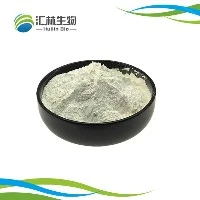
4-Hydroxyindole (CAS 2380-94-1) is an indole carrying a hydroxyl at the 4-position, on the benzene ring rather than on the pyrrole nitrogen. It is supplied as an off-white crystalline solid, C8H7NO, molecular weight 133.15, melting at 97 - 99 °C.
Synthesis groups use it as a substituted indole that already carries an oxygen handle; materials groups use it where the hydroxyl is wanted as a polymer attachment point. Both are working with the same property, which is that the oxygen sits close enough to the pyrrole to interact with it.
The position is the specification. Move the hydroxyl to the 5-position and the molecule changes shape, hydrogen-bonding pattern and reactivity, even though formula and molecular weight stay identical.
Specification
| Item | Specification | Test Method |
| Physical Description | / | / |
| Appearance | Off-white crystalline solid | Visual |
| Melting Range | 97 - 99 °C | Capillary method, USP Chapter 741 |
| Identification | Conforms to reference standard (retention time) | HPLC |
| Chemical Tests | / | / |
| Assay | ≥ 98.0% | HPLC, area normalization |
| Water | ≤ 0.5% | Karl Fischer |
| Residue on Ignition | ≤ 0.1% | Gravimetric, USP Chapter 281 |
| Heavy Metals | / | / |
| Heavy Metals (as Pb) | ≤ 10 ppm | ICP-MS |
Release limits for the grade. Lot-specific figures come with the material, not from this page.
Why the 4-Position Is Different
The indole ring has two distinct ends: the pyrrole nitrogen with its N-H, and the benzene ring with four free positions. A hydroxyl at C4 sits on the benzene ring immediately next to the carbon that carries the pyrrole nitrogen, which puts the oxygen within hydrogen-bonding distance of the N-H in the same molecule.
That proximity is what makes the 4-isomer useful and what makes it different from its siblings. The intramolecular interaction stiffens the molecule and changes which face of the ring is available to a reagent; it also changes solubility, since a hydroxyl that is hydrogen-bonded internally is less available to solvent than one that is not.
Mechanically the hydroxyl behaves as a phenol: it acylates, alkylates and forms ethers under ordinary conditions, and it directs electrophiles around the ring in the usual way. The indole N-H is the other reactive site, and protecting it is usually the first step in any sequence that needs the oxygen to react alone.
Air, Light and the Cold Chain
Indoles oxidise. The pyrrole ring is electron-rich and reacts with oxygen, and the reaction is faster in light and faster still in solution than in the solid. On a certificate this shows up as colour before it shows up as assay, which is why the material is specified as an off-white solid with a colour that can deepen in store.
The storage condition therefore belongs in the specification rather than on a label: 0 - 6 °C, sealed, under nitrogen, away from light. The nitrogen flush in the pack is part of the product, not a packing preference, and the shelf life of 24 months assumes the pack has not been opened.
| Condition | What the material does | Point to watch |
| Sealed under nitrogen at 0 - 6 °C | Holds the assay and colour stated on the certificate | Cold rather than frozen; condensation forms when a cold bag is opened warm |
| Opened at room temperature | Surface oxidises; colour deepens over days | Colour moves before assay does, so appearance is a poor early warning |
| Exposed to light | Darkens faster than material kept in the dark | Opaque or amber packaging, and a closed cupboard rather than a bench |
| Dissolved in DMSO or methanol | Solution ages faster than the solid | Make up what is needed for the day rather than storing a stock solution |
| In contact with moist air | Takes up water | Reseal after weighing; water is a release item, not a formality |
Applications
Indole Building Blocks - a substituted indole that arrives with an oxygen handle already in place, so the hydroxyl does not have to be installed later in the sequence.
Pharmaceutical Intermediates - a starting point for routes that need the 4-oxygenated indole core, including sequences where the nitrogen is protected first.
Functional Materials - a monomer or anchor point where the hydroxyl is used to attach the indole to a polymer or a surface.
Reference Work - a crystalline solid with a defined melting range, used alongside retention time when distinguishing the 4-isomer from the 5- and 7-isomers.
What a route produces depends on the protecting strategy, the solvent and the temperature; the description here is of the material as supplied.
FAQ
Q: Why does the certificate specify 0 - 6 °C?
A: Because the indole ring oxidises, and the rate rises with temperature and light. Cold, dark and sealed are the three conditions the 24-month shelf life is calculated on; a bag kept on a bench at room temperature will not hold its colour for that long, though the assay moves more slowly than the colour.
Q: How does the 4-isomer differ from 5-hydroxyindole?
A: Only in where the hydroxyl sits, and that is enough to change the molecule. At C4 the oxygen is next to the carbon bearing the pyrrole nitrogen, close enough to hydrogen-bond with the N-H internally; at C5 it is one position further away and cannot. Formula and molecular weight are the same, so a certificate that lists only assay will not tell them apart.
Q: Why is the melting range narrow?
A: Because the compound is fully crystalline and melts cleanly when pure. A depressed or widened range points to residual solvent or to oxidized material, both of which disrupt the lattice; the melting range is reported per batch so the drift is visible.
Q: Which assay method is used?
A: Reversed-phase HPLC with UV detection, reported by area normalisation at ≥ 98.0%. The method resolves the main component from oxidized by-products and from residual starting material, neither of which a titration would separate.
Q: How soluble is it, and in what?
A: Slightly soluble in water, methanol and DMSO. Routes normally run it in a polar aprotic or alcoholic solvent; because solutions age faster than the solid, the working practice is to dissolve what is needed rather than to keep a stock.
Q: Can smaller quantities than 1 kg be supplied?
A: Yes, on request, and they are packed the same way - nitrogen-flushed foil, cold chain where the route allows it. Small packs matter here because an opened bag oxidises, so the pack size should match the rate at which the material is used.
Q: What comes with the shipment?
A: Documentation comes in two layers: the certificate is issued per lot and carries its measured values, while the technical data sheet and safety data sheet describe the product and are not lot-specific. A residual solvent panel can be added to the release specification, and a tighter water limit can be held for a batch produced against it.
Supply, Documentation and Contact
4-Hydroxyindole is packed nitrogen-flushed in 1 kg foil bags or 25 kg fibre drums and dispatched from Xi'an under the cold condition stated above; smaller packs are filled the same way. The certificate for a lot reports what that lot measured, including the melting range.
Where a route needs a tighter water limit, a residual solvent panel or a smaller pack matched to consumption, it is arranged when the order is placed rather than after release. Documents for entry into your market are prepared when the order is placed.
Contact: sales@huilinbio-tech.com
This is a technical description. What may be done with the material is decided by the destination market.
Hot Tags: 4-hydroxyindole powder, China, suppliers, manufacturers, factory, wholesale, buy, price, bulk, pure, natural, high quality, in stock, for sale


