

Xi'an Huilin Bio-Tech Co., Ltd. is one of the leading manufacturers and suppliers of 4-aminophenyl 4-aminobenzoate powder in China. With abundant experience, we are committed to providing high quality natural products with competitive price. Please feel free to wholesale bulk pure 4-aminophenyl 4-aminobenzoate powder for sale here from our factory.
4-Aminophenyl 4-aminobenzoate (CAS 20610-77-9), shortened to APAB, is a powder that carries two primary aromatic amines on one molecule, joined by an ester bond between 4-aminobenzoic acid and 4-aminophenol. Its formula is C13H12N2O2, its molecular weight is 228.25, and it melts at 179 - 183 °C.
We supply it to polymer groups building polyimide and polyester-imide films, to producers of rubber antioxidants and optical brighteners who need a difunctional amine, and to laboratories preparing ester-bridged monomers for evaluation.
The distinguishing feature is the bridge. Where the usual diamine for polyimide work is joined by an ether oxygen, APAB is joined by an ester, which places a polar carbonyl between the two amine ends and changes how the chain packs without changing how it reacts.
Specification
| Item | Specification | Test Method |
| Physical Description | / | / |
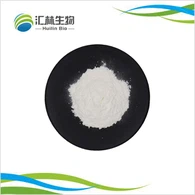
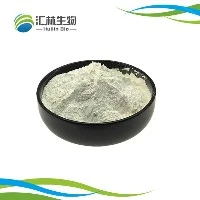
| Appearance | Off-white to white powder | Visual |
| Melting Range | 179 - 183 °C | Capillary method, USP Chapter 741 |
| Identification | Conforms to reference standard (retention time) | HPLC |
| Chemical Tests | / | / |
| Assay | ≥ 98.0% | HPLC, area normalization |
| Water | ≤ 0.5% | Karl Fischer |
| Residue on Ignition | ≤ 0.1% | Gravimetric, USP Chapter 281 |
| Heavy Metals | / | / |
| Heavy Metals (as Pb) | ≤ 10 ppm | ICP-MS |
The data above is for reference only. Please request the latest Certificate of Analysis (COA) for batch-specific data.
An Ester Bridge Between Two Amines
The molecule is built from two halves that are each familiar on their own: 4-aminobenzoic acid supplies the acid and one amine, 4-aminophenol supplies the phenol and the second amine. Esterifying one with the other leaves both amines free, which is why APAB behaves as a diamine in polymerisation even though it contains only one nitrogen per ring.
Both amines are primary and aromatic, so both react with dianhydrides at the same kind of rate. That is what makes the molecule a chain extender rather than a chain stopper: it enters a polyamic acid backbone at two points, and the ester stays in the repeat unit after imidisation.
The ester is the part that carries the difference. It adds a carbonyl to the backbone, increases polarity relative to an ether link, and introduces a bond that is hydrolysed by strong base or hot acid. For a film that will be processed in a polar aprotic solvent and imidised at high temperature, that is acceptable; for a system held in aqueous base, it is a limitation worth knowing before the monomer is committed.
Purity, Melting Range and Colour
Assay is reported by HPLC at ≥ 98.0%. The method resolves the ester from unreacted 4-aminobenzoic acid and 4-aminophenol, which are the two residues that survive the coupling if the charge or the work-up is off, and both of them are visible on a certificate.
Melting range is reported per batch as 179 - 183 °C. The window is wide in absolute terms because the compound melts high; a batch that starts melting below the window usually carries one of those two residues, and a batch that melts sharply at the top of the window is the cleaner one.
Water is limited to ≤ 0.5% and residue on ignition to ≤ 0.1%. Heavy metals are screened by ICP-MS against lead at ≤ 10 ppm. Colour is recorded as off-white to white because both amines oxidise on exposure to light and air, and a darker batch can carry the same assay.
APAB, 4,4′-Oxydianiline and 4-Aminophenol
All three are aromatic amines used in polymer and additive work, and all three are confused in correspondence because two of them share a ring and a name. They differ in how many amine ends they carry and in what joins them, which is what decides the role in a formulation.
| Dimension | APAB (20610-77-9) | 4,4′-Oxydianiline (101-80-4) | 4-Aminophenol (123-30-8) |
| End groups | Two primary aromatic amines | Two primary aromatic amines | One amine, one phenol |
| Bridge between ends | Ester, with a carbonyl in the chain | Ether oxygen | Direct, on a single ring |
| Formula / MW | C13H12N2O2 / 228.25 | C12H12N2O / 200.24 | C6H7NO / 109.13 |
| Physical form | Off-white to white powder | Crystalline solid | Crystalline solid |
| Role in a polyimide route | Diamine that adds an ester to the backbone | Diamine that adds an ether to the backbone | Chain stopper or coupling partner |
| What the certificate should show | Assay, melting range, free acid and free phenol | Assay, melting range, colour | Assay, melting range |
Choose APAB when the backbone needs a polar ester link between two amine ends, for example in a polyester-imide where the ester is part of the design. Choose the ether-bridged diamine when the backbone should stay all-ether and hydrolysis resistance matters more than polarity. Choose 4-aminophenol when a single amine is wanted and the phenol is the reactive end.
Applications
Polyimide and Polyester-Imide Monomers - a diamine that enters the backbone at both ends and leaves an ester link in the repeat unit after imidisation.
Films and Coatings - a monomer evaluated where the backbone needs a polar link rather than an ether, including film work in polar aprotic solvents.
Rubber Antioxidant Intermediates - a difunctional amine used as a starting material where two reactive ends are needed on one molecule.
Optical Brightener Intermediates - an amine component in routes that build conjugated systems from an aromatic acid and an aromatic amine.
Final performance in a polymer or additive system depends on the co-monomer, the imidisation schedule and the solvent; everything on this page describes the material as supplied, not a performance result in a finished film or compound.
FAQ
Q: What does APAB stand for?
A: APAB is the short form of 4-aminophenyl 4-aminobenzoate, CAS 20610-77-9. The same compound appears in catalogues as 4-aminobenzoic acid 4-aminophenyl ester and as 4-aminophenol 4-aminobenzoate; all three names describe one ester built from 4-aminobenzoic acid and 4-aminophenol.
Q: How does it differ from 4,4′-oxydianiline?
A: Both are diamines used in polyimide work, and they differ in the bridge: APAB joins its two amine ends with an ester, ODA joins them with an ether oxygen. The ester adds a carbonyl and greater polarity to the backbone and introduces a bond that strong base or hot acid can hydrolyse; the ether is more resistant to hydrolysis.
Q: Why is an ester bridge used at all?
A: Because it changes the backbone without changing the imidisation chemistry. Both amines still react with dianhydrides as primary aromatic amines; the ester sits in the repeat unit and alters polarity and chain packing, which is the variable a polyester-imide formulation is usually adjusting.
Q: Is the melting range a reliable identity check?
A: It is a useful second check, not a primary one. The window is 179 - 183 °C, which is high enough that a depressed onset points clearly to residual acid or phenol, but identification is by retention time against a reference standard; the melting range is reported alongside it.
Q: What residues appear on the certificate?
A: Unreacted 4-aminobenzoic acid and 4-aminophenol are the two that matter, because either one survives a coupling step that is short on charge or slow on work-up. Both are resolved by the HPLC assay method, and both are reported rather than folded into a single purity figure.
Q: How should the material be stored?
A: Sealed, dry, in the dark at room temperature. Both amines oxidise on exposure to light and air, which shows first as a colour shift rather than as a drop in assay, and moisture promotes slow hydrolysis of the ester.
Q: Which grade is supplied, and can a polymer grade be arranged?
A: The standard supply is a 98 % grade released against the items on this page. For polymerisation work a tighter metal profile or a residual solvent panel can be written into the release specification on request; the material is not reworked, the batch is tested against the additional items.
Q: What documentation is issued with each batch?
A: A batch-specific Certificate of Analysis, a technical data sheet and a safety data sheet. The COA reports assay, melting range, water, residue on ignition and heavy metals, with the measured value for the lot rather than a conformance statement.
Supply, Documentation and Contact
Xi'an Huilin Bio-tech Co., Ltd. supplies 4-aminophenyl 4-aminobenzoate as an off-white to white powder in 1 kg foil bags and 25 kg fibre drums. Each shipment carries a batch-specific COA, a TDS and an SDS, and the COA reports the items listed above with their measured values.
Custom specifications, including a tighter metal profile, a residual solvent panel or a different pack size, are available on request. Documentation to support import requirements in your market is available on request.
Contact: sales@huilinbio-tech.com
The information on this page is provided for evaluation by qualified technical and regulatory personnel. Regulatory status and permitted uses must be confirmed against the regulation that applies to your product and your market.
Hot Tags: 4-aminophenyl 4-aminobenzoate powder, China, suppliers, manufacturers, factory, wholesale, buy, price, bulk, pure, natural, high quality, in stock, for sale