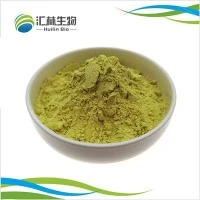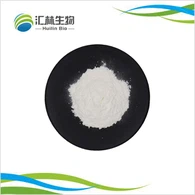

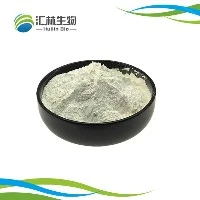
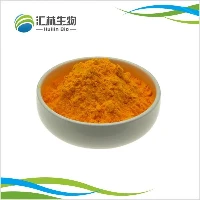


Xi'an Huilin Bio-Tech Co., Ltd. is one of the leading manufacturers and suppliers of sodium taurodeoxycholate powder in China. With abundant experience, we are committed to providing high quality natural products with competitive price. Please feel free to wholesale bulk pure sodium taurodeoxycholate powder for sale here from our factory.
A bile salt detergent rather than a bulk acid, sodium taurodeoxycholate arrives as a white to almost white crystalline powder - 521.7 g/mol on the anhydrous basis, CAS 1180-95-6, supplied at 97 %, 98 % and 99 %.
It has one job, and everything else on this page is a consequence of it: it dissolves membranes. One face of the steroid is fat-soluble, the taurine sulfonate on the other face carries a negative charge, and the molecule parks itself at an interface until that interface is gone. Lysis buffers, solubilisation buffers and membrane-protein preps are the same request in different words.
What decides whether it works is rarely the assay figure. It is whether the stock was above the critical micelle concentration when it was diluted, and whether the mass on the balance accounted for the water the lot carries. Both are covered below, along with the three places where the name tells you less than it appears to.
What It Does in a Buffer
Above a threshold concentration the molecules assemble into micelles - clusters with the fat-soluble face inward and the charged sulfonate outward. Those micelles are the working unit: they take lipids and integral membrane proteins into a water-compatible shell and hold them there.
Below that threshold there are no micelles, only free molecules, and the material stops behaving as a detergent. That is the ordinary explanation for a solubilisation that worked one day and failed the next: the stock was diluted past the point of assembly during buffer make-up. Keeping the working concentration above the threshold matters more than any other single variable in the protocol.
The same property explains the handling. A solution of this salt foams, wets glass and draws foam into a pipette tip; volumes read low in a cylinder and filters wet through faster than expected.
The Two Numbers That Decide the Purchase
Whichever grade is ordered, two figures on the certificate decide whether the weighing comes out right.
Water content. Commercial lots are often hydrates, so a gram of powder is not a gram of salt. This grade is specified on the anhydrous basis and reports water content per batch. At 5 % water, 1 g of powder carries about 0.95 g of salt; making one litre of 0.5 M - 260.9 g of salt - takes about 274.6 g of powder rather than 260.9 g. Skip that step and every buffer from the drum is under-concentrated.
Grade. The three release limits are one article, and they are not interchangeable inside a validated method.
| Grade | Assay limit | What the difference is |
| 97 % | ≥ 97.0 % | Routine solubilisation, where the detergent is an ingredient rather than an analyte |
| 98 % | ≥ 98.0 % | Middle of the range; general bulk supply |
| 99 % | ≥ 99.0 % | Method development and reference work, where the lot's purity is part of the measurement |
The gap between 97 % and 99 % shows up late: a shoulder on a peak, or background in a blank, weeks after the drum was accepted.
Identity and Certificate
| Item | Value | Item | Value |
| CAS | 1180-95-6 | UNII | 5PE424S83L |
| Molecular formula / weight | C26H44NNaO6S / 521.7 (anhydrous) | Appearance | White to almost white crystalline powder |
| Melting point | 168 °C, with decomposition | Specific rotation | +33° (c = 3, water) |
| Water solubility | 0.5 M at 20 °C, about 260 g/L | Grade | 97 %, 98 % or 99 % by HPLC |
| Structural class | Sodium salt of a taurine-conjugated secondary bile acid | Chemical name | Sodium 2-[[(3α,5β,12α)-3,12-dihydroxy-24-oxocholan-24-yl]amino]ethane-1-sulfonate |
Two questions have to be answered for sodium taurodeoxycholate, and most paperwork answers only the first. Which molecule: retention time and the infrared spectrum. Which counter-ion: a sodium determination, frequently absent from certificates that otherwise look complete.
The rotation of +33° is measured on the salt. It is not comparable with the figure printed for the free acid, and anything that swaps them is describing a different solid.
Specification and Release Basis
| Item | Specification | Test Method |
| Assay, sodium taurodeoxycholate | ≥ 97.0 % / ≥ 98.0 % / ≥ 99.0 %, by grade | HPLC |
| Appearance | White to almost white crystalline powder | Visual |
| Identification | IR spectrum corresponds to reference; retention time corresponds | IR; HPLC |
| Sodium content | Reported per batch | Ion chromatography or flame photometry |
| Specific rotation | Reported per batch, literature +33° (c = 3, water) | Polarimetry |
| Water content | Reported per batch | Karl Fischer or gravimetric |
| pH, 5 % solution | Reported per batch | pH meter |
| Heavy metals, as Pb | ≤ 10 mg/kg | ICP-MS |
| Lead, cadmium, mercury | Pb ≤ 2; Cd ≤ 1; Hg ≤ 0.5 mg/kg | ICP-MS |
| Arsenic | ≤ 2 mg/kg | ICP-MS |
| Total plate count | < 1,000 CFU/g | Plate count |
| Yeast and mould | < 100 CFU/g | Plate count |
| E. coli and Salmonella | Negative for both | Culture |
| Particle size | ≥ 95 % through 80 mesh | Sieve |
Release is against the row for the grade ordered, and the lot certificate is the record. Tighter limits are available on request.
Handling in Practice
Weigh in a fume hood or a balance enclosure. The powder is an irritant - GHS07, H315 for skin, H319 for eyes, H335 for the respiratory tract - and a fine dust of a detergent is more unpleasant than the label suggests. Gloves and eye protection throughout.
Sodium taurodeoxycholate dissolves directly into buffer; no neutralising step is needed, which is the practical difference from the free acid. Solutions are filtered rather than autoclaved and are best prepared close to the day of use. Ethanol dissolves the salt too; chloroform and ether do not, which is the boundary between the systems where it works and where it will not.
Keep the container closed. The lot may be a hydrate, so an open drum in a humid room gains water and quietly changes the conversion above.
Where It Is Used
Membrane protein work. Extraction of integral membrane proteins into solution without the denaturing force of SDS.
Mixed micelles and bilayer models. A fixed charge and a measurable critical micelle concentration make the salt a reference detergent for bile-salt–lipid systems.
Bile acid panels. Conjugated bile acids are analytes in clinical and metabolic work; a characterised lot is what the calibration curve is built from.
Method development. Where a standard has to be defensible, the 99 % grade and a stated assay route are what make it so.
What It Is Not
Not a drug product, and not supplied for ingestion, injection or any finished product.
Three substances are regularly mistaken for sodium taurodeoxycholate. The free acid, CAS 516-50-7 at 499.71, is the same molecule without the sodium and needs neutralising before it behaves the same way. The 7α isomer, sodium taurochenodeoxycholate, shares the formula and the mass and separates only chromatographically. The 7β compound, tauroursodeoxycholic acid at 14605-22-2, is a different molecule with its own regulatory history.
The toxicology is on record as well: the epidemiological literature associates higher circulating and faecal concentrations of conjugated bile acids, this one included, with colorectal cancer - the 2022 prospective study in JNCI Cancer Spectrum and the 2023 review of bile acids as carcinogens in the gastrointestinal tract are the usual citations. That work concerns endogenous exposure rather than handling powder, and it is why the material sits in the biochemical research range.
COA, TDS and SDS travel with the article; origin statements or additional testing are prepared on request.
Questions Buyers Ask Before the First Order
Q: How much powder makes one litre of 0.5 M?
A: About 261 g of salt on the anhydrous basis. With a reported 5 % water, weigh about 275 g of powder - the water is part of the mass being measured.
Q: Salt or acid - which CAS belongs to my method?
A: 1180-95-6 is sodium taurodeoxycholate; 516-50-7 is the free acid at 499.71, poorly soluble. Protocols do not transfer between them by mass.
Q: The label says TDCA - is that the salt?
A: Strictly no. TDCA is the free acid; trade usage stretches it over the salt. The CAS number on the certificate is what settles it.
Q: Why do two suppliers show different percentages for the same product?
A: Different calculations - chromatographic purity against acidimetric content - and different purification depth. Certificates compare only when both state the route and the standard.
Q: Will the detergent interfere with my assay?
A: Yes, in two places. The conjugate sits at masses close to PFOS and has been misread as it in untargeted LC-MS screens; and a bile salt carried into a colorimetric protein assay or a gel changes the result.
Q: What comes with a batch?
A: COA, TDS and SDS, with the assay route, water content and rotation stated on the certificate.
Supplier
Xi'an Huilin Bio-tech Co., Ltd. supplies sodium taurodeoxycholate in 97 %, 98 % and 99 % grades, alongside deoxycholic acid, ursodeoxycholic acid, chenodeoxycholic acid and hyodeoxycholic acid, from Shaanxi. Material is bought against a written specification rather than a catalogue entry, and each batch leaves with the certificate that carries the figures shown above. Documentation to support import requirements in the destination market is available on request.
This page describes a raw material supplied to laboratories and to manufacturers for research and industrial use. It is not a finished product and it is not a medicinal product. Final application and the regulatory determination in the destination market belong to the manufacturer of the finished product.
Hot Tags: sodium taurodeoxycholate powder, China, suppliers, manufacturers, factory, wholesale, buy, price, bulk, pure, natural, high quality, in stock, for sale