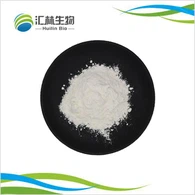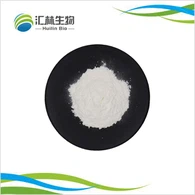


Xi'an Huilin Bio-Tech Co., Ltd. is one of the leading manufacturers and suppliers of 3,3'-dihydroxybenzidine powder in China. With abundant experience, we are committed to providing high quality natural products with competitive price. Please feel free to wholesale bulk pure 3,3'-dihydroxybenzidine powder for sale here from our factory.
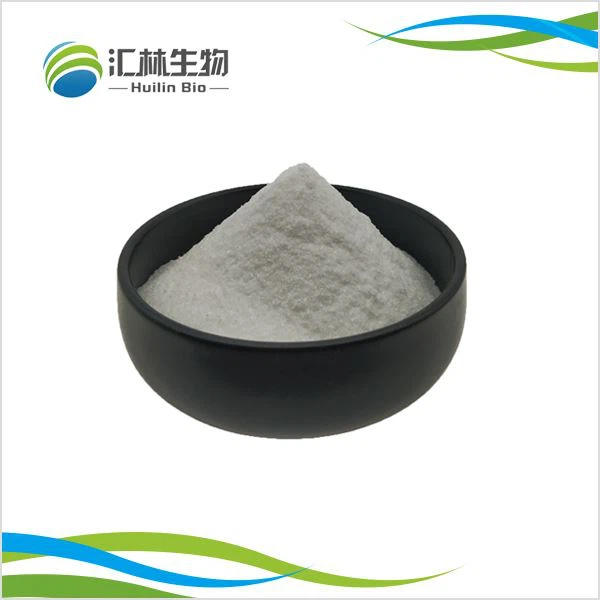
3,3'-Dihydroxybenzidine (CAS 2373-98-0) is a biphenyl carrying two amines and two hydroxyls, each hydroxyl sitting next to an amine on the same ring. It is supplied as a white to grey to brown powder, C12H12N2O2, molecular weight 216.24, melting at 292 °C.
Polymer groups take it as the diamine for polybenzoxazole precursors and for hydroxyl-bearing polyimides; dye producers take it as a coupling component. The hydroxyls are the reason it exists as a separate product rather than a substitute for the unsubstituted diamine.
The arrangement is what does the work: an amine and a hydroxyl ortho to each other can close a ring together once the polymer backbone is set, and that closure is the difference between an imide that stays an imide and one that becomes a benzoxazole.
Specification
| Item | Specification | Test Method |
| Physical Description | / | / |
| Appearance | White to grey to brown powder | Visual |
| Melting Range | 292 °C (reference) | Capillary method, USP Chapter 741 |
| Identification | Conforms to reference standard (retention time) | HPLC |
| Chemical Tests | / | / |
| Assay | ≥ 98.0% | HPLC, area normalization |
| Water | ≤ 0.5% | Karl Fischer |
| Residue on Ignition | ≤ 0.1% | Gravimetric, USP Chapter 281 |
| Heavy Metals | / | / |
| Heavy Metals (as Pb) | ≤ 10 ppm | ICP-MS |
The table states what we hold a batch to; what a batch actually measured is on its certificate.
Two Hydroxyls, One Purpose
A conventional aromatic diamine gives a polyimide: the amines react with a dianhydride, the chain grows, and imidisation closes the ring between amine and acid. Nothing further happens on heating. Place a hydroxyl next to each amine, and a second closure becomes possible - the hydroxyl can attack the imide carbonyl, expel water, and form a benzoxazole ring fused to the original chain.
That second closure is why the monomer is bought. It does not change the first step: both amines are still primary and aromatic, and they react with dianhydrides at the rate the route already assumes. What changes is what the finished material can be converted into, and at what temperature.
The hydroxyls also change solubility. They hydrogen-bond with polar aprotic solvents, which is why the monomer dissolves in NMP on warming even though it is practically insoluble in water. For a polymerisation run in NMP that is the property that matters most on the day of use.
Colour Drift and the 292 °C Melt
Appearance is specified as a range rather than a single colour, and the range is honest: white, grey and brown all occur in commercial material. The colour comes from slow oxidation of the aromatic amines on the surface of the powder, not from a different compound, and it moves with storage history more than with assay.
Melting at 292 °C is high enough that the value functions as an identity check rather than a processing parameter. Very few routes melt this monomer; most dissolve it. A batch whose onset sits well below the reference points to residual solvent or to incompletely coupled material, both of which depress the melt.
Water is held at ≤ 0.5% and residue on ignition at ≤ 0.1%. Because the material is stored as a powder with two oxidisable amines, the pack matters: a sealed bag under inert gas where the pack allows slows the colour drift that a repeatedly opened drum accelerates.
Three Routes, Three Different Requirements
The same monomer is bought for three purposes, and each one puts a different line of the specification under pressure. The table sets out which.
| Route | What the monomer contributes | What to confirm on the certificate |
| Polybenzoxazole precursor | Both amines for chain growth, both hydroxyls for the later ring closure | Assay and water, since residual moisture competes with the condensation |
| Hydroxyl-containing polyimide | Amines for the backbone, hydroxyls for later functionalisation or crosslinking | Assay and colour, because the hydroxyl content per unit weight follows from purity |
| Dye intermediate | A coupling component with two positions available | Assay and the level of partially coupled by-product, which shifts the colour yield |
In each case the specification is the same document; what differs is which line is read first. That is worth knowing before a batch is rejected over an item that the route in question does not depend on.
Applications
Polybenzoxazole Precursors - the diamine that carries both the amines for chain growth and the hydroxyls for the later ring closure that converts the chain into a benzoxazole.
Hydroxyl-Bearing Polyimides - a monomer that leaves reactive hydroxyls on the finished backbone, available for later functionalisation rather than consumed in the imidisation.
Dye Intermediates - a coupling component with two open positions, used where a biphenyl core is wanted in the chromophore.
Polymer Research - a comparison point against the unsubstituted diamine, used to isolate what the two hydroxyls change in thermal behaviour.
What a polymer or a dye run delivers depends on the co-monomer, the thermal profile and the solvent; this page describes the monomer, not the outcome.
FAQ
Q: What do the two hydroxyls actually do?
A: They open a second ring closure. The amines form the polyimide backbone as usual; on further heating, each hydroxyl can attack the adjacent imide carbonyl, expel water and close a benzoxazole ring. The monomer is bought for that second step, not for the first.
Q: Why does the appearance range run from white to brown?
A: Because the two aromatic amines oxidise slowly at the surface of the powder. The colour records storage and handling history; assay and water record the material itself. A brown batch and a white batch can carry the same assay, which is why the specification gives a range rather than a single colour.
Q: Is 292 °C a processing temperature?
A: No. Almost every route dissolves the monomer rather than melting it; the melt is reported as an identity check. An onset well below the reference value indicates residual solvent or incompletely coupled material, both of which depress the melting point.
Q: What does it dissolve in, and what does not dissolve it?
A: Practically insoluble in water, soluble in polar aprotic solvents such as NMP on warming. For a polymerisation run that is the number that matters, because the monomer has to go into solution before the dianhydride is added.
Q: How is the material stored once a drum is opened?
A: Sealed, dry and in the dark, under inert gas where the pack allows. Both amines oxidise, and the change shows first as colour rather than as a drop in assay; a bag that is opened repeatedly will drift further than one opened once.
Q: Which impurities appear on the certificate?
A: Partially coupled material and residual solvent are the two that depress the melt and shift the dye yield. Both are visible in the HPLC assay as peaks resolved from the main component, which is why assay is reported by area normalisation at ≥ 98.0%.
Q: Can a polymer grade with a tighter metal profile be supplied?
A: Yes. A tighter metal screen or a residual solvent panel under ICH Q3C can be written into the release specification before the batch is made; the material is not reworked afterwards, it is tested against the additional items.
Supply, Documentation and Contact
Packed as a white to grey to brown powder, 1 kg to a foil bag and 25 kg to a fibre drum, from Xi'an. Each pack is filled after release, so the lot number on the label and the lot number on the certificate are the same one.
For polymerisation work the release specification can carry a metal profile or a residual solvent panel before packing; both are arranged per order. Tell us the destination and the import documents can be assembled.
Contact: sales@huilinbio-tech.com
Material description only; permitted applications differ by jurisdiction and are set there.
Hot Tags: 3,3'-dihydroxybenzidine powder, China, suppliers, manufacturers, factory, wholesale, buy, price, bulk, pure, natural, high quality, in stock, for sale