



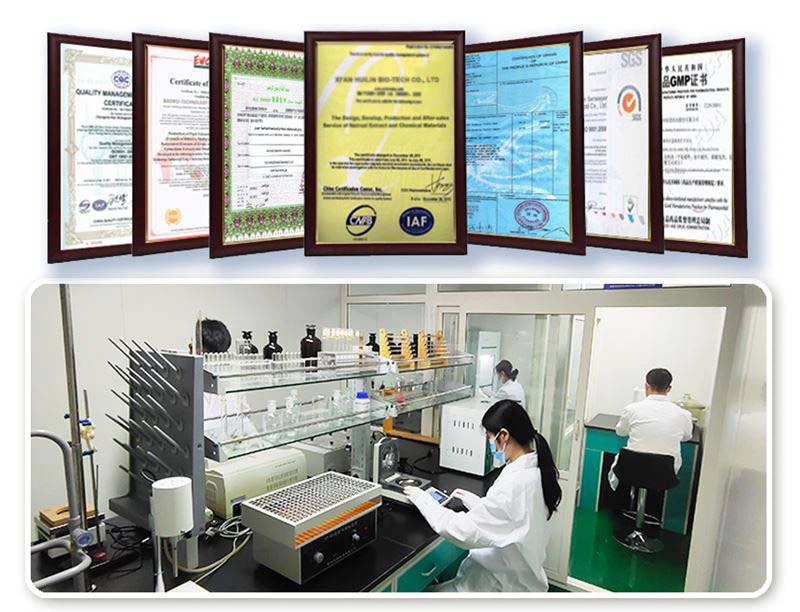
Xi'an Huilin Bio-Tech Co., Ltd. is one of the leading manufacturers and suppliers of melibiose powder in China. With abundant experience, we are committed to providing high quality natural products with competitive price. Please feel free to wholesale bulk pure melibiose powder for sale here from our factory.
Introduction
Melibiose is a naturally occurring reducing disaccharide composed of one galactose and one glucose molecule linked by an α-1,6-glycosidic bond. It is a distinctive component of plant honeydew and certain legume seeds. Unlike the more common sucrose (α-1,2 linkage) or lactose (β-1,4 linkage), its unique α-1,6 bond makes it resistant to hydrolysis by most mammalian digestive enzymes but selectively fermentable by specific gut microbiota, underpinning its value as a specialized prebiotic and research tool in microbiology and food science.
Physical & Chemical Parameters
| Parameter | Specification / Value | Notes / Significance |
|---|---|---|
| Molecular Weight | 342.30 g/mol | -- |
| Appearance | White to off-white crystalline powder | -- |
| Melting Point | 180 - 185 °C | -- |
| Specific Optical Rotation [α]²⁰/D | +129° to +132° (c=4 in H₂O) | Key identifier for purity and conformation. |
| Solubility | Freely soluble in water. Very slightly soluble in ethanol. | Essential for preparing solutions for biological assays. |
| Reducing Sugar Property | Yes. Contains a free anomeric carbon (hemiacetal) on the glucose unit. | Participates in the Maillard reaction; gives positive test with Fehling's/Benedict's reagent. |
Mechanism of Action
The core bioactivity of Melibiose stems from its selective fermentability, which drives its prebiotic and research applications.
- Resistance to Upper GI Digestion: The α-1,6 glycosidic bond of melibiose is not hydrolyzed by human salivary or pancreatic enzymes (e.g., amylase, sucrase-isomaltase, lactase). Therefore, it passes through the stomach and small intestine intact, reaching the colon undigested.
- Selective Microbial Fermentation (Prebiotic Effect): In the large intestine, melibiose serves as a preferred carbon source for specific beneficial bacteria, notably certain strains of Bifidobacteria and Lactobacilli, which possess the enzyme α-galactosidase (melibiase). This enzyme cleaves the α-1,6 bond, releasing galactose and glucose for bacterial metabolism.
- Production of Beneficial Metabolites: The fermentation of melibiose by these bacteria yields short-chain fatty acids (SCFAs), primarily acetate, propionate, and butyrate. SCFAs lower colonic pH, inhibit pathogenic bacteria, provide energy for colonocytes, and exert systemic anti-inflammatory and metabolic benefits.
- Research Tool in Microbiology: Melibiose is a differential carbohydrate in microbial identification. For example, the ability to ferment melibiose is a key test to distinguish Escherichia coli (melibiose-positive) from Salmonella species (often negative).
Key Benefits & Efficacy
- Targeted Prebiotic Activity: Selectively stimulates the growth of beneficial α-galactosidase-producing bacteria (e.g., certain bifidobacteria), supporting a healthier gut microbiome balance.
- Stable & Soluble: Highly stable under normal storage conditions and readily soluble in water, facilitating easy incorporation into various liquid and solid formulations.
- Mild Sweetness: Provides approximately 30-40% of the sweetness of sucrose, allowing it to contribute to flavor without excessive sweetness in functional foods and beverages.
- Valuable Research Substrate: An essential reagent for studying carbohydrate metabolism, microbial ecology, enzyme kinetics (α-galactosidase), and as a carbon source in selective culture media.
Primary Applications
| Industry/Field | Application Examples | Purpose / Mechanism |
|---|---|---|
| Functional Food & Nutraceuticals | Prebiotic supplements, symbiotic formulations, functional beverages, and healthy snacks. | Delivers intact to the colon to selectively nourish beneficial gut bacteria, promoting digestive health. |
| Microbiological Research & Diagnostics | Component of selective/differential culture media (e.g., for E. coli); substrate for α-galactosidase activity assays. | Used to identify and enumerate specific microorganisms based on their ability to ferment melibiose. |
| Biochemical & Nutritional Studies | Research on carbohydrate digestion, fermentable oligosaccharides, and gut microbiota modulation. | Serves as a model α-linked disaccharide to study fermentation dynamics and prebiotic efficacy. |
| Food Science | Investigational ingredient for reducing sugar content while maintaining functional properties. | Contributes to browning (Maillard reaction) and can influence texture and moisture retention. |
FAQ: Frequently Asked Questions
Q: Is Melibiose a reducing sugar?
A: Yes, melibiose is a reducing sugar. The glucose moiety in the molecule has a free anomeric carbon (in hemiacetal form), allowing it to reduce agents like Fehling's solution and participate in Maillard browning reactions.
Q: Where is Melibiose found in plants?
A: Melibiose is a natural component of plant aphid honeydew and is found in the seeds of some legumes. It is also a partial hydrolysis product of larger α-galactosides like raffinose and stachyose.
Q: What is the structural difference between Melibiose and Lactose?
A: Both are disaccharides of galactose and glucose, but their glycosidic linkages differ.
- Melibiose: Galactose (α1→6) Glucose
- Lactose: Galactose (β1→4) Glucose
This structural difference is why lactose is hydrolyzed by human lactase, while melibiose is not.
Q: How does Melibiose compare to Raffinose or other prebiotics?
A: Melibiose is a disaccharide, while raffinose is a trisaccharide (Gal-Glu-Fru). Both are α-galactosides and act as prebiotics. Melibiose offers a simpler, more defined structure for research and may have different fermentation kinetics compared to larger oligosaccharides.
Q: What is Gentiobiose, and how is it different?
A: Gentiobiose is also a glucose disaccharide, but it has a β-1,6 linkage (Glc β1→6 Glc). Melibiose has an α-1,6 linkage between galactose and glucose. They are structural isomers with different biochemical properties and enzyme specificities.
Act Now
Enhance your functional food products or advance your microbiological research with our premium-grade Melibiose powder. We guarantee high purity, batch-to-batch consistency, and provide full technical documentation.
Contact our sales team today to:
- Request a detailed Certificate of Analysis (CoA).
- Discuss your specific application and receive formulation support.
- Get a competitive quote for your R&D or commercial-scale needs.
Invest in a specialized ingredient that bridges gut health science and product innovation.
Please contact us at ella.zhang@huilinbio-tech.com.


Hot Tags: melibiose powder, China, suppliers, manufacturers, factory, wholesale, buy, price, bulk, pure, natural, high quality, in stock, for sale


