




Can saw palmetto extract powder be used topically? Yes - one randomized trial applied a 20% saw palmetto oil lotion for 16 weeks, cut hair fall 22.19% from baseline while placebo worsened, and left serum DHT unchanged. The catch is loading: matching that dose with a 45% powder puts 37.8% of the batch in the jar.

1. The Short Answer
The answer is yes, subject to three conditions that decide whether the formula does anything at all.
› The form: a standardized extract with a stated total fatty acid assay measured by GC, not milled fruit
› The loading: enough extract in the base to put a measurable fatty acid load on the scalp per application
› The vehicle: an emulsion or anhydrous base that keeps the fatty acids available at the skin surface
Each condition can fail on its own. A 2% addition of saw palmetto extract powder to a gel serum fails the second condition by a wide margin, and no amount of marketing language repairs it. What follows is the arithmetic behind that sentence, because a formulator working with saw palmetto needs numbers rather than reassurance.
2. What Skin Actually Lets Through
Molecular size is not the obstacle for saw palmetto; vehicle and lipophilicity are. The 500 Dalton rule, set out by Bos and Meinardi in Experimental Dermatology in 2000, holds that compounds above roughly 500 Da penetrate intact stratum corneum poorly, and the principal fatty acids and the main sterol all sit below that line.
| Constituent | Formula | Molecular weight | Position against the 500 Da rule |
| Lauric acid | C12H24O2 | 200.32 | Well inside |
| Oleic acid | C18H34O2 | 282.5 | Well inside |
| β-Sitosterol | C29H50O | 414.7 | Inside, but close to the limit |
The real constraint runs the other way. The saw palmetto fatty acids are lipophilic molecules against a lipophilic outer layer, so they partition into stratum corneum lipids and stay near the surface rather than crossing into the viable epidermis. That is adequate for a follicle target at the infundibulum and inadequate for anything deeper, which is why the finished base rather than the powder decides how much arrives.
3. What the Human Studies Measured
One randomized, placebo-controlled trial has tested a topical saw palmetto product against placebo in androgenetic alopecia, and it delivered the extract as an oil at 20% in a lotion. Sudeep and colleagues published it in Clinical, Cosmetic and Investigational Dermatology in 2023: 80 men and women, four arms, 16 weeks, roughly 5 mL applied once daily and washed off after 30 minutes.
Hair fall fell 22.19% from baseline by week 16 in the topical arm while it rose in the placebo arm, with the between-group difference significant at p<0.001. Hair density rose 7.61% (p<0.001). Hair thickness and the anagen to telogen ratio did not move significantly. Serum dihydrotestosterone did not change significantly in the topical arm, while the oral arm of the same study showed a marked reduction - the most useful safety finding in the topical literature.
| Study | Design | Topical result | What it does not show |
| Sudeep, 2023 | Randomized, double-blind, placebo-controlled, 80 subjects, 16 weeks | Hair fall −22.19% from baseline; density +7.61% | No change in thickness or anagen to telogen ratio |
| Wessagowit, 2016 | Open-label, within-subject, no placebo, 50 men, 24 weeks | Hair count and terminal count rose at weeks 12 and 24 | No control arm, so regression to the mean is not excluded |
| Evron, 2020 | Systematic review, 5 randomized trials and 2 cohorts, oral and topical pooled | Density improved in 83.3% of patients; 60% overall hair quality | Nothing about route of use, because oral and topical were merged |
The open-label work points the same way with weaker design. Wessagowit and colleagues treated 50 men for 24 weeks without a placebo arm and reported rising hair counts at weeks 12 and 24, with gains flattening once a concentrated product was withdrawn at week 4. The authors framed topical use as an option for men who cannot tolerate standard medication, which is a positioning statement rather than an efficacy claim.
The strongest recent randomized data are oral, and that matters for anyone writing a label. Ablon reported a six-month study of 40 active and 20 placebo subjects in the Journal of Cosmetic Dermatology in 2026, with total terminal hair count changing +18.6 against −10.1 and total hair density +25.1 against −12.2. Those numbers belong to a capsule, and citing them beside a serum is a claim defect rather than a shortcut.
4. Potency Varies More Than the Assay Suggests
Two extracts sold under the same name can differ by more than seventyfold in 5-alpha-reductase inhibition, and the fatty acid total will not tell you which one you have. Broadley and colleagues measured this in 2026 in International Journal of Cosmetic Science, using primary human hair follicle dermal papilla cells and full-length follicles kept alive ex vivo.
| Material tested | 5-alpha-reductase IC50 | Material needed for the same inhibition |
| Bioactive free fatty acid extract | 0.39 µg/mL | 1× (reference) |
| Lipidosterolic extract meeting the USP monograph | 9.1 µg/mL | ≈23× |
| Standard commercial saw palmetto extract | 29.1 µg/mL | ≈75× |
That study also found effects which do not depend on testosterone: the extract prolonged anagen in follicles cultured without androgen and reduced a marker of culture stress. So 5-alpha-reductase inhibition is part of the mechanism rather than the whole of it, and a supplier who quotes one number as the specification is describing half a material.
For a buyer of saw palmetto extract the consequence is direct. A fatty acid figure says what fraction of the powder is lipid. It says nothing about the free fatty acid profile, the sterol content or the potency. Ask for the GC chromatogram with individual fatty acids, ask for β-sitosterol, and treat a 25% to 45% range as a range that has to be fixed per lot before the batch record is signed.
5. The Powder-to-Lotion Arithmetic
Matching the published topical dose with a saw palmetto extract powder requires a loading no lotion can carry. The trial lotion held 20% of an extract containing at least 85% total fatty acids, which puts roughly 0.85 g of fatty acids into each 5 mL application. Working back from that figure gives the two rows below.
| Powder grade | Total fatty acids | Powder per 5 mL to deliver 0.85 g | Share of the finished lotion |
| High assay | 45% | 1.89 g | 37.8% |
| Low assay | 25% | 3.40 g | 68.0% |
Neither figure is a formula anyone can emulsify, which is why the published work used an oil. A powder at 38% to 68% of the batch leaves no room for water, emulsifier, thickener or preservative, and the texture fails before the efficacy question arises. Three routes remain honest.
› Reduce the fatty acid target and accept a smaller effect than the trial reported
› Dissolve the powder into an oil or glyceride phase and build an anhydrous serum around it
› Use a lower dose and generate efficacy data on the finished formula
The third route is the only one that supports a claim, and it is also the cheapest to defend. Ingredient data does not transfer to a finished product automatically, and in the European Union that principle sits in the claim regulation rather than in guidance.
6. Where the Topical Evidence Stops
Sebum is the one skin endpoint with a human number attached, and that number comes from an uncontrolled study. Dobrev reported in the Journal of Cosmetic Dermatology in 2007 that a cream containing a polyphenol-rich saw palmetto extract with sesame and argan oil cut casual sebum by 20% and oily spot area by 42% over four weeks in 20 volunteers, with no control arm and no way to separate the three ingredients. Patents from the mid-1980s describe topical compositions based on the saw palmetto fruit's lipid fraction for acne, and patent text is not efficacy data.
Two further limits on topical saw palmetto belong in the file. The randomized trial found no significant change in hair thickness or in the anagen to telogen ratio, so a density claim is supportable and a growth-cycle claim is not. And the absence of a systemic dihydrotestosterone change, which is good news for tolerability, also removes any basis for presenting a topical product as a hormone modulator.
Tolerability in the trial was assessed by investigators and subjects, with no serious adverse events, a 30-minute contact time and a wash afterwards. That protocol detail is worth copying: a short-contact or rinse-off format cuts both irritation risk and the cosmetic burden of a high oil load.
7. What You Can Say, and What Makes It a Drug
In the United States, a saw palmetto product that claims to restore hair growth or to treat acne is a drug, whatever the ingredient is derived from. The Food and Drug Administration names restoring hair growth among the claims that establish a drug intended use, regardless of how the product is marketed.
In the European Union the boundary appears from two directions. The European Medicines Agency holds an herbal monograph for saw palmetto fruit covering the symptomatic treatment of benign prostatic hyperplasia, which is a medicinal use and one a cosmetic cannot borrow. Separately, Regulation (EU) No 655/2013 requires that a claim extrapolating ingredient properties to a finished product be supported by evidence, including demonstration that the ingredient is present at an effective concentration.
| Wording | United States | European Union |
| Restores hair growth | Drug claim; named by FDA as an example | Outside cosmetic claims |
| Treats acne or dandruff | Drug claim | Outside cosmetic claims |
| Blocks DHT | Structure or function claim, therefore a drug | Not supportable on a cosmetic |
| Improves the look of hair density | Cosmetic if substantiated | Cosmetic if substantiated on the finished product |
| Reduces the appearance of shedding | Cosmetic if substantiated | Cosmetic if substantiated on the finished product |
The wording that survives is about appearance and is demonstrated on the batch you sell, not on the raw material you bought. A comb count with standardized photography on 30 subjects is a modest budget line, and it converts an unlicensed claim into a defensible one.
8. Buying and Handling the Powder
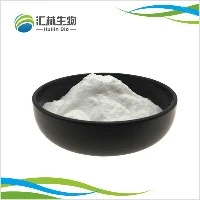
Specify the saw palmetto extract powder by assay convention first, because two purchase orders can carry the same number and describe different products. The standardized grade is 25% to 45% total fatty acids by GC, a white powder from an oil-package process, with a 24-month shelf life in the unopened container and a 25 kg drum as the standard pack. The fruit powder is the separate milled-berry line at 80 mesh from 1 kg, a different material with a different fatty acid load.
› Total fatty acids by GC, with the individual fatty acid profile listed rather than one total
› β-Sitosterol content, since the published topical work standardized on it at 2% to 3%
› Loss on drying, ash, heavy metals, pesticide residues and microbiological limits per lot
› Residual solvent declaration, because the extraction route decides what the GC baseline looks like
In the plant, disperse the powder into the oil phase at 60 to 70 °C before emulsification and keep it out of the water phase, where the fatty acids will separate. Add tocopherol or another oil-soluble antioxidant, since unsaturated fatty acids oxidize and the resulting odour will be blamed on the extract. If the base is anhydrous, the preservative question disappears and the loading problem becomes easier at the same time.
The 24-month shelf life applies to the sealed drum. Once dispersed in a lotion, stability belongs to the emulsion, and a three-month run at 40 °C is the minimum evidence to hold before committing to a launch date. A full specification and COA checklist for the 45% grade is set out separately, including the comparison against the USP monograph floor of 80% total fatty acids.
9. Frequently Asked Questions
Q: Can saw palmetto extract powder be used topically?
A: Yes, in a base that can carry enough of it. A randomized trial applied a 20% saw palmetto oil lotion once daily for 16 weeks and reduced hair fall by 22.19% from baseline, while hair fall rose in the placebo arm. A dry powder at 2% in a gel serum is a different formula with no equivalent evidence behind it.
Q: How much extract powder does a topical formula need?
A: To match the published dose you would need 1.89 g per 5 mL at a 45% fatty acid assay, or 3.40 g at 25%, which is 37.8% and 68.0% of the lotion. Neither is practical, so most brands set a lower fatty acid target, move to an anhydrous base, or generate their own data.
Q: Does topical saw palmetto lower DHT in the blood?
A: The randomized trial found no significant serum dihydrotestosterone change in the topical arm, while its oral arm showed a marked reduction. That is the tolerability argument for topical use, and it also removes any basis for presenting a topical product as a hormone modulator.
Q: Does it reduce scalp oil or help with acne?
A: One uncontrolled four-week study in 20 volunteers found a 20% fall in casual sebum from a cream that also contained sesame and argan oil, so saw palmetto cannot be isolated from the result. No controlled trial of the extract alone has measured sebum or acne lesions, and treating acne is a drug claim in the United States anyway.
Q: Is the 45% fatty acid grade the strongest one available?
A: Not necessarily, and the number does not answer the potency question. Three extracts compared in one 2026 study differed by about 75-fold in 5-alpha-reductase inhibition, with IC50 values of 0.39, 9.1 and 29.1 micrograms per millilitre. Ask for the fatty acid profile and the sterol figure, not only the total.
Q: What claims can a hair serum with this extract carry?
A: Appearance claims you have substantiated on the finished formula, such as improving the look of density or reducing the appearance of shedding. Restoring hair growth or blocking DHT makes the product a drug in the United States, and in the European Union an ingredient claim cannot be projected onto a finished product without evidence of an effective concentration.
Xi'an Huilin Bio-tech Co., Ltd. supplies saw palmetto extract powder at 25% to 45% total fatty acids, assayed by GC, alongside the milled fruit line and the wider saw palmetto fruit powder range. Send the fatty acid target, the sterol figure and the base you intend to build, and we will quote the lot against its own certificate of analysis.
Sources
-
1. Sudeep HV, Rashmi S, Jestin TV, Richards A, Gouthamchandra K, Shyamprasad K. Oral and topical administration of a standardized saw palmetto oil reduces hair fall and improves hair growth in androgenetic alopecia subjects: a 16-week randomized, placebo-controlled study. Clin Cosmet Investig Dermatol. 2023;16:3251-3266. doi
-
2. Wessagowit V, Tangjaturonrusamee C, Kootiratrakarn T, et al. Treatment of male androgenetic alopecia with topical products containing Serenoa repens extract. Australas J Dermatol. 2016;57(3):e76-e82. doi
-
3. Evron E, Juhasz M, Babadjouni A, Mesinkovska NA. Natural hair supplement: friend or foe? Saw palmetto, a systematic review in alopecia. Skin Appendage Disord. 2020;6(6):329-337. doi
-
4. Broadley D, Le Riche A, Guénin S, et al. A proprietary lipidosterolic extract of Serenoa repens promotes hair growth through mechanisms that extend beyond 5-alpha reductase inhibition. Int J Cosmet Sci. 2026;48(2):352-366. doi
-
5. Ablon G. The safety and efficacy of a novel saw palmetto (Serenoa repens) extract for promoting hair growth in adults with self-perceived thinning hair: 180-day results. J Cosmet Dermatol. 2026;25(2):e70717. doi
-
6. Bos JD, Meinardi MM. The 500 Dalton rule for the skin penetration of chemical compounds and drugs. Exp Dermatol. 2000;9(3):165-169. doi
-
7. Sultan C, Terraza A, Devillier C, et al. Inhibition of androgen metabolism and binding by a liposterolic extract of Serenoa repens in human foreskin fibroblasts. J Steroid Biochem. 1984;20(1):515-519. doi
-
8. PubChem, National Library of Medicine. Lauric acid, CID 3893; oleic acid, CID 445639; β-sitosterol, CID 222284. CID 3893, CID 445639, CID 222284
-
9. US Food and Drug Administration. Is it a cosmetic, a drug, or both? (Or is it soap?) fda.gov
-
10. European Medicines Agency, Committee on Herbal Medicinal Products. Sabalis serrulatae fructus – herbal medicinal product. ema.europa.eu
-
11. Dobrev H. Clinical and instrumental study of the efficacy of a new sebum control cream. J Cosmet Dermatol. 2007;6(2):113-118. doi
-
12. Commission Regulation (EU) No 655/2013 laying down common criteria for the justification of claims used in relation to cosmetic products. EUR-Lex