




The key ingredients in Sophora japonica extract are one compound per product, not a blend: quercetin at 98% and rutin at 95%, sold as two separate raw materials. Each carries the other only as a low-level impurity. What the market calls "quercetin with rutin" is a finished capsule formula, not a powder specification.
1. Two Raw Materials, One Compound Each
The two standardised lines are separate products with separate certificates, separate minimums and separate prices. A quercetin lot is assayed on quercetin and carries rutin only as a residual; a rutin lot is assayed on rutin and caps quercetin as an impurity. Neither is a co-formulated blend, and neither is a ratio extract.
| Raw material | Assayed on | CAS / MW | The other compound |
| Quercetin 98% | Quercetin aglycone, 98% HPLC | 117-39-5 / 302.24 | Rutin, low residual |
| Rutin 95% | Rutin, ≥95% NF11 / DAB10 | 153-18-4 / 610.51 | Quercetin, ≤2.0% |
That is the whole ingredient answer. Everything else a buyer usually sees attached to this plant - the 10:1 ratio powders, the phenolic acid lines, the pre-blended sports formulas - is either a different product or somebody else's formulation, and mixing those categories is how specifications go wrong.
2. The Plant Makes Rutin, and the Factory Makes Quercetin
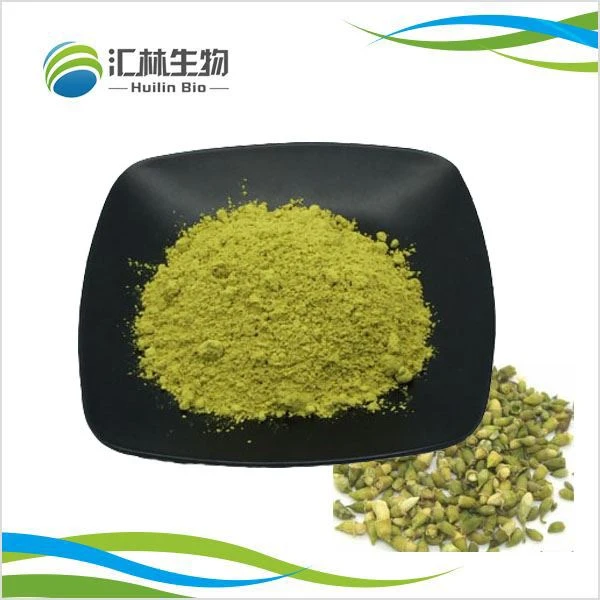
Dried Sophora buds run 20–30% rutin by dry weight, which is why this species is the commercial source of the flavonoid. Quercetin is not extracted from the bud at 98% by any solvent; it is made from rutin by hydrolysing the rhamnose-glucose chain and purifying the resulting aglycone.
So the two products sit in sequence rather than side by side. Rutin is what the plant gives you; quercetin is what that material becomes after a reaction. A quercetin lot with a low rutin figure is a lot where hydrolysis went far enough, and a rutin lot with a low aglycone figure is one purified before hydrolysis began.
3. What Each Certificate Actually Controls
The key ingredients are settled by two certificates, and each one controls the other compound as a limit rather than an ingredient. The rutin line publishes its impurity profile, and quercetin appears in it as a bounded contaminant rather than as a partner. That is the clearest evidence the two are separate products: one of them treats the other as a specification limit.
| Item on the rutin certificate | Limit | What it means commercially |
| Assay, HPLC | 95.0–101.0% | The figure the price is built on |
| Quercetin | ≤2.0% | Hydrolysis has started, or purification stopped short |
| Isoquercitroside | ≤2.0% | One glucose short of rutin |
| Kaempferol-3-O-rutinoside | ≤2.0% | The co-occurring flavonol, not a defect |
| Total impurities | ≤4.0% | The ceiling that separates 95% from 98% |
| Loss on drying | 5.5–9.0% | Water the customer pays for by weight |
The isolate line is built the other way round: 98% is the assay, and residual rutin plus the other flavonoids sit in the balance. Our specification sheet states the assay and leaves the balance to the certificate, so the figure to request with every lot is the rutin content, reported on the same basis as the assay.
Loss on drying is where a rutin purchase quietly loses value. The sample certificate on our rutin page reports 95.14% assay against 8.11% loss on drying; on an as-is basis that drum is 87.4% rutin, not 95%. A 500 mg capsule label therefore needs about 572 mg of powder from that lot to deliver the number printed on the panel.
4. Where "Quercetin with Rutin" Actually Comes From
The key ingredients question ends at the raw material; what happens next is a formula decision. Combination products exist, but they are made at the filling line, not at the extraction plant. A brand buys the quercetin lot and the rutin lot, weighs both into the same batch, and declares both on the label. The ratio is the brand's formulation decision, and it changes with every SKU that brand sells.
That has three practical consequences. Two certificates have to be filed instead of one. Two weighings and two line clearances appear in the batch record. And the ratio becomes intellectual property rather than a purchasing detail, which is why some brands keep the blending in-house even when a supplier offers to pre-blend.
If a supplier quotes a single powder described as "quercetin with rutin" at a fixed ratio, ask which certificate governs. Either it is a pre-blend with two underlying lots and two assays, or it is a rutin lot with a quercetin figure attached, and those are not the same purchase.
5. Buying the Two Together
The order sizes do not match, and that decides the route. Rutin carries a 25 kg minimum with samples from 1 kg; the quercetin line is quoted per lot. A brand using a small percentage of rutin in a large batch can end up holding years of inventory on one component and weeks on the other.
| Route | What arrives | Constraint | When it works |
| Two raw materials | Quercetin 98% and rutin 95%, separately | Rutin 25 kg minimum | You own the ratio and change it per SKU |
| Pre-blend | One lot at an agreed ratio, two assays | Ratio frozen for the run | One SKU, small volume, fewer weighings |
Order a 1 kg sample of each before committing to 25 kg of rutin. Twenty grams is enough to confirm mesh, colour and flow, and it tells you whether the two powders will blend into a capsule at the ratio your label needs. A single line is also an option rather than a compromise. If the label claims quercetin, the lot already carries its residual rutin and needs nothing added; if the label claims rutin, the rutin lot does the same in reverse. Adding the second compound is a formulation choice, not a requirement of either specification.
6. Beyond the Assay: Four Lines That Decide the Run
Four figures decide whether the powder behaves in your plant: loss on drying, particle size, the grade of any minor component you add, and the basis the assay was measured on. None appears in a marketing sheet, and each can stop a production run.
Particle size comes first because blends segregate before they dissolve. Rutin is specified at 95% or more through 80 mesh and the quercetin isolate at the same mesh; a coarse fraction against a fine one separates in a V-blender and leaves a drum that looks uniform and assays unevenly. Ask for the mesh on each input, not on the blend.
Grade is the second trap when you add a third component. Our chlorogenic acid lists the 98% grade for research use, and caffeic acid is supplied at 99% in cosmetic and pharmaceutical grades. Neither is a component of the Sophora lines; both are separate purchases, and a research lot that ends up in a food blend is the most common compliance gap in botanical formulas.
7. What Is Not in Either Product
The key ingredients list is short because there is nothing to hide inside a 98% assay. Starch, maltodextrin, silicon dioxide and sweeteners are not part of either specification, and each takes up mass the assay then has to account for. A 98% quercetin lot has no headroom for a carrier at all, and a 95% rutin lot has 4% of impurity allowance, most of it already spoken for by related flavonoids.
The question to put to a supplier is not what is in the drum but what the assay was measured on. A 98% figure reported on the extract before a carrier was added is not 98% on the powder you receive. The 10:1 ratio extract is the line where this matters most: it is a legitimate product for tea and cosmetic bases, but it is commonly carried on maltodextrin and its ratio says nothing about flavonoid content.
8. Frequently Asked Questions
Q: What are the key ingredients in Sophora japonica extract?
A: Two separate raw materials rather than one blend: quercetin assayed at 98% by HPLC, and rutin assayed at 95% or above. Each contains the other only at residual or impurity level. The plant itself carries 20–30% rutin in the dried bud, and quercetin is produced from that rutin by hydrolysis.
Q: Is quercetin the main component of the extract?
A: Only in the isolate line, and only because that line is made deliberately. In the plant, rutin is the majority flavonoid at 20–30% of the dried bud. Quercetin is the aglycone that appears after rutin loses its sugar chain, so its level in a rutin lot is capped as an impurity.
Q: Does the powder contain both quercetin and rutin?
A: Not by design. The isolate carries a low rutin residual and a rutin lot caps quercetin at 2.0%, but neither is formulated to deliver both. If your label claims both compounds, you are buying two raw materials and blending them, or ordering a pre-blend made from two lots.
Q: What does 10:1 mean on the ratio extract?
A: Ten kilograms of dried buds produced one kilogram of extract. It is a mass-balance statement, not a potency statement, and it does not tell you the rutin content. Ask for the rutin assay on the lot before accepting a ratio as a specification.
Q: Why does loss on drying matter so much on rutin?
A: Because rutin is sold as a hydrate and the certificate allows 5.5–9.0% water by USP <921>. At 8.11% moisture the as-is rutin content of a 95.14% lot falls to 87.4%, so a 500 mg label needs about 572 mg of powder to deliver the declared amount.
Q: Which should I order for a combination capsule?
A: Both, as separate lots, unless volume justifies a pre-blend. Check the rutin minimum order first, because 25 kg sets the inventory you will carry. Then fix the ratio you want and confirm that both assays are reported on the same basis before the batch record is written.
Xi'an Huilin Bio-tech Co., Ltd. supplies quercetin at 98% HPLC and rutin at 95% NF11 and 98% pharmaceutical grade as separate lines from dried Sophora japonica buds, with a ratio extract available from 1 kg for applications that need no marker claim. Send the two assays you need and the batch size, and we will quote each lot against its own certificate.
Sources
-
1. PubChem, National Library of Medicine. Quercetin, CID 5280343, C15H10O7, molecular weight 302.24. PubChem
-
2. PubChem, National Library of Medicine. Rutin, CID 5280805, C27H30O16, molecular weight 610.51. PubChem
-
3. PubChem, National Library of Medicine. Chlorogenic acid, CID 1794427, C16H18O9, molecular weight 354.31. PubChem
-
4. PubChem, National Library of Medicine. Caffeic acid, CID 689043, C9H8O4, molecular weight 180.16. PubChem
-
5. United States Pharmacopeia. <921> Water Determination, the method behind the loss-on-drying limit applied to rutin. usp.org
-
6. US Food and Drug Administration. Structure/Function Claims. fda.gov
-
7. Regulation (EC) No 1924/2006 on nutrition and health claims made on foods. EUR-Lex
-
8. European Commission. EU Register of nutrition and health claims made on foods. EU Register