


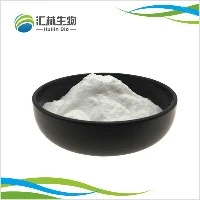


We supply 99% L-arginine powder, and we cannot tell you it is safe for people with diabetes, because no study in the published record was designed to answer that question. What we can do is show you the exposures that have been tested, and the four claims in circulation that nobody has sourced.
1. The Short Answer
There is no published safety trial of oral L-arginine in a diabetic population at supplement doses, so any yes or no you read is an inference rather than a finding.
› The longest controlled oral exposure we located is 6.4 g daily for six months, and it was in nondiabetic patients
› The one six-month study in type 2 diabetes used a combination product, with 24 patients
› No trial we located reports hypoglycaemia, and none was powered to detect it
We are a supplier, not a clinician, and we do not give advice to patients. What we can do is keep you from printing something you cannot defend, which is the part of this question that reaches your label.
2. Why Diabetes Is a Different Question
L-arginine is the substrate for nitric oxide synthase, and in diabetes that pathway is already under pressure. Forzano and colleagues reviewed the preclinical and clinical work on L-arginine in diabetes in Cardiovascular Diabetology in 2023, and their framing is the useful part: the interest exists because endothelial function is impaired in diabetes, not because arginine corrects glucose.
That distinction decides how a product should be described. A substrate argument supports a vascular mechanism. It does not support a claim about blood sugar, and the two get merged constantly in supplement copy - including in the draft we were sent, which opened with nitric oxide and closed with blood-sugar advice.
3. What the Human Record Actually Contains
The record is small, and every study in it was built around a vascular or metabolic endpoint rather than a safety one. That is the single most important thing to understand before citing any of it.
| Study | Population and size | Exposure | Endpoint reported |
| Lucotti, 2009 | 32 nondiabetic patients after coronary bypass | 6.4 g daily, six months, double-blind | ADMA fell, endothelial function and insulin sensitivity improved |
| Martina, 2008 | 24 men with type 2 diabetes and hypertension | N-acetylcysteine plus arginine, six months | Systolic pressure and endothelial activation fell; described as well tolerated |
Read the first row carefully, because it is the one most often miscited. The six-month, 6.4 g exposure that gets quoted as evidence of safety in diabetes was run in patients selected for a nondiabetic glucose response. It tells you that six months at that dose was tolerated in that group. It does not tell you anything about a person managing type 2 diabetes on medication.
The second row is the closest thing to a diabetic exposure, and it has two limits: the arginine was not given alone, and 24 patients cannot exclude an uncommon event. A study that reports "well tolerated" in 24 people is reporting the absence of a signal, not the absence of a risk.
4. Four Claims We Could Not Source
The draft we were sent contained four specific safety assertions, and we could not find a source for any of them. They are worth naming because the same four circulate widely.
› "2 to 10 g daily is safe in type 1 and type 2 diabetes" - no trial covers that range in either group
› "Above 15 g, blood sugar can drop too far" - we located no controlled report of hypoglycaemia at any oral dose
› "High doses stress the kidneys or raise urinary protein" - no human data in diabetic kidney disease
› "Most people see no glucose change, some see a small rise" - direction and magnitude are both unsourced
The absence of a report is not proof of safety, and we are not presenting it as such. It does mean that a brand quoting these numbers is quoting something it cannot produce on request, which is a commercial risk before it is a scientific one.
5. What a Brand May Not Print
Diabetes is a disease, so a claim about managing blood sugar is a disease claim wherever the ingredient comes from. Being an amino acid does not change that, and neither does the product being sold as a supplement rather than a drug.
That rules out the framing the draft was heading toward. "Safe for diabetics" is a safety statement about a patient group, which is a medical position to take, and it is not one a raw-material supplier or a brand can substantiate from a certificate of analysis. What remains available is a description of the material and its specification, plus any claim the brand can support with its own study on its own formula.
6. What Our Specification Actually Says
Since the chemistry is the part we can stand behind, here is what our 99% L-arginine powder specification says, without the surrounding claims. These are the fields we issue per lot, and they are the ones a formulator should check before anything else in this conversation matters.
| Field | Value | What it does and does not tell you |
| CAS | 74-79-3 | Identity of the free base, not of a salt or an ester |
| Formula and weight | C6H14N4O2, 174.20 | Lets you calculate dose per gram of active |
| Assay | 99% by HPLC | Content, not physiological effect |
| Grade and handling | Food grade, freely water-soluble, white powder | Processing behaviour in your plant |
| Shelf life | 24 months in the unopened container | Storage of the raw material, not of the finished product |
We mention the limits in the third column because buyers routinely read a certificate as if it covered more than it does. A 99% assay is a statement about what is in the bag. It is not a statement about what happens in a person with diabetes, and no certificate from any supplier can be.
7. What We Tell a Brand Building for This Audience
When a brand asks us for 99% L-arginine powder to sell to people managing diabetes, we ask three questions before quoting. They are uncomfortable questions, and they are the reason some of those conversations end without an order.
› What claim are you trying to make, and can you show the study that supports it on your formula
› Will the label tell a person on glucose-lowering medication to speak to their clinician first
› If a customer reports an adverse event, who logs it and what triggers a recall review
A brand that can answer all three is one we will supply without hesitation, because the risk sits where it belongs. A brand that wants "safe for diabetics" printed because a supplier said so is asking us to hold a liability we cannot hold. Our note on arginine and insulin sensitivity covers the efficacy side of this question, and it reaches the same conclusion from a different direction.
8. Frequently Asked Questions
Q: Is 99% L-arginine powder safe for people with diabetes?
A: Nobody has run the study that would answer it. The longest controlled oral exposure we found was 6.4 g daily for six months, in patients selected for a nondiabetic glucose response, and the only six-month study in type 2 diabetes used a combination product in 24 men. We supply the material; we do not issue a safety verdict.
Q: Does L-arginine lower blood sugar?
A: We could not locate a controlled study that establishes direction or size of any glucose effect from oral L-arginine at supplement doses. Trials have reported insulin sensitivity as a secondary endpoint, but none was designed to test glucose control, and a blood-sugar claim would be a disease claim in any case.
Q: Is it a problem for people with diabetic kidney disease?
A: We found no human study showing that oral L-arginine worsens proteinuria or kidney function in diabetic kidney disease, and equally no study showing it is safe in that group. The honest position is that the question is open, which is a conversation for the patient's clinician rather than a line on a label.
Q: Where does the 2 to 10 g dose range come from?
A: We could not trace it to a trial. The highest controlled oral dose in a six-month study we located is 6.4 g daily, and that study was in a nondiabetic population. A range that no study covers is a marketing convention rather than a dosing recommendation.
Q: Can a brand describe the product as diabetic-friendly?
A: We would not, and we would not supply material for that wording. It is a safety statement about a patient group, which requires clinical substantiation the brand does not have from a raw material certificate. Describe the ingredient and its assay instead, and let any health claim rest on your own study.
Q: What should a formulator check first on the certificate?
A: That the CAS is 74-79-3 for the free base rather than a hydrochloride or an ester, that the assay is 99% by HPLC with the basis stated, and that moisture and heavy metals are reported per lot. Those three decide whether the dose you calculate is the dose you actually put in the capsule.
We are Xi'an Huilin Bio-tech Co., Ltd., and we supply 99% L-arginine powder, CAS 74-79-3, C6H14N4O2 as a food-grade material with a 24-month shelf life. Tell us the claim you intend to make and the population you intend to make it for, and we will tell you which part of it the specification supports and which part has to come from your own study.
Sources
-
1. Forzano I, Avvisato R, Varzideh F, et al. L-Arginine in diabetes: clinical and preclinical evidence. Cardiovasc Diabetol. 2023;22(1):89. doi
-
2. Lucotti P, Monti L, Setola E, et al. Oral L-arginine supplementation improves endothelial function and ameliorates insulin sensitivity and inflammation in cardiopathic nondiabetic patients after an aortocoronary bypass. Metabolism. 2009;58(9):1270-1276. doi
-
3. Martina V, Masha A, Gigliardi VR, et al. Long-term N-acetylcysteine and L-arginine administration reduces endothelial activation and systolic blood pressure in hypertensive patients with type 2 diabetes. Diabetes Care. 2008;31(5):940-944. doi
-
4. PubChem, National Library of Medicine. L-Arginine, CID 6322, C6H14N4O2, molecular weight 174.20. CID 6322
-
5. Xi'an Huilin Bio-tech Co., Ltd. Product specification for 99% L-arginine powder: CAS 74-79-3, 99% by HPLC, food grade, freely water-soluble, 24-month shelf life. Company product page.