


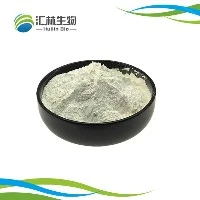

Saw palmetto extract 45% fatty acids sits below the USP-grade material that must contain at least 80.0% total fatty acids. For a B2B buyer, the useful question is not which figure looks better on a quotation, but which grade supports the label claim the finished product has to carry.
Bulk saw palmetto extract specifications circulate in more than one convention, so two quotations can look identical while describing different things. Ask which convention a figure follows before comparing price per kilogram.
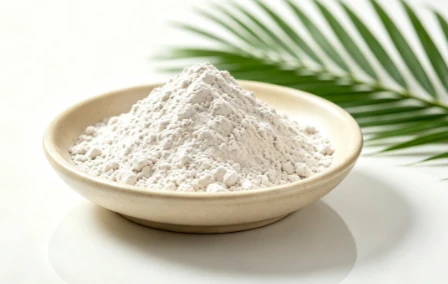
A 45% fatty acid figure describes the extract, not the fruit
A 45% fatty acid figure describes the total fatty acid content of the extract on a weight basis. It is not the share of saw palmetto fruit in the powder, and it is not an extraction ratio.
Whole-berry powders and standardized lipid extracts are different materials with very different fatty acid loads, and the gap between them is larger than most buyers expect. In a blinded study of 28 commercial products, total fatty acid content ranged from 0.796% in a berry powder product to 89.923% in a lipid extract product. None of the berry powders in that study met the criteria used for clinical efficacy.
Saw palmetto extract powder supplied by Xi'an Huilin Bio-tech Co., Ltd. is standardized to 25%–45% total fatty acids and assayed by GC, with a 24-month shelf life under proper storage. The material is packed in 25 kg drums, sourced from North and South America, and harvested from November to early December, as listed on our saw palmetto extract powder product page. Buyers comparing saw palmetto extract 45% fatty acids against a 25% declaration are comparing two points on one scale rather than two different materials. Buyers working through a full specification range can also review the wider standardized herb extracts line for comparable assay conventions.
The USP standard for saw palmetto extract sets a fatty acid floor of 80.0%
The USP monograph is the reference specification that regulated finished-product markets benchmark against, and its central requirement is a fatty acid floor of 80.0% on the anhydrous basis.
Under the monograph, Saw Palmetto Extract is obtained from comminuted saw palmetto by extraction with hydroalcoholic mixtures, with solvent hexane, or by supercritical extraction with carbon dioxide. The ratio of starting crude plant material to extract is from 8.0:1 to 14.3:1. The extract contains not less than 80.0% of fatty acids, not less than 0.2% of sterols, and not less than 0.1% of β-sitosterol, all on the anhydrous basis. The monograph also states that it contains no added substances.
The same monograph constrains a second group of markers. Long-chain alcohols must fall between 0.15% and 0.35% in the lipophilic extract, and between 0.01% and 0.15% in the hydroalcoholic extract, again on the anhydrous basis. That window is one reason the declared extraction route matters commercially: the limit changes with the process.
45% fatty acids versus USP-grade, parameter by parameter
Comparing the two tiers side by side shows that they diverge on more than one number. The USP monograph constrains the extraction ratio, the moisture basis, the sterol content and the permitted process at the same time, and a 45% declaration typically names the fatty acid content alone
| Parameter | Typical 45% declaration | USP Saw Palmetto Extract | What it changes at purchase |
|---|---|---|---|
| Total fatty acids | 45% (single declared figure) | Not less than 80.0%, anhydrous basis | The two tiers are not interchangeable for a label that cites a USP-grade fatty acid level |
| Physical form as supplied | Powder; the declared figure applies to the standardized extract within the powder matrix | Yellow to brown viscous oil at this concentration | Form and concentration are linked in this ingredient, so a form that does not match the figure is the first thing to question |
| Sterols | Usually not stated | Not less than 0.2% | A second identity signal; request it as a separate COA line |
| β-sitosterol | Usually not stated | Not less than 0.1% | Requires its own assay, not an inference from the fatty acid figure |
| Long-chain alcohols | Usually not stated | 0.15%–0.35% (lipophilic) or 0.01%–0.15% (hydroalcoholic) | Fix the extraction route first, because the limit is process-dependent |
| Extraction ratio | Often quoted separately as 10:1 or 30:1 | 8.0:1 to 14.3:1 | A ratio outside the monograph window is outside the monograph |
| Permitted process | Supplier-dependent | Hydroalcoholic, hexane, or supercritical CO₂ | The route determines which residual solvent tests belong on the COA |
| Added substances | Powder grades carry a carrier or encapsulation matrix alongside the extract | None permitted in the extract itself | Ask for the carrier share separately, and confirm which basis the declared figure uses |
| Assay approach | May be reported as a single value by HPLC | Individual fatty acid methyl ester reference standards are specified | Request a GC fatty acid profile rather than one aggregate number |
The table also explains why a supplier can quote 45% and 80%+ material from the same production site without either figure being wrong. They are different grades serving different label requirements, and they are also different physical materials: the lower figure is normally supplied as a powder, the higher figure as an oil. A saw palmetto extract 45% fatty acids grade and an 85% oil lot can leave the same facility on the same day, carrying the same botanical name, two different specification sheets and two different handling regimes.


Why fatty acid content is quantified by gas chromatography
Saw palmetto extract fatty acids are quantified as fatty acid methyl esters by gas chromatography, and a single aggregate percentage without a profile leaves the identity question unanswered.
The USP monograph lists methyl esters of caproic, caprylic, capric, lauric, myristic, palmitic, palmitoleic, stearic, oleic, linoleic and linolenic acid as reference standards, alongside β-sitosterol. That set of individual standards is what makes a fatty acid profile possible, because a profile requires each fatty acid to be resolved rather than summed.
Independent analytical work reaches the same conclusion. A phytochemical comparison of commercial saw palmetto products found that GC analysis provides a rapid means of assessing the concentration of known fatty acids within those products. Independent third-party testing programmes apply gas chromatography with AOCS or comparable methodology when they quantify saw palmetto fatty acids.
Practical consequence for a purchase file: where the documentation shows only an HPLC result, buyers can reasonably request the GC fatty acid profile as well. The same request applies whether the target grade is saw palmetto extract 45% fatty acids or a higher-concentration material, because the identity question does not change with the declared percentage. HPLC remains valid for other assays, but the conventional route for the fatty acid identity check is GC.
COA checklist for bulk saw palmetto extract
A usable certificate of analysis for saw palmetto extract lets a buyer confirm identity, potency, purity and origin from one document. If any of those four is missing, the COA is incomplete regardless of how many pages it runs to.
-
Fatty acid profile and the lauric acid ratio
The fatty acid profile should list individual fatty acids with their concentrations, not only the total. The reason is that authenticity is assessed from ratios between them.
In the 2023 product study, only one of the 28 products met the United States Pharmacopeia criteria for a standardized lipidosterolic extract, defined as total fatty acid content of 80% or more and a fatty acid profile indicative of authentic Serenoa repens based on the ratios of lauric acid concentration to nine other individual fatty acid concentrations. Six lipid extracts and one multi-active product met the dose and fatty acid criteria used in that study; seven products in total met its identity and potency standards.
For a buyer, the operable instruction is to ask for the lauric acid figure and the individual fatty acid concentrations that sit behind it. A total percentage on its own cannot be checked against a ratio-based authenticity criterion. When the target grade is saw palmetto extract 45% fatty acids, that ratio check carries more weight rather than less, because the total figure alone sits below the threshold used in the published identity criterion.
-
Sterols, long-chain alcohols and extraction ratio
Sterols, long-chain alcohols and the extraction ratio are the three parameters most often missing from a bulk COA, and all three are specified in the USP monograph.
Each one is a separate assay line. Sterols are required at not less than 0.2% and β-sitosterol at not less than 0.1%; long-chain alcohols fall in a process-dependent window; and the extraction ratio of 8.0:1 to 14.3:1 ties the extract back to a defined quantity of starting material. When a supplier quotes an extraction ratio of 10:1 while declaring 45% fatty acids, those two statements should be read together, because the ratio and the concentration describe different things.
-
Origin, harvest and solvent documentation
Origin documentation matters for this specific raw material because the dominant commercial supply is regulated at the point of harvest.
Effective July 2018, the Florida Department of Agriculture and Consumer Services requires a permit to harvest and sell saw palmetto berries in Florida, and the state's Endangered Plant Advisory Council unanimously recommended adding saw palmetto to the FDACS commercially exploited plant list. For buyers, that means harvest and chain-of-custody paperwork is not a formality in this supply chain.
Solvent documentation follows from the permitted extraction routes. Because the monograph allows hydroalcoholic, hexane and supercritical CO₂ extraction, the residual solvent panel on a COA should match the route actually used. A hexane route and a supercritical route carry different solvent profiles, and the COA should name the route rather than leaving it to inference.

Adulteration is the dominant quality risk in bulk saw palmetto extract
Adulteration of saw palmetto extract with cheaper plant oils is a documented commercial problem, not a theoretical one, and it is the reason fatty acid profiling exists as a routine test rather than an optional extra.
According to the release accompanying the 2023 product study, the ingredient has seen widespread misrepresentation, with saw palmetto extracts blended or diluted using lower-cost plant oils such as coconut, canola, olive and sunflower oil, and with unripened berries that do not provide the same profile.
Two structural features of the supply chain make this easier to attempt than for many botanicals. First, the established identity criterion is ratio-based, so a dilution that keeps the total fatty acid figure intact can still be detectable only through the individual fatty acid profile. Second, the material's dominant commercial harvest is wild-collected rather than plantation-grown, which places the verification burden on documentation.
For a purchase file on saw palmetto extract, the counter-measure is procedural. Request the fatty acid profile with individual concentrations, request the lauric acid figure, and request that the declared extraction route match the residual solvent panel. None of those three requests requires special equipment on the buyer's side.
-
When the declared form does not match the declared concentration
A high fatty acid figure paired with an ordinary powder form is the most useful screening question a buyer can apply to this ingredient, because form and concentration move together in commercial supply.
Measured across commercial products, liquid saw palmetto supplements carried 710.3–941.3 mg of total fatty acids per gram, against 68.6–327.3 mg per gram for powder products, a spread of more than a factor of ten between the lowest powder and the highest liquid. Those figures come from a published analysis of 20 commercial saw palmetto supplements. At the top of the range, material listed at 85% fatty acids is sold commercially as an oil produced by supercritical CO₂ extraction.
The practical reading is not that a high-concentration powder is impossible, but that it requires explanation. Where a quotation shows a high fatty acid figure together with a powder form, two things need to be established: whether the figure is stated on the extract or on the finished powder, and what share of the finished powder is carrier or encapsulation matrix. A supplier who answers with a GC fatty acid profile and a carrier percentage has given the buyer something checkable; a specification sheet alone has not.
Evidence strength and claim limits, by market
Regulatory status and evidence strength are separate questions, and both are usually asked before a specification is approved. The short answer is that claim availability is narrower than most product concepts assume.
On evidence, the U.S. National Center for Complementary and Integrative Health states that a 2023 review of 27 studies in men with benign prostatic hyperplasia found that saw palmetto, when administered alone, provides little or no benefit for BPH symptoms. The same review analysed hexane-extracted products and other products separately, because it had been suggested that hexane extraction might be more effective, and found no difference between the two kinds of products.
On safety, the same source states that saw palmetto is well tolerated and has been used safely in research studies for up to three years, that adverse effects are mild and infrequent and may include digestive symptoms, dizziness and headache, and that it does not appear to affect PSA readings even at higher-than-usual amounts.
On regulation in the United States, dietary supplements are not approved by the FDA before they are sold to the public, and manufacturers and distributors are responsible for evaluating the safety and labelling of their products before marketing. In the European Union the position is tighter, as set out in a legal analysis of the 2025 ruling on botanical food supplements: health claims for botanicals submitted after 2010 must not be assessed by EFSA and cannot be authorised by the European Commission, so functional claims are not an available route for a saw palmetto finished product in that market.
The practical consequence for a B2B specification is that saw palmetto extract is bought on identity, potency and documentation. A supplier dossier that leans on claim language rather than specification data is harder to place in a regulatory file, which is a procurement consideration rather than a scientific one.
Bulk sourcing terms: samples, packaging and lead time
Sample policy, packaging format and dispatch lead time decide whether a first order is workable, and all three should be confirmed in writing before a specification is frozen.
On our own product pages, samples of saw palmetto extract are offered with the shipping cost carried by the buyer, dispatch is stated as 3–5 working days after payment confirmation and excludes Chinese public holidays, packaging runs from 1 kg foil bags through 5 kg cartons to 25 kg drums, and OEM/ODM label and logo work is available. Payment terms are 100% before shipment, by bank transfer, Western Union, PayPal or Escrow. These are our published commercial terms rather than market averages; the specification detail sits on our saw palmetto extract powder page, and the commercial terms are published across our product pages.
Two conventions are worth fixing on a saw palmetto extract order before it is placed. Confirm whether the quoted fatty acid figure is expressed on an as-is or anhydrous basis, because the USP monograph states its limits on the anhydrous basis. And confirm whether the figure refers to the extract alone or to a blend that includes a carrier oil, since the monograph permits no added substances.

Frequently asked questions
Q: Is 45% fatty acids the same as USP-grade saw palmetto extract?
A: No. The USP monograph requires not less than 80.0% total fatty acids on the anhydrous basis, so a 45% declaration sits below that floor. The two are different grades serving different label requirements, and 45% material should not be presented as meeting the USP fatty acid requirement.
Q: Which test method should a saw palmetto extract COA report?
A: Gas chromatography, reported as a fatty acid profile rather than a single total. The USP monograph specifies individual fatty acid methyl ester reference standards, and third-party testing programmes quantify saw palmetto fatty acids by GC using AOCS or comparable methodology. A total figure alone cannot be checked against a ratio-based identity criterion.
Q: How can a buyer tell whether bulk saw palmetto extract is adulterated?
A: Check the individual fatty acid profile rather than the total figure alone. Authenticity has been defined in the published literature as total fatty acids of 80% or more combined with a profile consistent with genuine Serenoa repens, assessed from the ratios of lauric acid concentration to nine other individual fatty acid concentrations.
Q: What documents should arrive with a saw palmetto extract shipment?
A: A COA covering the fatty acid profile, sterols, β-sitosterol, long-chain alcohols and the extraction ratio, plus a residual solvent panel that matches the declared extraction route. Origin and harvest documentation belongs in the same file, because Florida requires a permit to harvest and sell saw palmetto berries.
Q: What MOQ, packaging and lead time should a buyer expect for bulk saw palmetto extract?
A: Expect a low minimum for samples and a 25 kg drum as the standard bulk unit, with foil bags and cartons for smaller quantities. On our product pages, samples are offered with freight at the buyer's cost, dispatch is 3–5 working days after payment confirmation, and OEM/ODM labelling is available. Confirm these terms against the current quotation.
Q: Can a saw palmetto finished product carry prostate health claims?
A: Claim availability depends on the market and is narrower than most product concepts assume. In the United States, supplements are not FDA-approved before sale and the manufacturer is responsible for label compliance. In the European Union, health claims for botanicals submitted after 2010 cannot be assessed by EFSA or authorised.
Next step: request the specification package before comparing price
Saw palmetto extract 45% fatty acids and USP-grade material are both legitimate products, but they are not substitutes, and the difference lives in the documentation rather than in the quotation. The fastest way to close a sourcing decision on this ingredient is to request four items from any saw palmetto extract supplier in the first message: the fatty acid profile with individual concentrations, the sterol and β-sitosterol figures, the declared extraction route with the matching residual solvent panel, and the harvest and origin paperwork.
You can request the specification package, a COA for the current lot and a sample through our inquiry form, or reach the team directly via the contact page. Buyers comparing this material against other men's health actives can start from our standardized extract range, and readers who need the consumer-facing dosage and side-effect discussion rather than the procurement view will find it in our saw palmetto fruit powder guide.
This article is written for ingredient sourcing, formulation and regulatory professionals. It is not medical advice and is not intended to diagnose, treat, cure or prevent any disease.
References
- United States Pharmacopeia. Saw Palmetto Extract monograph, USP-NF. https://doi.usp.org/USPNF/USPNF_M74425_05_01.html
- National Center for Complementary and Integrative Health, National Institutes of Health. Saw Palmetto. Last updated April 2025. https://www.nccih.nih.gov/health/saw-palmetto
- Florida Department of Agriculture and Consumer Services. Saw Palmetto Berry Harvesting. https://www.fdacs.gov/agriculture-industry/plant-industry-permits/saw-palmetto-berry-harvesting
- Study published in Journal of Urology Open Plus, 2023, on the identity and potency of commercial saw palmetto products, as summarised in the accompanying AAAS EurekAlert news release dated 27 July 2023. The release is promotional in part and names a commercial supplier; its listed data are cited here as reported figures. https://www.eurekalert.org/news-releases/996864
- ConsumerLab.com. Prostate Supplements Review: saw palmetto fatty acid analysis method. https://www.consumerlab.com/methods/prostate-supplements-beta-sitosterol-phytosterols-saw-palmetto/sawpalmetto/
- Penugonda K, Lindshield BL. A phytochemical comparison of saw palmetto products using gas chromatography and high performance liquid chromatography. PubMed Central. https://pmc.ncbi.nlm.nih.gov/articles/PMC4284019/
- Legal analysis of the ruling restricting advertising of botanical food supplements in the EU, 7 July 2025. https://www.jdsupra.com/legalnews/european-court-of-justice-restricts-3233741/