


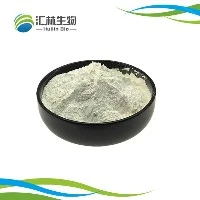
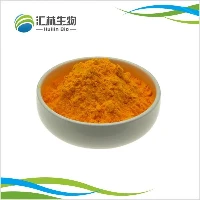

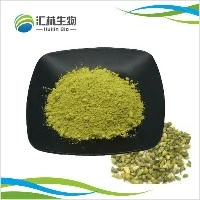
Four different products come from one pumpkin seed, and they are not interchangeable. Whole seed powder, cold-pressed oil, a water-ethanol extract and a protein flour each take a different fraction of the same raw material. Our pumpkin seed extract powder is the third of those, and the price gap between them is not a markup story.
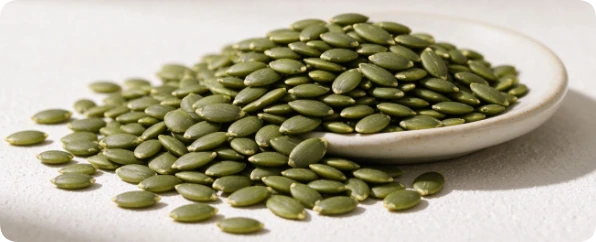
1. One Seed, Four Things You Can Buy
Pumpkin seed extract vs pumpkin seed oil is the comparison most buyers start with, and it resolves quickly once you see what each process dissolves. Whole seed powder keeps everything the seed contains. Cold pressing squeezes out the lipid fraction and leaves the meal behind. Aqueous or aqueous-ethanol extraction pulls the soluble fraction and discards most of the oil. Protein flour is what remains after the oil has gone.
| Product | How it is made | What it keeps | Where it usually goes |
| Whole seed powder | Cleaned, dried and milled | Everything, oil included | Food, bakery, capsules with a large fill weight |
| Cold-pressed oil | Pressed without solvent | The lipid fraction only | Softgels, dressings, cosmetic bases |
| Water-ethanol extract | Extracted then spray dried | The soluble fraction, most oil left behind | Two-piece capsules, powder blends, sachets |
| Protein flour | Defatted seed meal, milled | Protein and fiber, oil removed | Bars, beverages, high-protein food |
The four are not grades of each other. A buyer who switches from oil to extract is not moving up a quality ladder, they are switching materials. That explains most of the confusion in this category, including why two quotes for a similar-sounding ingredient can differ so widely.
2. What the Oil Keeps That the Powder Leaves Behind
The split is decided by the solvent, and the solvent only knows one thing: whether a compound dissolves in it. Oil is the seed's own lipid, so pressing it out carries the fatty acids, the tocopherols and the lipid-soluble sterols with it. Water and aqueous ethanol carry sugars, salts, small peptides and the more polar fraction, while the bulk of the oil stays in the press cake.
| Fraction of the seed | In the cold-pressed oil | In the water-ethanol extract |
| Fatty acids | Concentrated, this is the product | Mostly left in the press cake |
| Phytosterols | Present in the lipid phase | Present in the water-ethanol soluble fraction |
| Tocopherols | Carried with the oil | Largely removed with the oil |
| Polar solids | Low | This is what the powder mostly is |
So the honest answer to "which one is stronger" is that the question does not apply. Asking whether pumpkin seed oil outperforms the extract is like asking whether flour outperforms butter. They come from the same plant, and they do not do the same job in a formula.
3. Where the Ratio Number Comes From
A pumpkin seed extract carries an extraction ratio instead of a percentage, and that ratio is easier to read than it looks. Ten to one means the process consumed ten kilograms of dried seed for every kilogram of powder it produced. It is a statement about input and output, written on the drum because there is no single compound inside to put a percentage on.
What the number guarantees is that a lot of seed went in. What it does not guarantee is that any particular compound is ten times more concentrated than it is in the seed, and nothing on the certificate will confirm the ratio independently. That is not a flaw in this product, it is how ratio extracts work across the whole botanical trade.
The practical consequence is simple. If you need a known amount of a specific compound in your finished product, a ratio extract is the wrong tool and a standardized extract is the right one. If you need a concentrated whole-seed material for a capsule or a blend, the ratio is a reasonable way to describe it, as long as everyone in the conversation understands it describes the process and not the potency.
The published specification offers 10:1 as standard and 5:1 to 20:1 on request. A range is useful when you are developing a formula and less useful when you are placing a repeat order, because a range lets the ratio move between deliveries without anything on the paperwork changing.
4. What the Seed Brings Besides Oil
The seed is more than a lipid reservoir. It carries protein, fiber, phytosterols, tocopherols and a mineral fraction, and the proportions shift with variety, region and harvest year. That variability is why a specification states a range rather than a single figure.
The clearest published example for this material is the phytosterol figure, which the specification quotes at 128 to 2,087 mg per 100 g of powder. The top of that range is more than sixteen times the bottom, inside one product description. A buyer who orders by name alone is therefore ordering somewhere inside a sixteen-fold window, and a buyer who orders against a stated target is not.
That is a fact about botanical raw materials rather than about any one supplier, and it applies to pumpkin seed oil as much as to the powder. The useful response is to decide which measured line matters for your application and to specify that one.
5. Which Form Fits Which Product
The choice usually resolves once you start from the finished product rather than from the raw material list. Each dosage form imposes its own constraints on load, taste, solubility and stability, and those constraints point at one fraction of the seed more often than not.
| Finished product | Usually fits better | Why |
| Softgel | Cold-pressed oil | The fill is already a liquid, and the shell handles oil well |
| Two-piece capsule | Water-ethanol extract | A dry powder fills and flows without a liquid fill line |
| Instant drink or sachet | Water-ethanol extract | Partially water-soluble, and easier to flavor than oil |
| Gummy | Neither, in most cases | Cooking heat and water activity both work against this material |
| Bar or high-protein food | Protein flour or whole seed powder | Contributes bulk and protein rather than a concentrated fraction |
The gummy row is worth pausing on. Gummies made with this material usually carry an overage and a flavor system built to cover the taste. If a supplier says the powder drops in without adjustment, ask what else changed.
For capsules there is one further constraint: fill weight. A two-piece capsule holds a limited mass, so a 10:1 extract fits more seed equivalent into a given shell than a 5:1 does. That is the legitimate case for a higher ratio, and it has nothing to do with potency per milligram.
6. Reading the Label Without a Laboratory
Four fields carry most of what a buyer needs, and none requires sending a sample anywhere. Read them in order, because each narrows what the next can mean.
| Field | What it tells you | What a normal entry looks like |
| Botanical source and part | Which plant, and which part of it | Cucurbita pepo L., seed |
| Extraction ratio or marker | Whether strength is described by process or by measurement | 10:1 for a ratio extract, or a named marker percentage |
| Solvent | What the extraction pulled out | Water or aqueous ethanol |
| Carrier | Whether the powder is pure extract or a blend | None, or a named carrier with its percentage |
The botanical name is the field people skip and the one that carries the most weight. Cucurbita pepo L. names the species and the authority, and identification in this trade is normally confirmed by chromatographic fingerprint rather than by a single peak: a review of 2,386 commercial herbal products sold in 37 countries is a fair measure of how routine that work has become. A label that names the species but never mentions how identity was confirmed is telling you less than it appears to.
The carrier field matters more than its size suggests. An extract sprayed onto a carrier can still be called an extract. Ask for the percentage rather than the word.
7. Comparing Two Quotes on the Same Page
Two quotes for "pumpkin seed extract" can differ by a factor of several and both be honest. Before treating the gap as a bargain or a warning, put three things side by side.
› Same product type first: oil and extract are not competing offers, whatever the quote sheet says.
› Same ratio basis second: dried seed and fresh weight give different numbers for one drum.
› Same carrier third: an undeclared carrier moves the price without moving the label.
Line those up and most price gaps are describing different materials rather than different margins.
8. Frequently Asked Questions
Q: Is pumpkin seed extract the same as pumpkin seed oil?
A: No, and the difference is which part of the seed each one takes. The pumpkin seed extract vs pumpkin seed oil question is really a question about solvent: pressing keeps the lipid fraction, while water or aqueous ethanol keeps the polar fraction and leaves most of the oil in the press cake. They are different materials, not two grades of one.
Q: What does 10:1 mean on a pumpkin seed extract label?
A: Ten kilograms of dried seed went in for every kilogram of powder that came out. It describes the input-to-output relationship of the process, not the concentration of any single compound. No laboratory can confirm the figure from the powder alone, which is why it is written on the drum by the producer rather than measured by the buyer.
Q: Which is better for a capsule, oil or extract?
A: It depends on the capsule. A softgel suits cold-pressed oil because the fill is already liquid. A two-piece capsule suits the dry extract because the powder fills and flows without a liquid fill line. Neither choice is better in the abstract, and a formulator who picks one without checking the shell type has skipped a step.
Q: Does a higher ratio mean a stronger product?
A: Not in the sense most people mean. A 20:1 powder used more seed per kilogram, so it usually looks darker, tastes stronger and costs more, but the ratio does not measure any one compound. The legitimate reason to choose 20:1 over 10:1 is fill weight: more seed equivalent fits into the same capsule.
Q: Why is pumpkin seed extract brown?
A: Because the powder is what the seed left behind after the oil was taken. Seed pigments and the mild browning that comes with drying and spray drying both stay in the soluble fraction. A light cream color is more likely to indicate a carrier than a purer extract, so brown is normal rather than a defect.
Q: Can pumpkin seed extract be used in drinks?
A: Yes, with two caveats. The powder is only partially soluble in water, so a clear beverage will need either a lower dose or a solubilizer, and the taste is nutty and earthy enough to need a flavor system around it. A sachet or an instant drink handles both problems more easily than a ready-to-drink format.
Xi'an Huilin Bio-tech Co., Ltd. supplies pumpkin seed extract powder from Cucurbita pepo L. seed at 10:1, with 5:1 to 20:1 available on request, and states loss on drying, sieve size and solubility on every certificate. If you are still deciding between the extract and the oil, tell us the dosage form and the fill weight, and we will say which one fits rather than quote both. Send your target specification and we will answer line by line.
Sources
-
1. Xi'an Huilin Bio-tech Co., Ltd. Pumpkin Seed Extract Powder, product specification and extraction ratio. product page
-
2. Xi'an Huilin Bio-tech Co., Ltd. Natural Ingredients range, used here as the comparison for a standardized extract. aronia berry extract
-
3. Ichim MC, et al. Chemical Authentication of Botanical Ingredients: A Review of Commercial Herbal Products. Frontiers in Pharmacology, 2021. PMC8082499
-
4. Advances in Fingerprint Analysis for Standardization and Quality Control of Herbal Medicines. 2022. PMC9201489