



A bulk fish oil order turns on three numbers most specification sheets never reconcile: peroxide value, p-anisidine value, and the TOTOX calculated from them. When they disagree, a grade reading 40% EPA plus DHA delivers less than the label implies. What follows works through that arithmetic against the EE and TG specification published for this product.
1. One Figure on a Specification Sheet Is Usually Decorative
On a bulk fish oil specification the three oxidation limits are exactly coincident, which is deliberate rather than lucky. Peroxide value is capped at 1.0 meq/kg, p-anisidine value at 10.0, and TOTOX at 12, and 2 × 1.0 + 10.0 returns 12. Any single line on the sheet tells a buyer the same thing.
| Parameter | GOED v8.1 | Release limit here |
| Peroxide value (PV) | 5 meq/kg | 1.0 meq/kg |
| p-Anisidine value (p-AV) | 20 | 10.0 |
| TOTOX | 26 | 12 |
| Acid value (AV) | Not specified | 1.0 mg KOH/g |
| Lead, cadmium, mercury, arsenic | 0.05 and 0.1 mg/kg | Same as GOED |
| Total PCBs | 0.09 mg/kg | 0.09 mg/kg |
| Dioxins, furans and DL-PCBs | 3 pg WHO-TEQ/g | 3 pg WHO-TEQ/g |
The standard behind those numbers behaves differently. The GOED Voluntary Monograph caps peroxide value at 5 meq/kg and p-anisidine at 20, then sets TOTOX at 26, while 2 × 5 + 20 returns 30. Those limits cannot be met in combination, so TOTOX decides.
Contaminants run the other way. Lead, cadmium, mercury, arsenic, total PCBs and the dioxin group sit at the monograph limits and no lower, so those rows state conformity. Acid value is a buyer specification, because the monograph sets none.
2. TOTOX Binds the Other Two Numbers
TOTOX on a bulk fish oil certificate is not an independent test. It is a weighted sum, 2 × PV + p-AV, so a lot can sit at both individual ceilings and still fail the ceiling that matters. The grid below keeps every figure inside the GOED limits and changes only the combination; one cell fails.
| Peroxide value | p-Anisidine value | TOTOX, 2 × PV + p-AV | Against the 26 ceiling |
| 1.0 | 10 | 12 | Pass |
| 3.0 | 20 | 26 | Pass, at the ceiling |
| 5.0 | 15 | 25 | Pass |
| 5.0 | 20 | 30 | Fail |
Two consequences follow for a bulk fish oil buyer. A certificate quoting a low peroxide value beside a high p-anisidine value is not a clean lot: 0.8 and 22 returns 23.6, worse than 4.5 and 9 at 18. And a TOTOX ceiling looser than 2 × PV + p-AV can never bind, so PV at or below 5, p-AV at or below 20 and TOTOX at or below 40 describes a figure no lot can fail. A falling peroxide value beside a rising p-anisidine value is the signature of a lot measured late.
3. Ethyl Ester and Triglyceride Are Not Two Grades of the Same Oil
Ethyl ester and triglyceride carry the same fatty acids on different backbones, and the backbone changes the certificate, the label and the fill. Reading them as two grades of one oil is a shorthand that does not survive a formula review.
| Aspect | Ethyl ester | Triglyceride |
| How it is produced | Transesterification with ethanol, then distillation | Re-esterification onto glycerol |
| Backbone | One fatty acid on ethanol | Three fatty acids on glycerol |
| Reported as | Ethyl ester, or free acid | Triglyceride, or free acid |
| Mass added over free acid | About 9% | About 4% |
| Usual format | High-potency softgel, clinical nutrition | Emulsions, fortified foods, pet nutrition |
An ethyl ester is made by transesterifying the natural oil with ethanol, then concentrating the result by distillation, which is how that form reaches the upper end of the range. A triglyceride keeps its glycerol backbone and is re-esterified onto it.
What changes is mass. The same EPA weighs about 9% more as an ethyl ester and about 4% more inside a triglyceride, because the ester group and the glycerol backbone are not fatty acid, so a certificate reporting the ester reports a larger number for an identical bulk fish oil lot. That is a reporting convention, not a quality difference: GOED corrects results to free fatty acid equivalents and then allows ethyl esters to be calculated either as FFA or as EE, so two bulk fish oil quotes cannot be compared until each basis is known.
4. The Ester Basis Moves the Same Oil by Nine Percent
The same bulk fish oil lot can be certified at 300 mg/g or 274 mg/g without a milligram of oil changing, because the basis is a choice. EPA as the free acid is C20H30O2 at 302.5 g/mol, DHA is C22H32O2 at 328.5, and the ethyl ester adds 28.05 to each.
| Reporting basis | EPA multiplier | DHA multiplier |
| Free fatty acid | 1.000 | 1.000 |
| Triglyceride | 1.042 | 1.039 |
| Ethyl ester | 1.093 | 1.085 |
Applied to a 30/10 grade declared at 300 mg/g EPA and 100 mg/g DHA, the free-acid equivalents are 274.5 mg/g and 92.1 mg/g, or 366.7 mg/g combined rather than 400. A 1,000 mg softgel filled with that oil carries 367 mg of EPA plus DHA, not 400, and the gap is arithmetic rather than adulteration; the line that settles it belongs in the purchase order.
5. What a 30 to 50 Percent Grade Buys You
A bulk fish oil grade of 30 to 50 percent is a concentration band, not a quality tier, and the only comparison between bands that carries information is cost per gram of EPA plus DHA. Price per kilogram rewards dilution; delivered fatty acid does not.
| Grade | EPA | DHA | Combined | Break-even against 18/12 |
| 18/12 | 180 mg/g | 120 mg/g | 300 mg/g | 1.00 |
| 30/10 | 300 mg/g | 100 mg/g | 400 mg/g | 1.33 |
| 10/30 | 100 mg/g | 300 mg/g | 400 mg/g | 1.33 |
The break-even is a ratio. A 30/10 grade at 400 mg/g delivers a third more EPA plus DHA per kilogram than an 18/12 grade at 300 mg/g, so it costs less per delivered gram only while its price stays below 1.33 times the 18/12 price. Above that, the higher grade costs more.
Two documents sit above this product and neither is the certificate. A monograph written for high-concentrate ethyl esters does not describe a 300 to 500 mg/g grade, so a fail against it says nothing about the lot. Health claims belong to the finished-product label: Regulation (EU) No 432/2012 lists the permitted wording and the daily intake each requires, and the entries for EPA and DHA are set out on the bulk fish oil product page.
6. Twenty-Four Months Is a Conditional Statement
Twenty-four months on a bulk fish oil certificate is a claim about a container and a store room, not about an oil. The monograph applies its specifications throughout the declared shelf life rather than at release alone, which makes the release certificate a starting point.
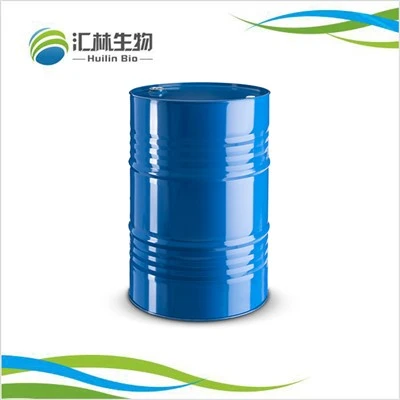
On this grade the conditions are 2 to 8 degrees Celsius, a nitrogen blanket in the headspace and exclusion of light, in a 190 kg nitrogen-flushed steel drum or a 25 kg drum. Hold all three and the release values stay predictive; miss one and the certificate describes only the day it was issued.
| Condition | Requirement here | What stops being true |
| Temperature | 2 to 8 degrees Celsius | Release values no longer predict the end date |
| Headspace oxygen | Nitrogen flushed drum | Peroxide value climbs from the first month |
| Antioxidant | Tocopherol per declaration | The shelf life was never tested on that oil |
Headspace is the part buyers underestimate. A 25 kg drum carries a larger headspace to oil ratio than a 190 kg drum, so an identical nitrogen flush leaves more oxygen per litre of oil in the smaller pack. Specify headspace oxygen for both formats.
The distinction matters more for a bulk fish oil contract than for a powder, because oxidation is cumulative, and a drum opened, sampled and reclosed four times has had four exposures.
7. The COA Checklist for a First Order
A certificate of analysis for bulk fish oil earns its place only when it states the basis, the limit and the measured value for each parameter, and first-order failures come more often from a missing basis than from a failed number. The list below is worth sending before a price is negotiated.
| Item on the certificate | Why it decides the order | What to require in writing |
| Ester form | EE and TG behave differently downstream | Named on the lot certificate |
| EPA and DHA basis | The basis shifts the figure by up to 9% | The basis stated beside the number |
| PV, p-AV and TOTOX | Three rows, one arithmetic relationship | All three, with the calculation shown |
| Contaminant panel | Fixed limits, not a compliance sentence | Measured values against each limit |
| Species and fishery | Traceability and import paperwork | Declared per lot |
| Release date and expiry | Oxidation is time dependent | Both dates on the certificate |
A bulk fish oil certificate should carry both dates, manufacture and expiry: a lot released eleven months ago meets the same specification on paper while already carrying eleven months of exposure, and a first order should be filled from a recent lot.
The same discipline applies to any oil-phase line item in the range, including squalene. A number without a limit cannot be judged, and a limit without a method cannot be reproduced.
Frequently Asked Questions: Five Answers Before a First Order
Q: What Does The TOTOX Value On A Fish Oil COA Mean?
A: TOTOX is a calculated figure, 2 × PV + p-AV, that combines primary and secondary oxidation into one number. Because it is calculated rather than measured, it can be checked against the other two rows of the same certificate in a single step, and a mismatch means the certificate was not assembled from those measurements.
Q: Which Form Should A Softgel Order Specify, Ethyl Ester Or Triglyceride?
A: It depends on the payload the label needs and on the process downstream. Ethyl ester concentrates further and suits a high-potency capsule where fill volume is fixed; triglyceride suits emulsions, fortified foods and formats where the oil is dispersed through a matrix. Name the form on the bulk fish oil order, because the grade alone does not fix it.
Q: How Is EPA And DHA Content Calculated On A Certificate?
A: As free fatty acid equivalents or as the ester, and the two differ by about 9% for an ethyl ester and about 4% for a triglyceride. The arithmetic is a mass correction, not a purity difference, so a lower figure on one basis can describe the identical bulk fish oil. Ask which basis applies before comparing quotes.
Q: What Peroxide Value Should Bulk Fish Oil Be Supplied At?
A: The monograph ceiling is 5 meq/kg and this grade is released at or below 1.0, one fifth of the ceiling. A lower release figure buys margin before the end of shelf life rather than a different oil on the day it was made, and it proves little unless it travels with a p-anisidine limit and a TOTOX limit.
Q: Why Does The Same Grade Cost Different Amounts Per Kilogram?
A: Because price per kilogram says nothing about delivered fatty acid. Divide the price per kilogram by the EPA and DHA content in mg/g to get cost per delivered gram, then compare grades on that figure. A cheaper drum of a lower grade frequently costs more per gram of EPA plus DHA.
Reviewed and updated 29 October 2026 by the technical team at Xi'an Huilin Bio-tech Co., Ltd., which supplies omega-3 fish oil in EE and TG grades from Xi'an, China.
Sources
-
1. GOED. Voluntary Monograph for Omega-3 Oils, Version 8.1. Global Organization for EPA and DHA Omega-3s, 6 January 2022. https://goedomega3.com/storage/app/media/Monograph/GOED%20Monograph%20-%202022%2001%2006%20-%20FINAL.pdf
-
2. Commission Regulation (EU) No 432/2012 establishing a list of permitted health claims made on foods, other than those referring to the reduction of disease risk and to children's development and health. OJ L 136, 25.5.2012, p. 1. https://eur-lex.europa.eu/eli/reg/2012/432/oj
-
3. National Center for Biotechnology Information. PubChem Compound Summary for CID 446284, Icosapent. https://pubchem.ncbi.nlm.nih.gov/compound/446284
-
4. National Center for Biotechnology Information. PubChem Compound Summary for CID 445580, Doconexent. https://pubchem.ncbi.nlm.nih.gov/compound/445580