




Dehydroacetic acid and sodium dehydroacetate share one cosmetic limit, and the limit is written as acid. Almost every quotation, specification sheet and formulation note repeats the number as though it were the powder. It is not, and the gap is 11.6% of the dose.
1. Two Substances, One Entry, Two Molecular Weights
The two forms are cousins with different masses, and the cosmetic annex treats dehydroacetic acid and its salt as one entry because one is the salt of the other. That is tidy for regulators and awkward for buyers, because the limit is written against the acid while most of the tonnage shipped is the salt.
| Property | Dehydroacetic acid | Sodium dehydroacetate |
| CAS number | 520-45-6 | 4418-26-2 |
| EC number | 208-293-9 | 224-580-1 |
| Formula | C8H8O4 | C8H7NaO4 |
| Molecular weight | 168.15 | 190.13 |
| Water solubility | Very low | Freely soluble |
| Typical grade | 98% minimum | 98% minimum |
Solubility decides which one you end up buying. Dehydroacetic acid needs an alkaline or solvent system to dissolve, so it is awkward in a clear gel, a toner or a beverage. The salt dissolves freely, which is why a formulator reaching for the maximum usually reaches for the salt and inherits the conversion problem in the next section.
2. The 0.6% Is As Acid, So The Powder Ceiling Is 0.678%
Annex V of Regulation (EC) No 1223/2009 lists 3-acetyl-6-methylpyran-2,4(3H)-dione and its salts at a maximum of 0.6% expressed as acid. Read literally, the finished product must not carry more than 0.6 grams of dehydroacetic acid per 100 grams. The powder you weigh is not that acid.
The conversion is the ratio of the two molecular weights. Sodium dehydroacetate at 190.13 carries 168.15 of acid, so one gram of salt delivers 0.884 grams of acid. Run it the other way and the ceiling on the salt is 0.678%, not 0.6%.
| Salt weighed into the batch | Acid equivalent delivered | Position against the 0.6% limit |
| 0.50% | 0.442% | Under, a quarter of the headroom unused |
| 0.60% | 0.531% | Under, 11.6% short of the ceiling |
| 0.65% | 0.575% | Under, 4.2% short |
| 0.678% | 0.600% | At the limit |
| 0.70% | 0.619% | Over the limit |
The failure is quiet. A formulator who copies 0.6% from a supplier sheet onto the salt runs 0.531% as acid, which is compliant and which passes every check except the one that matters at month twelve, when the mould arrives. The opposite error is louder but rarer, because 0.7% of salt looks safe beside a limit written as 0.6%.
› Write the specification as acid equivalent, never as powder weight
› Confirm which form a quotation refers to before comparing two prices
› Recalculate every time a formula switches from the acid to the salt
3. Above pH 5.5, Most Of The Dose Stops Working
An organic acid preservative works in its undissociated form, because only the neutral molecule crosses a microbial membrane. How much of the dose is neutral depends on pH and on the pKa, and dehydroacetic acid carries a pKa of about 5.27. That single number narrows the working window far more than the 0.6% limit does.
| Product pH | Share still undissociated | Practical reading |
| 3.0 | 99.5% | Full strength |
| 4.0 | 94.9% | Full strength |
| 5.0 | 65.1% | Two thirds of the dose |
| 5.5 | 37.1% | Co-preservative needed |
| 6.0 | 15.7% | Supporting role only |
| 6.5 | 5.6% | Effectively inert |
| 7.0 | 1.8% | Not a preservative at this pH |
This is where dehydroacetic acid is most often over-sold. Supplier notes describe it as effective across a wide range, and against some moulds that is defensible, but a promise that it protects a pH 7 emulsion is a promise that 1.8% of the dose is doing all the work. The honest brief is pH 3.0 to 5.5, where most of what you paid for is still active.
Read as a purchasing decision, the same table says something useful. A brand buying for a pH 3 to 4.5 toner is buying the whole system at one price per kilogram. A brand buying for a pH 6 cream is buying a supporting act at that same price, and should budget for a second preservative on top of it.
4. The Spectrum Gap Is Where The Pairing Decision Starts
Dehydroacetic acid is strong against moulds and yeasts and weak against gram-negative bacteria, which is the gap a challenge test finds first. Pseudomonas aeruginosa is the organism most likely to survive a preserved aqueous product, and it sits on the gram-negative side of that gap.
| Partner | Annex V maximum | The gap it covers |
| Phenoxyethanol | 1.0% | Gram-negative bacteria |
| Benzyl alcohol | 1.0% | Gram-negative bacteria |
| Potassium sorbate | 0.6% as acid | Yeast at the upper end of the pH window |
| Sodium benzoate | 0.5% as acid, leave-on | Bacteria at the acid end of the window |
Two details in that table are easy to miss. The sorbate and benzoate ceilings are expressed as acid, exactly like the dehydroacetic entry, so every partner brings its own conversion. And the benzoate figure depends on the product type: rinse-off carries 2.5% as acid, oral care 1.7%, leave-on 0.5%. Using the rinse-off number on a cream is a compliance error that reads like a formula.
5. A Second Preservative Does Not Buy A Second Limit
Pairs are counted one at a time, each against its own annex entry. Adding phenoxyethanol does not enlarge the dehydroacetic acid ceiling, and no combination lets either partner exceed its own line. The arithmetic of section two stays in force for every component you add.
The annex also defines what counts as a salt, and the definition is broader than most formulators assume. It covers the sodium, potassium, calcium, magnesium, ammonium and ethanolamine cations, so an ethanolamine salt of dehydroacetic acid is inside the same 0.6% entry rather than beside it.
The practical build order is therefore: set the pH first, because pH decides how much of each acid is active; choose the partner for the gap; then compute each component as acid and check each against its own ceiling. Doing it in that order takes ten minutes. Doing it after the challenge test takes a reformulation.
6. Food Rules Are Tightening, The Cosmetic Entry Is Not
The reason dehydroacetic acid keeps appearing in reformulation news is the food side. China removed it from seven categories, the United States permits it in exactly one, and the European Union has no food entry for it at all. The cosmetic preservative entry, by contrast, has been stable.
| Market | Food position | Cosmetic position |
| China | GB 2760-2024 deleted seven categories | Permitted, 0.6% as acid |
| United States | 21 CFR 172.130, cut or peeled squash only, 65 ppm as acid | No federal concentration limit |
| European Union | No entry in the Regulation (EC) No 1333/2008 positive list | Annex V, 0.6% as acid |
The Chinese change for dehydroacetic acid took effect on 8 February 2025 and did two different things. It deleted the use provisions outright in butter and concentrated butter, starch products, bread, pastry, bakery fillings and surface glazes, prepared meat products, and fruit and vegetable juice. It also cut the pickled vegetable level from 1 g/kg to 0.3 g/kg, which is a reduction rather than a ban and needs a reformulation brief instead of an exit. The food list is amended often enough that the current consolidated annex should be checked before a shipment, not after.
7. What To Put On The Certificate Before You Order
For a cosmetic buyer the certificate has to answer one question the assay does not: which form is in the drum. Six lines do most of that work, and grades across the cosmetic raw material range are quoted against the same six.
| Line | Test | What it settles |
| Identity | IR or melting point | Acid or salt, which sets the conversion |
| Assay, dry basis | Titration | How much acid your dose really delivers |
| Loss on drying | Oven, 105 degrees Celsius | Whether the assay is being read wet or dry |
| Heavy metals | ICP-MS | Lead and arsenic against your market limit |
| Residual solvent | GC | Whether the route suits a leave-on brief |
| Total plate count | USP | Whether a preservative arrives pre-contaminated |
The first line is the one buyers skip and the one that costs most. For dehydroacetic acid a certificate showing 98% assay is silent on whether the lot is the acid or the salt, and the two differ by 13% in mass per unit of active. Ask for the identity line and the assay basis before a first order, not after a failed stability run.
Frequently Asked Questions
Q: Is The 0.6% Limit For The Powder Or For The Acid?
A: The acid. Annex V sets 0.6% expressed as acid, so the ceiling on sodium dehydroacetate powder is 0.678%. Weighing 0.6% of the salt gives 0.531% as acid, which is compliant but 11.6% below the load the limit allows. Recalculate whenever the form changes.
Q: Why Does The Sodium Salt Outsell The Acid Form?
A: Solubility. The acid dissolves only in alkaline or solvent systems, while the salt dissolves freely in water, which suits clear gels, toners and beverages. The salt also costs less per kilogram of active because it is a commodity intermediate. Both routes end at the same 0.6% acid equivalent.
Q: Can I Use It As The Only Preservative?
A: Only in a narrow case, at pH 4 or below in a product with low water activity. Above pH 5.5 the active share falls under 40% and the gram-negative gap matters more, so a partner is needed. Most failed challenge tests on dehydroacetic acid are single-preservative systems above pH 5.
Q: What PH Should I Formulate To?
A: Between 3.0 and 5.5. At pH 4.0, 94.9% of the dose is undissociated and working; at pH 6.0 only 15.7% is, and at pH 7.0 the figure is 1.8%. Below pH 3 the stability of the finished product usually becomes the limiting factor rather than the preservative.
Q: Is It Still Used In Food Anywhere?
A: Yes, but narrowly. The United States permits it for cut or peeled squash at 65 ppm as acid, and China retains it in categories outside the seven deleted by GB 2760-2024. The European Union has no food entry at all. The cosmetic entry is the stable one.
Q: Is This The Same DHA As In Self-Tanners?
A: No. The preservative is 3-acetyl-6-methylpyran-2,4(3H)-dione. The self-tanning agent is dihydroxyacetone. They share three letters and nothing else, and a safety assessment that confuses them reaches a conclusion about the wrong molecule. Keep them apart in specifications and in label copy.
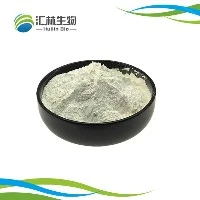
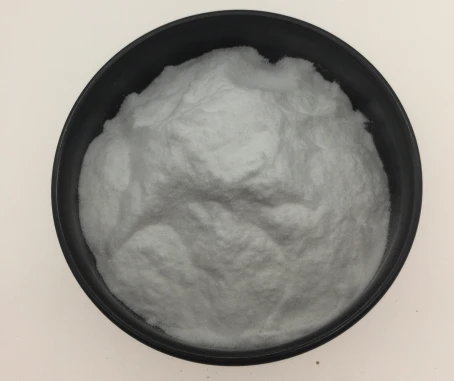
Xi'an Huilin Bio-tech Co., Ltd. supplies cosmetic-grade dehydroacetic acid powder at 98% minimum, with identity, assay basis and moisture stated on the lot certificate.
Sources
-
1. European Commission, CosIng, Annex V, list of preservatives allowed in cosmetic products, entry 13, 0.6% as acid, and the entries for phenoxyethanol, benzyl alcohol, sorbic acid and benzoic acid. https://ec.europa.eu/growth/tools-databases/cosing/reference/annexes/list/V
-
2. Regulation (EC) No 1333/2008 of the European Parliament and of the Council of 16 December 2008 on food additives, OJ L 354, 31.12.2008, p. 16. https://eur-lex.europa.eu/eli/reg/2008/1333/oj
-
3. 21 CFR 172.130, Dehydroacetic acid, covering the acid and its sodium salt and the cut or peeled squash limit. https://www.ecfr.gov/current/title-21/chapter-I/subchapter-B/part-172/subpart-B/section-172.130
-
4. Jimu News, report on GB 2760-2024 taking effect on 8 February 2025, listing the seven deleted categories and the pickled vegetable change. http://m.cnhubei.com/content/2025-02/08/content_18926070.html
-
5. PubChem CID 122903, dehydroacetic acid, C8H8O4, molecular weight 168.15. https://pubchem.ncbi.nlm.nih.gov/compound/122903
-
6. PubChem CID 23721629, sodium dehydroacetate, C8H7NaO4, molecular weight 190.13. https://pubchem.ncbi.nlm.nih.gov/compound/23721629
-
7. Huilin Bio-tech, Dehydroacetic Acid Powder product page, pKa and grade data, accessed 28 October 2026.