

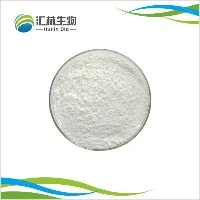
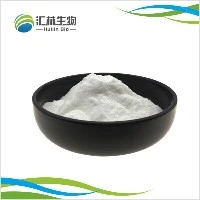
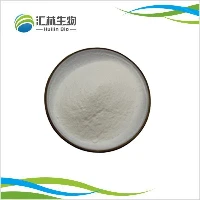


Xi'an Huilin Bio-Tech Co., Ltd. is one of the leading manufacturers and suppliers of sodium hyaluronate powder in China. With abundant experience, we are committed to providing high quality natural products with competitive price. Please feel free to wholesale bulk pure sodium hyaluronate powder for sale here from our factory.
Introduction
Sodium Hyaluronate Powder is the sodium salt form of hyaluronic acid (HA), a powerful glycosaminoglycan naturally found throughout the human body, particularly in the skin, joints, and eyes. This form offers superior stability and solubility compared to its acidic counterpart. Renowned for its incredible capacity to bind and retain water-holding up to 1,000 times its own weight-it is a quintessential humectant and a cornerstone ingredient in the cosmetic and wellness industries for delivering intense hydration and promoting tissue health [1].

Biochemical & Physical Parameters
| Parameter | Specification |
|---|---|
| CAS No. | 9067-32-7 |
| Chemical Name | Sodium Hyaluronate |
| Appearance | White or off-white fluffy powder |
| Molecular Weight | Low (50-300 kDa), Medium (500-1000 kDa), High (>1000 kDa) |
| Assay (on dry basis) | ≥ 95% |
| pH (1% Solution) | 6.0 - 7.5 |
| Solubility | Easily soluble in water, forming a clear viscoelastic solution. |
| Loss on Drying | ≤ 10% |
Mechanism of Action
The efficacy of Sodium Hyaluronate is rooted in its unique physicochemical properties and biological interactions:
1. Supreme Water-Binding (Humectancy): The Sodium Hyaluronate molecule is a long, linear polysaccharide chain rich in hydrophilic (water-loving) groups. It forms a hydrated molecular network on the skin's surface or within the joint space, creating a reservoir of moisture that helps maintain tissue turgor and lubrication [2].
2. Multi-Depth Hydration via Molecular Weight: This is a key functional differentiator.
- High Molecular Weight (HMW >1000 kDa): Remains on the skin's surface, forming a breathable, non-occlusive film that reduces Transepidermal Water Loss (TEWL) and provides immediate, long-lasting hydration and smoothing.
- Low Molecular Weight (LMW <300 kDa): Can penetrate deeper into the epidermis, delivering moisture to the living cells and providing hydration from within. It may also help stimulate the skin's own hyaluronic acid production and support tissue repair.
3. Viscoelasticity & Lubrication: In solutions, it exhibits both viscous and elastic properties, making it an excellent lubricant and shock absorber in joints and tissues.
Key Benefits of Sodium Hyaluronate

- Intense, Multi-Layer Hydration: Attracts and locks in moisture at multiple skin depths, leading to a noticeable improvement in skin plumpness, dewyness, and the reduction of fine lines caused by dehydration.
- Improved Skin Barrier Function: By reducing TEWL, it helps strengthen the skin's natural barrier, making it more resilient against environmental aggressors.
- Smoothing & Plumping Effect: Fills the spaces between skin cells and collagen/elastin fibers, resulting in a smoother, more supple, and youthful-looking complexion.
- Biocompatible & Soothing: As a substance native to the human body, it is highly biocompatible, well-tolerated, and has soothing properties, making it suitable for all skin types, including sensitive skin.
- Joint & Eye Health (for Nutraceuticals): When taken orally, it supports joint comfort and mobility by lubricating the synovial fluid and contributes to eye moisture [3].
Sodium Hyaluronate vs. Hyaluronic Acid
| Feature | Sodium Hyaluronate | Hyaluronic Acid |
|---|---|---|
| Chemical Form | Sodium salt | Acid form |
| Molecular Size | Generally smaller, more consistent | Can be larger and more variable |
| Stability | Higher. More stable in formulations. | Lower, can degrade more easily. |
| pH | Neutral (~6-7.5), skin-friendly. | Acidic (~4.5-6.0). |
| Skin Penetration | Better penetration due to smaller particle size. | Varies, but generally less penetrative. |
| Key Takeaway | The refined, stable, and more bioavailable form used in most modern cosmetics. | The foundational, naturally occurring molecule. |
Applications in Industry

Sodium Hyaluronate Powder is incredibly versatile:
1. Cosmetics & Skincare:
- Serums, Essences & Ampoules: For concentrated hydration.
- Moisturizers & Creams: As a key humectant in day/night formulas.
- Sheet Masks & Gels: To deliver an instant, intensive hydrating boost.
- Anti-Aging Products: For its plumping and wrinkle-smoothing effects.
2. Pharmaceuticals & Medical:
- Ophthalmic Solutions: Used in artificial tears and eye drops.
- Injectable Formulations: For dermal fillers and joint lubrication injections.
- Wound Healing: Promotes a moist environment conducive to repair.
3. Nutraceuticals:
- Dietary Supplements: In capsules or powders for joint and skin health support.
Frequently Asked Questions (FAQ)
Q: What are the side effects of Sodium Hyaluronate?
A: It is generally recognized as very safe and non-irritating. Due to its high biocompatibility, side effects are rare. In very rare cases, individuals with extremely sensitive skin might experience minor redness. Always perform a patch test.
Q: Is it suitable for all skin types?
A: Absolutely. Its lightweight, non-comedogenic, and soothing properties make it excellent for all skin types, from oily and acne-prone to dry and sensitive skin.
Q: Can I use it with other active ingredients?
A: Yes, it is highly versatile and can be layered with virtually any other active, such as Vitamin C, Niacinamide, Retinol, and Peptides. It can even help buffer potential irritation from stronger actives.
Q: Why is molecular weight important?
A: Different molecular weights serve different purposes. A blend of high, medium, and low molecular weights provides a comprehensive hydration strategy, moisturizing the surface, mid-layers, and deeper epidermis simultaneously for optimal results.
Contact Us
Elevate your formulations with the gold standard in hydration. Our high-purity, multi-molecular-weight Sodium Hyaluronate Powder (CAS 9067-32-7) is your key to creating superior skincare, nutraceutical, and pharmaceutical products. Contact us today to request a sample, technical data sheet, and discuss your specific molecular weight requirements.
E-mail: ella.zhang@huilinbio-tech.com.
References
- Papakonstantinou, E., Roth, M., & Karakiulakis, G. (2012). Hyaluronic acid: A key molecule in skin aging. Dermato-endocrinology, 4(3), 253–258.
- Jegasothy, S. M., Zabolotniaia, V., & Bielfeldt, S. (2014). Efficacy of a new topical nano-hyaluronic acid in humans. The Journal of clinical and aesthetic dermatology, 7(3), 27–29.
- Kawada, C., et al. (2014). Ingested hyaluronan moisturizes dry skin. Nutrition journal, 13, 70.
Hot Tags: sodium hyaluronate powder, China, suppliers, manufacturers, factory, wholesale, buy, price, bulk, pure, natural, high quality, in stock, for sale, Carbomer 940 Powder, Monobenzone Powder, Hydrolyzed Silk Powder, Arbutin Powder, D Panthenol Powder, Kojic Dipalmitate Powder


