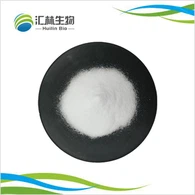

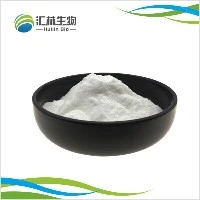


Xi'an Huilin Bio-Tech Co., Ltd. is one of the leading manufacturers and suppliers of 3-o-ethyl-l-ascorbic acid powder in China. With abundant experience, we are committed to providing high quality natural products with competitive price. Please feel free to wholesale bulk pure 3-o-ethyl-l-ascorbic acid powder for sale here from our factory.
Introduction
3-O-Ethyl-L-ascorbic Acid is a highly stable and oil-soluble derivative of pure Vitamin C (L-ascorbic acid). By introducing an ethyl group at the 3rd position, this derivative overcomes the major limitations of L-ascorbic acid-namely, its instability in water, heat, and air-while retaining its potent biological activity. It effectively penetrates the skin barrier and is converted into active L-ascorbic acid within the skin, making it a cornerstone ingredient for stable and effective cosmetic formulations targeting brightness, anti-aging, and antioxidant protection [1].

Biochemical & Physical Parameters
| Parameter | Specification |
|---|---|
| CAS No. | 86404-04-8 |
| Molecular Formula | C₈H₁₂O₆ |
| Molecular Weight | 204.18 g/mol |
| Appearance | White to off-white crystalline powder |
| Assay (HPLC) | ≥ 98.0% |
| Solubility | Soluble in oils, ethanol, and water (up to 4%) |
| pH (1% Solution) | ~2.5 - 3.5 |
Mechanism of Action: The Superior Bioavailable Precursor
The efficacy of 3-O-Ethyl-L-ascorbic Acid is based on its unique structure, which provides both stability and effective delivery:
1. Enhanced Stability & Penetration: The ethyl group protects the enediol structure of Vitamin C, which is most prone to oxidation. This makes the molecule stable in aqueous formulations and resistant to light and heat. Furthermore, its amphiphilic nature (due to the ethyl group) allows it to penetrate the stratum corneum more effectively than water-soluble L-ascorbic acid.
2. Intracellular Conversion & Activity: Once inside the skin cells (keratinocytes and fibroblasts), the ethyl ether bond is enzymatically cleaved, releasing active L-ascorbic acid directly at the target site [2]. The freed L-ascorbic acid then exerts its biological functions by:
- Donating Electrons: Directly neutralizing free radicals like the superoxide anion and hydroxyl radical.
- Regenerating Vitamin E: Recycling oxidized Vitamin E back to its active form in the skin.
- Acting as a Cofactor: Serving as an essential cofactor for enzymes involved in collagen synthesis and melanin regulation.
Key Benefits of 3-O-Ethyl-L-ascorbic Acid in Skincare

- Superior Stability: Remains stable in water-based formulas for over 24 months, preventing the yellowing and degradation associated with pure L-ascorbic acid. This extends product shelf life and ensures consistent efficacy.
- Potent Skin Brightening: Effectively inhibits the enzyme tyrosinase, crucial for melanin production. This leads to a reduction in the appearance of dark spots, hyperpigmentation, and melasma, promoting a more even and radiant skin tone [3].
- Boosts Collagen Production: Stimulates fibroblast activity and acts as a cofactor for prolyl hydroxylase and lysyl hydroxylase, enzymes necessary for collagen formation. This helps reduce the appearance of fine lines and wrinkles and improves skin firmness.
- Powerful Antioxidant Protection: Provides robust defense against oxidative stress induced by UV exposure and pollution, helping to prevent photoaging.
- Gentle on Skin: Its stable nature and moderate pH make it less irritating than low-pH L-ascorbic acid, suitable for sensitive skin types.
3-O-Ethyl-L-ascorbic Acid vs. Other Vitamin C Forms
| Feature | 3-O-Ethyl-L-ascorbic Acid | L-Ascorbic Acid (Pure VC) | Tetrahexyldecyl Ascorbate (THD Ascorbate) |
|---|---|---|---|
| Stability | Excellent. Stable in water and air. | Very Poor. Oxidizes quickly in water and air. | Excellent. Stable in oils. |
| Solubility | Amphiphilic. Soluble in water and oils. | Water-soluble only. | Oil-soluble only. |
| Skin Penetration | Very Good. Due to its amphiphilic nature. | Limited. Due to its hydrophilicity. | Excellent. Due to high lipophilicity. |
| Bioavailability | High. Converts to active VC in the skin. | Direct. But easily degraded before penetration. | High. Converts to active VC in the skin. |
| Irritation Potential | Low. | High (at an effective low pH). | Very Low. |
Applications in Industry

3-O-Ethyl-L-ascorbic Acid Powder is versatile for a wide range of skincare products:
1. Brightening & Whitening Serums: As a core active for targeting hyperpigmentation.
2. Anti-Aging Creams & Lotions: To stimulate collagen and combat wrinkles.
3. Essences & Toners: For lightweight, hydrating antioxidant layers.
4. Oil-in-Water (O/W) Emulsions: Its stability makes it ideal for a broad range of emulsion-based products.
5. Sunscreen & Day Creams: To provide synergistic antioxidant protection against UV-induced damage.
Formulation Reference
Basic Stable Vitamin C Brightening Serum:
1. Water Phase (84.5%):
- Deionized Water: q.s. to 100%
- Glycerin: 5%
2. 3-O-Ethyl-L-ascorbic Acid Powder: 2% (Pre-dissolve in a small amount of warm water or propylene glycol)
- Actives & Preservatives (3.5%):
- Niacinamide: 3% (Ensure compatibility and pH balance)
- Phenoxyethanol & Ethylhexylglycerin: 0.5%
3. Instructions: Pre-dissolve the 3-O-Ethyl Ascorbic Acid powder. Add to the main water phase with glycerin. Mix well. Finally, add the preservative. pH is typically in an effective range without adjustment.
Frequently Asked Questions (FAQ)
Q: How does it compare to L-ascorbic acid?
A: It is a stable derivative of L-ascorbic acid. While L-ascorbic acid is pure Vitamin C but highly unstable, 3-O-Ethyl Ascorbic Acid offers superior stability in formulations, good skin penetration, and is converted to active L-ascorbic acid in the skin, making it a more reliable and gentle choice for cosmetic products.
Q: Are there any side effects?
A: It is generally well-tolerated and considered non-irritating and non-sensitizing. Its gentle profile makes it suitable for sensitive skin, unlike the potential irritation from low-pH L-ascorbic acid formulations. Always conduct a patch test for new products.
Q: What is the recommended usage concentration?
A: The effective usage range is typically between 0.5% to 3.0% in the final formulation. A concentration of 2% is common for significant brightening and antioxidant effects.
Q: Is it the same as Ethyl Ascorbic Acid?
A: Yes, "3-O-Ethyl-L-ascorbic Acid" is the precise chemical name, while "Ethyl Ascorbic Acid" is a common abbreviated name for the same ingredient. They refer to the identical compound.
Contact Us
Formulate with confidence using the stable and powerful 3-O-Ethyl-L-ascorbic Acid Powder (CAS 86404-04-8). Elevate your skincare line with a proven Vitamin C derivative that delivers visible brightening and anti-aging results. Contact us today to request a sample, certificate of analysis (CoA), and technical data sheet.
E-mail: ella.zhang@huilinbio-tech.com.
References
- Iliopoulos, F., Sil, B. C., Moore, D. J., Lucas, R. A., & Lane, M. E. (2019). 3-O-ethyl-l-ascorbic acid: Characterisation and investigation of single solvent systems for delivery to the skin. International Journal of Pharmaceutics: X, *1*, 100025
- Al-Niaimi, F., & Chiang, N. Y. Z. (2017). Topical Vitamin C and the Skin: Mechanisms of Action and Clinical Applications. The Journal of Clinical and Aesthetic Dermatology, *10*(7), 14–17.
- Chen, S. J., et al. (2021). The anti-melanogenic effects of 3-O-ethyl ascorbic acid via Nrf2-mediated α-MSH inhibition in UVA-irradiated keratinocytes and autophagy induction in melanocytes. Free Radical Biology and Medicine, *173*, 151–169
Hot Tags: 3-o-ethyl-l-ascorbic acid powder, China, suppliers, manufacturers, factory, wholesale, buy, price, bulk, pure, natural, high quality, in stock, for sale, Hydrolyzed Silk Powder, Mandelic Acid Powder, L Glutathione Powder 99 , Carbomer 940 Powder, Tranexamic Acid Powder 99 , Laurocapram Azone Powder