



N-acetyl-L-cysteine powder is routinely described as hygroscopic, and that description is wrong in a way that costs batches. The handbook record calls NAC non-hygroscopic and notes that it oxidises in moist air instead. Working out how to mix NAC powder without losing assay therefore starts with oxygen and metal contact, not with a dehumidifier.

1. The Record Says Non-Hygroscopic, and the Record Matters
The peer-reviewed reference record does not describe NAC as hygroscopic, and the distinction between absorbing water and oxidising in moist air changes every control point downstream.
The Hazardous Substances Data Bank entry for N-acetyl-L-cysteine, retrieved through PubChem, states the material is "Stable in ordinary light; stable at temp up to 120 °C; nonhygroscopic (oxidizes in moist air)", citing Remington's Pharmaceutical Sciences. Two lines earlier the same record gives a melting point of 109.5 °C from the CRC Handbook, with DrugBank listing 109–110 °C. Read those together and three common pieces of NAC advice collapse: it does not pull water out of the air, it does not need to be kept away from ordinary light, and it survives temperatures well above any drying oven you would use.
What it does is oxidise. The thiol group reacts with oxygen, slowly in dry air and quickly when moisture is present, forming the disulfide dimer. That product is less soluble, harder, and off-white to yellow, so the symptom looks exactly like damp powder that has caked. This is why the hygroscopic story survives for NAC powder: the visible evidence supports it and almost nobody checks the assay instead of the appearance.
2. Four Degradation Routes, Ranked by What Actually Happens
For NAC powder, oxidation dominates and the rest are secondary or conditional, which is the ranking that tells a plant where to spend money.
| Route | Trigger | First visible sign | Control that works |
| Thiol oxidation of NAC powder | Oxygen, accelerated by moisture | Yellow tint, hard crust, sulfurous smell | Nitrogen blanket, sealed liner, small headspace |
| Metal-ion catalysis | Iron, copper, rust, bare carbon steel | Discolouration at points of contact | Glass, plastic, or 316 stainless only |
| Thermal decomposition | Above roughly 120 °C | Melting, then breakdown | Cap drying at 60 °C; jacket at room temperature |
| Photodegradation | Ordinary light | Not documented | Opaque packaging is convention, not a requirement |
The fourth row is included because it is the one most often written into specifications without a basis. If your stability protocol lists light sensitivity for NAC, you are testing a failure mode the reference record does not recognise, and you are doing it at the expense of the oxygen control that does matter.
3. Workspace: What to Control and What Is Ceremony
How to mix NAC powder is mostly a scheduling question rather than an equipment one. Humidity control is worth having, but it is a secondary measure, and quoting a threshold nobody published is how a good SOP loses credibility with a customer's QA team.
› Sealed containers with desiccant, opened only at the weighing station
› Metal-free scoops, spatulas and vessel contact surfaces throughout
› Nitrogen or argon blanket whenever the batch will sit open for more than a few minutes
› Relative humidity logged as a process parameter, not enforced as a published limit
A 40% RH ceiling is a reasonable house rule and it is what most facilities already run. Present it as a specification and someone will eventually ask which method it came from. Present it as a control you log, and it does its job without inviting the question.
4. Mixing by Scale: the Method Changes Twice
How to mix NAC powder changes at roughly 1 kg and again at 10 kg, because the dominant failure shifts from static losses to segregation, and then to heat and work input.
| Scale | Equipment | Real risk | Method note |
| Under 100 g | Wide-mouth jar or mortar, spatula | Static loss on the vessel wall | Geometric dilution; scrape walls every 30 seconds |
| 1–10 kg | V-blender or double-cone | Segregation of fine from coarse particles | Load the minor component in the middle of the shell |
| Above 10 kg | Ribbon or ploughshare | Heat and work input over a long cycle | Jacket at room temperature; cap cycle time; sample three points |
One point the scale table hides: if NAC is the majority component, segregation is not your problem. The fine material that separates and floats is whichever minor active you added at one or two percent. Geometric dilution fixes it cheaply, and a glidant helps only when the blend is genuinely cohesive rather than merely stratified.
There is also a category error worth naming, because it shows up in briefs. Not every raw material sold into these blends is a powder. Methyl pentanoate has a boiling point of 128 °C and a melting point of −91 °C, which makes it a liquid at every temperature a blending room will ever reach. A volatile ester like that is adsorbed onto a carrier or dosed as a liquid; it is never tumbled dry with NAC, and any SOP that lists it as a powder is describing a product that does not exist.
5. What Failure Looks Like Before the Assay Confirms It
Every failure mode in NAC powder announces itself visually first, and the visual signs point to oxidation rather than moisture in all four cases.
› A yellow cast on the surface layer is oxidised powder, not damp powder
› A crust that cracks rather than deforms has reacted, and cannot be dried back to specification
› A sulfurous smell means free thiol has turned over and the batch predates its own COA
› One to two points of assay drift between sample points means segregation, not degradation
The last item is the one people misdiagnose. A blend that separates will read low at the top and high at the bottom while every particle in it is still perfectly good material. Retesting the whole lot after re-blending usually recovers it, which is also the cheapest possible confirmation that the problem was physical.
6. Storage After Mixing
Storage decides whether the work survives, and the freezer advice that circulates in this category does more harm than good.
Storing NAC powder sealed, dry and below 25 °C, with the liner intact and the headspace small, is sufficient and it is what the reference data supports. Moving a hygroscopic-looking powder to a freezer looks prudent until the container is opened at room temperature, at which point condensation forms directly on cold powder. If a freezer is genuinely required for a different component in the blend, let the sealed container reach room temperature before opening it, and say so in the SOP rather than assuming operators will.
Aqueous solutions are a separate case and a stricter one. Our own product documentation states that the aqueous solution is susceptible to oxidation in air and should be prepared before use, and that contact with metal, rubber, oxidising agents and oxygen should be avoided. That is the same chemistry as the dry state, running faster, which is why bench protocols that hold a NAC solution overnight are losing material without noticing.
7. What to Put in the Spec Before You Order
Decide how to mix NAC powder before you write the purchase order, because the blend you are building determines the specification. A single assay figure will not predict how a lot behaves, so the specification has to carry the five items that do.
› Assay method, and whether the figure is on the dried or the as-is basis
› Loss on drying, because it moves the assay without moving the label
› Heavy metals, which act as oxidation catalysts at trace level
› A photographed colour standard, not the word "white"
› Packaging detail: liner type, headspace volume, desiccant or none
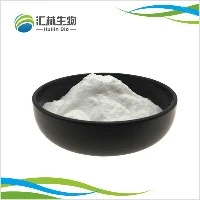
The material we ship is listed at 98% assay as a white crystalline powder, CAS 616-91-1, molecular formula C5H9NO3S, molecular weight 163.19, EINECS 210-498-3, soluble in water, ethanol and methanol and insoluble in chloroform and ether. Minimum order is 1 kg, monthly capacity is around 2,000 kg, and 10–20 g samples go out free of charge so a formulation team can run its own blend trial before committing to a drum.
8. Frequently Asked Questions
Q: Is NAC Powder Hygroscopic?
A: No, and the distinction is the most useful thing on this page. The HSDB record retrieved through PubChem describes NAC as non-hygroscopic and notes that it oxidises in moist air. It does not pull water into the crystal; it reacts with oxygen, and moisture accelerates that reaction. Controls aimed only at humidity miss the failure that actually occurs.
Q: Why Does My NAC Powder Go Yellow?
A: Oxidation of the thiol group in NAC powder. NAC reacts with oxygen to form the disulfide dimer, which is less soluble and off-white to yellow, and the change begins at the surface where powder meets air. A yellowed batch cannot be dried back into specification. Incoming colour, headspace oxygen and metal contact are the three variables worth checking first.
Q: Can I Dry NAC In An Oven?
A: Yes; NAC powder at 60 °C sits well inside a thermal limit of roughly 120 °C. The risk in oven drying is oxidation rather than heat, so a vacuum oven with a nitrogen purge is safer than a fan oven at the same setting. Drying is not a rescue route for a batch that has already changed colour.
Q: What Humidity Should The Blending Room Run At?
A: There is no published threshold, so do not write one into a customer specification. Most facilities run 40% relative humidity or lower and log it as a process parameter. Treat humidity as a secondary control that slows oxidation, and treat oxygen displacement, sealed liners and metal-free contact as the primary controls.
Q: What Is The Most Common Mistake When Learning How To Mix NAC Powder?
A: Mixing longer to fix it. Control loading order and particle size instead. Add the minor component into the middle of the shell rather than at the start, use geometric dilution below 1 kg, and avoid running a V-blender long enough to stratify the batch. Longer mixing makes separation worse, not better. Confirm with three-point sampling before release.
Q: What Assay Should I Specify?
A: For NAC powder, specify method, basis and appearance together, because the number alone will not predict behaviour in a blend. Our material is listed at 98% assay as a white crystalline powder, CAS 616-91-1. Ask for loss on drying and heavy metals alongside it, and agree on a colour reference your QA team will physically compare against.
Buying NAC powder for a capsule line, a powder blend or a bench protocol? N-acetyl-L-cysteine powder ships from Xi'an Huilin Bio-tech Co., Ltd. at 98% assay, with 1 kg minimum orders, free 10–20 g samples and a batch COA issued against the specification you send. Tell us the blend and the failure you are trying to avoid, and we will answer against that rather than against a catalogue page.
Written for trade buyers and formulators; not medical advice.
Sources
-
1. PubChem. N-Acetyl-L-Cysteine, CID 12035 - chemical and physical properties. pubchem.ncbi.nlm.nih.gov/compound/12035
-
2. Hazardous Substances Data Bank, HSDB 3003: N-Acetylcysteine - stability and shelf life. pubchem.ncbi.nlm.nih.gov/source/hsdb/3003
-
3. Osol A, ed. Remington's Pharmaceutical Sciences. 16th ed. Easton, PA: Mack Publishing; 1980:805.
-
4. Lide DR, ed. CRC Handbook of Chemistry and Physics. 81st ed. Boca Raton, FL: CRC Press; 2000:3-139.
-
5. DrugBank. Acetylcysteine, DB06151. go.drugbank.com/drugs/DB06151
-
6. Xi'an Huilin Bio-tech Co., Ltd. N-Acetyl-L-cysteine Powder (NAC) - specification and handling notes. hlextract.com