


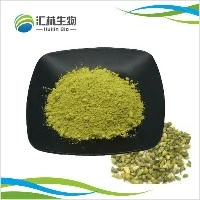


Quercetin for athletes rests on one dose: 1,000 mg a day. Twelve of the thirteen randomised trials pooled in a 2023 meta-analysis used it, and your label has to deliver it from Sophora japonica extract quercetin. Whether the SKU works is a question about assay basis, absorption and claims wording, not about the plant.

1. The Pooled Trials Support Soreness and Creatine Kinase, and Not Cytokines
The best evidence for quercetin for athletes is a 2023 meta-analysis in Biology of Sport covering 13 randomised controlled trials and 249 participants. Soreness fell at 0–24 hours after exercise with a standardised mean difference of −1.33 (p = 0.03), creatine kinase at 24–48 hours by −1.15 (p = 0.02), and post-exercise oxidative stress by −0.92 (p = 0.03). Interleukin-6 did not change.
That last line is the commercially important one. The mechanism story usually sold to formulators runs through NF-κB and cytokine suppression; the pooled human data does not reproduce it. A product page built on "lowers inflammatory cytokines" is claiming something the meta-analysis tested and did not find.
The population is narrower than sports-nutrition copy implies: 249 participants, sedentary to well-trained young men, and every included study carried some concerns on risk of bias. The authors' own conclusion is a dose statement - 1,000 mg a day for more than seven days and up to twelve weeks appears safe and efficacious for muscle damage and soreness in that group.
2. Two Controlled Trials Found Nothing at the Same Dose
Two well-controlled trials in this literature tested 1,000 mg a day and found no effect, which is why the pooled result comes with a confidence interval rather than a promise.
O'Fallon and colleagues gave 30 adults 1,000 mg daily for seven days before and five days after eccentric elbow exercise. Plasma concentration reached 202 ± 52 ng/mL and stayed elevated through recovery. Strength loss, soreness, arm swelling, creatine kinase and C-reactive protein did not differ between the two groups.
McAnulty and colleagues randomised 40 athletes to 1,000 mg daily or placebo for six weeks, then had them cycle three hours at 57% of maximum on three consecutive days. F2-isoprostanes, nitrite, ferric-reducing ability of plasma, trolox equivalent antioxidant capacity and C-reactive protein all rose with exercise; none differed by group. Their conclusion was blunt: the antioxidant effect seen in vitro is absent in vivo.
Both results sit inside the same dose range as the positive trials. What separates them is timing, population and endpoint, not milligrammes. Anyone formulating quercetin for athletes should carry that reading into the claim: a recovery input with a measurable but inconsistent effect, not a switch.
3. The "Fewer Colds" Figure Is a Flavonoid Figure, Not a Quercetin Figure
The 40% figure that circulates in quercetin for athletes copy is a sick-day reduction pooled across fourteen flavonoid trials, and the largest quercetin trial found no overall effect.
Heinz and colleagues ran the largest: 1,002 adults aged 18 to 85, randomised to 500 mg, 1,000 mg or placebo for twelve weeks, with symptoms logged daily. Across all subjects there was no significant difference in upper respiratory tract infection rates, severity or duration. One subgroup separated - subjects aged 40 and over who rated their own fitness in the top half of the group, 325 people - with 36% lower severity (p = 0.020) and 31% fewer sick days (p = 0.048) at 1,000 mg.
The 33% incidence reduction and the 40% sick-day reduction belong to Somerville's meta-analysis of dietary flavonoids generally, at 0.2 to 1.2 g a day, and the authors describe the sick-day figure as unclear. Those trials pool several flavonoids rather than quercetin alone. None of it transfers to a quercetin line item, and a "40% fewer colds" claim is a disease claim in both the US and the EU.
4. Absorption Is the Binding Constraint, Not Purity
A 98% powder is quercetin aglycone, and aglycone is the lowest-bioavailability form in the most recent systematic review of the question.
Liu and colleagues pooled 31 human intervention studies published up to July 2024 and ranked forms by measured bioavailability. Quercetin-3-O-oligoglucosides came out 2-fold above quercetin-3-O-glucoside, 10-fold above rutin and about 20-fold above the aglycone. Formulation moved the number further: a lecithin phytosome gave 20.1-fold, a glucoside–γ-cyclodextrin complex 10.8-fold, and a self-emulsifying fenugreek galactomannan with lecithin 62-fold.
| Form | Bioavailability vs aglycone | What it means for a buyer |
| Quercetin aglycone (98% isolate) | 1× (reference) | Cheapest milligramme of quercetin; highest dose per capsule |
| Rutin (quercetin-3-O-rutinoside) | about 2× | Bud extract standardised on rutin; a different SKU, not a substitute |
| Quercetin-3-O-glucoside | about 10× | Needs a glycoside or enzymatic route, not a hydrolysis isolate |
| Quercetin-3-O-oligoglucosides | about 20× | Higher-cost grade; label claim per milligramme falls sharply |
| Lecithin phytosome | 20.1× | Second purchase order, different cost of goods |
| Fenugreek galactomannan + lecithin | 62× | A formulation play, not a commodity powder swap |
Ratios are derived from the fold-differences stated in Liu et al. (2025) and are relative, not absolute.
The practical consequence: 1,000 mg a day produced 0.67 µmol/L in O'Fallon's trial, calculated from the reported 202 ng/mL and a molecular weight of 302.23. If your positioning needs a higher plasma level, the answer is a formulated grade - and that is a different purchase order from a 98% isolate.
Food matrix is the free lever. Guo and colleagues gave nine adults 1,095 mg of aglycone with a fat-free, low-fat or high-fat breakfast; against fat-free, the 15.4 g fat meal raised Cmax by 45% and AUC over 24 hours by 32%. The 2025 review reports dietary fat and fibre each roughly doubling bioavailability. A "take with food" instruction is therefore not folk advice but the only absorption lever that costs nothing.
5. Two Certificates Can Both Say 98% and Differ by Fifteen Percent
Quercetin is sold on two bases, anhydrous and dihydrate, and an assay figure that does not name its basis is not a specification.
Anhydrous quercetin is C15H10O7 at 302.23 (PubChem CID 5280343); the dihydrate is C15H14O9 at 338.27 (PubChem CID 5284452). The dihydrate is 89.3% quercetin by weight, so a 98% anhydrous powder and a 95% dihydrate powder are not the same material at the weigh boat.
| Label claim (quercetin) | Powder needed at 98% anhydrous | Powder needed at 95% dihydrate |
| 250 mg | 255 mg | 295 mg |
| 500 mg | 510 mg | 589 mg |
| 1,000 mg | 1,020 mg | 1,178 mg |
At 1,000 mg a day the gap is 158 mg of powder per serving, or 15.8 kg per 100,000 servings. That is the figure to put in front of a procurement team before arguing about price per kilogramme. Our own specification declares CAS 117-39-5, the anhydrous form, at 98% by HPLC; state the same basis on your label and your certificate and the comparison stays honest.
6. One Plant Name, Two Different Products
Sophora japonica supplies a rutin-standardised bud extract and a quercetin isolate, and the two cannot be swapped on a specification.
The bud accumulates rutin, which is quercetin 3-O-rutinoside - the aglycone carrying a rhamnose–glucose chain. The isolate is obtained by hydrolysing that chain and purifying the aglycone, the same chemistry described in the rutin-degrading enzyme literature. A product sold as "Sophora japonica extract, 98% quercetin" is therefore an isolate with a botanical origin story, not a ratio extract.
Ask which one you are quoting. The rutin grade is assayed on rutin by HPLC and priced as a bud extract; the isolate is assayed on the aglycone and priced as a monomer. The two carry different COA templates, different flow behaviour in a blender and a different cost per milligramme of active.
7. The Botanical Name Should Be Identical on Label, COA and Invoice
Sophora japonica L. is a synonym of Styphnolobium japonicum, and mismatched names across documents are a defect your customer's QA team will find.
The Global Biodiversity Information Facility backbone records Sophora japonica L. as a synonym of Styphnolobium japonicum in the genus Styphnolobium, family Fabaceae. Both strings appear in commerce and in pharmacopoeial monographs, so neither is wrong - but a certificate citing one while the label cites the other invites a query. Choose one string for the specification, note the synonym once in the product description, and keep it identical across COA, artwork and commercial invoice.
8. Which Claims Survive Contact With the Evidence
In the US a quercetin line may carry a structure or function statement and nothing stronger; in the EU the wording must already be authorised before it reaches artwork.
The US route is procedural. A structure/function claim has to be truthful and not misleading, must carry the standard disclaimer that the statement has not been evaluated by the Food and Drug Administration and that the product is not intended to diagnose, treat, cure or prevent any disease, and must be notified to FDA no later than 30 days after the product is marketed.
The EU route is a list. Regulation (EC) No 1924/2006 allows a health claim only once it is authorised, and in practice the wording has to appear on the EU Register before it is printed. "Reduces colds by 40%" fails both tests: it is a disease claim, and the largest quercetin trial found no overall effect.
What is defensible is narrow and specific: a statement that quercetin supports recovery from exercise-induced muscle soreness, filed with a substantiation dossier that cites the 2023 meta-analysis, its effect sizes, its confidence intervals and its risk-of-bias caveats. What is not: cytokine language, immunity percentages, or any implied equivalence to a drug.
9. Frequently Asked Questions
Q: How Much Quercetin Do Athletes Actually Take?
A: 1,000 mg a day. Twelve of the thirteen trials in the 2023 meta-analysis used that dose, and the authors describe 1,000 mg daily for more than seven days and up to twelve weeks as safe in sedentary to well-trained young men. The largest community trial also tested 500 mg and found no separation from placebo across all subjects, which is why the quercetin for athletes literature is built on 1,000 mg.
Q: Does Quercetin Reduce Delayed Onset Muscle Soreness?
A: The pooled estimate says yes, at a standardised mean difference of −1.33 in the first 24 hours after exercise, across 13 trials and 249 participants. Individual trials disagree, including O'Fallon's, which found no difference at 1,000 mg a day. Treat it as a modest and inconsistent effect rather than a reliable one.
Q: Does Quercetin Improve Endurance Performance?
A: This evidence base cannot support that claim. The 2023 meta-analysis measured muscle damage, soreness, inflammatory markers, antioxidant capacity and oxidative stress; endurance performance was not among its outcomes. A performance claim needs a trial with a performance endpoint, and the pooled recovery data will not substitute for one.
Q: Is Sophora Japonica Quercetin Better Absorbed Than Apple Quercetin?
A: No evidence supports that. Once purified to a 98% aglycone the molecule is identical whichever plant it came from, and the review that ranked bioavailability compared chemical forms rather than botanical sources. Absorption is set by the form - aglycone, glucoside, phytosome - and by the meal it is taken with.
Q: Should Quercetin Be Taken With Fat?
A: Yes, if exposure matters. In a crossover trial, 1,095 mg of aglycone taken with a 15.4 g fat breakfast produced 45% higher Cmax and 32% higher AUC over 24 hours than the same dose taken fat-free. The 2025 review reports dietary fat and fibre each roughly doubling bioavailability.
Q: What Should A Quercetin COA State?
A: Assay and its basis first: anhydrous or dihydrate, with the HPLC method named. Then loss on drying, residue on ignition, heavy metals, residual solvents, particle size through the stated mesh, total plate count and pathogen screen, batch number and retest date. A certificate that says 98% without naming the basis cannot be compared with a competitor's.
Xi'an Huilin Bio-tech Co., Ltd. supplies Sophora japonica extract quercetin as a 98% HPLC isolate from dried flower buds, CAS 117-39-5, packed from 0.1 kg foil bags to 25 kg cartons with a two-year shelf life, alongside our standardised herb extract range and the neighbouring polyphenol lines that arrive in the same RFQ - tea polyphenols and boswellia serrata. Send the specification you need to match, including assay basis and mesh, and we will confirm it against a current COA. Bulk enquiries: sales@huilinbio-tech.com.
Sources
-
1. Rojano-Ortega D, Peña-Amaro J, Berral-Aguilar AJ, Berral-de la Rosa FJ. Quercetin supplementation promotes recovery after exercise-induced muscle damage: a systematic review and meta-analysis of randomized controlled trials. Biology of Sport. 2023;40(3):813-825. doi:10.5114/biolsport.2023.121320. PubMed
-
2. O'Fallon KS, Kaushik D, Michniak-Kohn B, Dunne CP, Zambraski EJ, Clarkson PM. Effects of quercetin supplementation on markers of muscle damage and inflammation after eccentric exercise. International Journal of Sport Nutrition and Exercise Metabolism. 2012;22(6):430-437. doi:10.1123/ijsnem.22.6.430. PubMed
-
3. McAnulty SR, McAnulty LS, Nieman DC, et al. Chronic quercetin ingestion and exercise-induced oxidative damage and inflammation. Applied Physiology, Nutrition, and Metabolism. 2008;33(2):254-262. doi:10.1139/H07-177. PubMed
-
4. Heinz SA, Henson DA, Austin MD, Jin F, Nieman DC. Quercetin supplementation and upper respiratory tract infection: a randomized community clinical trial. Pharmacological Research. 2010;62(3):237-242. doi:10.1016/j.phrs.2010.05.001. PubMed
-
5. Somerville VS, Braakhuis AJ, Hopkins WG. Effect of flavonoids on upper respiratory tract infections and immune function: a systematic review and meta-analysis. Advances in Nutrition. 2016;7(3):488-497. doi:10.3945/an.115.010538. PubMed
-
6. Liu L, Barber E, Kellow NJ, Williamson G. Improving quercetin bioavailability: a systematic review and meta-analysis of human intervention studies. Food Chemistry. 2025;477:143630. doi:10.1016/j.foodchem.2025.143630. PubMed
-
7. Guo Y, Mah E, Davis CG, Jalili T, Ferruzzi MG, Chun OK, Bruno RS. Dietary fat increases quercetin bioavailability in overweight adults. Molecular Nutrition & Food Research. 2013;57(5):896-905. doi:10.1002/mnfr.201200619. PubMed
-
8. PubChem, National Library of Medicine. Quercetin, CID 5280343, molecular formula C15H10O7 and molecular weight 302.23. PubChem
-
9. PubChem, National Library of Medicine. Quercetin dihydrate, CID 5284452, molecular formula C15H14O9 and molecular weight 338.27. PubChem
-
10. Zhao J, Wu H, Wang L, et al. The seed-specific rutin-degrading enzyme FtBGLU29 is a key factor promoting the accumulation of the bitter compound quercetin. Journal of Agricultural and Food Chemistry. 2025;73(9):5328-5340. doi:10.1021/acs.jafc.4c10858. PubMed
-
11. Global Biodiversity Information Facility. Styphnolobium japonicum, accepted name for Sophora japonica L. (synonym), family Fabaceae. GBIF
-
12. US Food and Drug Administration. Structure/Function Claims. fda.gov
-
13. Regulation (EC) No 1924/2006 of the European Parliament and of the Council on nutrition and health claims made on foods. EUR-Lex
-
14. European Commission. EU Register of nutrition and health claims made on foods. EU Register