



Does L-arginine lower blood pressure? The pooled trial data says yes, by roughly six millimetres of mercury systolic, and no supplement brand may print that sentence. 99% L-arginine powder sells into exactly that gap, so this is the L-arginine and blood pressure question a buyer actually needs answered: what the numbers are, and what they license you to say.

1. The Effect Is Real, Small, and Unprintable
Does L-arginine lower blood pressure? The pooled trials say yes by a modest margin, and in both major markets that finding sits on the wrong side of the line between a structure claim and a disease claim.
The most recent synthesis is Shiraseb and colleagues, published in Advances in Nutrition in 2021 and covering 22 randomised controlled trials with 30 effect sizes. Oral L-arginine lowered systolic pressure by 6.40 mmHg (95% CI −8.74 to −4.05) and diastolic pressure by 2.64 mmHg (95% CI −3.94 to −1.40), both significant. That is a real effect size, comparable to what a single lifestyle intervention delivers in a motivated population, and it is the number every supplier in this category is quietly quoting.
What almost none of them say next is that hypertension is a disease. In the United States a claim to lower blood pressure is a disease claim, which makes it drug territory; only a drug may be marketed to diagnose, treat, cure or prevent a disease. In the European Union a health claim is usable only if it appears in the authorised list, and no arginine entry for blood pressure sits there. The result, for L-arginine powder, is a category where the science is more favourable than the law allows, and where the brands that win are the ones that express the benefit without naming it.
2. What the Pooled Data Actually Shows
Two reviews carry the argument for L-arginine powder, they agree on direction, and they disagree on spread in a way that tells you how fragile the pooled figure is.
| Review | Basis | Systolic | Diastolic |
| Shiraseb et al., Advances in Nutrition, 2021 | 22 RCTs, 30 effect sizes, oral dosing only | −6.40 mmHg (95% CI −8.74 to −4.05) | −2.64 mmHg (95% CI −3.94 to −1.40) |
| McRae, Journal of Chiropractic Medicine, 2016 | Umbrella review of 7 meta-analyses | −2.2 to −5.4 mmHg | −2.7 to −3.1 mmHg |
For L-arginine powder, the gap between a range and a point estimate is the story. McRae's umbrella review recorded statistically significant heterogeneity in five of the seven meta-analyses it examined, which means the trials were not measuring one consistent effect. Pooling them produces a tidy number that describes no individual study particularly well, and that is the number a marketing team will want to put in a headline.
3. The Dose-Response Reverses at Nine Grams
The most useful finding for anyone selling L-arginine powder is also the least quoted, because it tells a formulator to use less material rather than more.
In the Shiraseb meta-analysis the effect is present at ordinary doses and then stops being detectable above 9 g per day. Subgroup analysis found no significant change in systolic or diastolic pressure at doses greater than 9 g daily, and no significant change in trials running longer than 24 days. The nonlinear dose-response put the effective threshold at 4 g per day or more for systolic pressure, independent of trial duration.
Read alongside the safety data, the L-arginine powder window is narrow rather than wide. McRae's umbrella review records that intakes above 9 g per day are associated with gastrointestinal discomfort, nausea and diarrhoea. So the same threshold that appears to cost you the effect is also the threshold where tolerability starts to fail. An L-arginine powder product dosed at 20 g is not a premium version of one dosed at 5 g; on this evidence it is a more expensive way to reach the same or worse endpoint.
One caveat belongs here rather than in a footnote. Fewer trials sit above 9 g, so the loss of significance may reflect power as much as physiology. The honest formulation of the finding is that no benefit has been demonstrated above 9 g, not that harm has been proven. For a brand deciding where to set a serving size, those two statements lead to the same place.
4. The Normotensive Question
Whether L-arginine powder does anything for people without the diagnosis is the question that decides who a brand can sell to, and on this one, does L-arginine lower blood pressure has a more favourable answer than the folk version suggests.
The same meta-analysis ran subgroup analyses by baseline blood pressure category and found significant reductions in both normotensive and hypertensive participants. It also found reductions regardless of sex, health status, and body mass index category, with the exception of obese participants, where the change was not significant. Diastolic pressure fell more in women than in men, and a meta-regression found a significant relationship between dose and diastolic change.
That does not make a prevention claim available, and it does not mean a normotensive user will feel anything. It does mean the widely repeated line that arginine only works if you already have high blood pressure is not supported by the pooled data. If your positioning rests on that line, you are arguing against the better evidence.
5. The Stacking Claims, Ranked by What Can Be Sourced
Pairing language is where the L-arginine powder category loses control, because each added ingredient multiplies the number of claims a regulator can examine and almost none of the pairings have trial support.
| Pairing | Common claim | Evidence status |
| L-citrulline | Converts to arginine, so it raises arginine | Supported as a delivery route: oral citrulline has been shown to raise plasma arginine more than oral arginine does |
| Selenium | Protects nitric oxide from breaking down | No blood pressure trial of the pairing located |
| SAMe | Lowers homocysteine, which lowers pressure | No blood pressure trial of the pairing located |
| Alpha-ketoglutarate | Amplifies the nitric oxide effect | No trial located; AAKG already binds the two in one molecule |
| GABA | Lowers cortisol, therefore lowers pressure | No blood pressure trial of the pairing located |
The citrulline row is the one worth acting on commercially for L-arginine powder. It is not a claim about blood pressure; it is a pharmacokinetic finding about which molecule delivers arginine into plasma more effectively. That makes it defensible on a label in a way the other four are not, and it is the reason sports and vascular formulators moved toward citrulline malate while the arginine category stayed where it was.
The other four rows are legitimate ingredients with their own categories. Selenium is an essential trace element, SAMe is a methyl donor sold into mood and joint formats, alpha-ketoglutarate is an energy metabolite, and GABA is sold into sleep and stress products. None of them has blood pressure evidence behind it in combination with arginine, and building a stack page around the combination converts four defensible products into one unsupported claim.
6. What the Label Can Say Without Naming the Disease
Both markets leave room, and the room is in mechanism rather than outcome. That is the practical answer to does L-arginine lower blood pressure for anyone writing copy: you may describe what the nutrient does in the body, not what it does to a diagnosis.
In the United States a structure or function claim may describe the role of a nutrient in normal physiology without prior approval, provided it is truthful and not misleading, carries a substantiation file, and is notified to the agency within 30 days of marketing. The required disclaimer has to appear on the label. What is not available is any statement that the product lowers, treats, prevents or controls high blood pressure, because that is a disease claim and only a drug may carry one.
In the European Union there is no equivalent safe harbour. A claim is usable only if it appears in the authorised list, and authorised wording is specific enough that a paraphrase usually falls outside it. That means the same sentence that survives in the United States can be unusable in Germany, which is why the practical answer for a brand selling into both is one claim set for the US and a mechanism-only label for the EU.
For L-arginine powder, a serving size is not itself a claim, but the sentence wrapped around it usually is. "5 g of L-arginine per stick" is a fact. "5 g of L-arginine to keep your blood pressure in check" is a disease claim with a number attached. The number is what makes it look like evidence, and it is also what makes it easy for a regulator to date-stamp.
7. The Salt Form, and Why Your Serving Size Is Probably Wrong
Two L-arginine powder products carrying the same name can differ by a fifth in what the customer actually swallows, and the difference is invisible on an assay certificate.
Free-base L-arginine has a molecular weight of 174.20; the hydrochloride salt is 210.66. The base is therefore 82.7% of the salt by mass, which means 5 g of declared L-arginine requires about 6.05 g of hydrochloride. A formulator who writes the label against the salt weight under-delivers by roughly 18%, and one who writes it against the base weight and buys the salt over-declares. Neither error appears anywhere except in the final product.
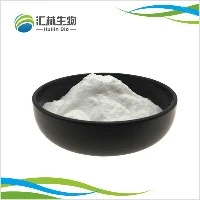
Our L-arginine powder is the free base: CAS 74-79-3, molecular formula C6H14N4O2, molecular weight 174.20, 99% assay, 95% passing 80 mesh, food grade, 148.7 g/L solubility in water at 20 °C. Minimum order is 1 kg, drums are 25 kg, shelf life is 24 months, and annual output runs to around 200 tonnes.
Format follows from the number. A 5 g serving dissolves in about 34 mL of water at that solubility, which is a stick pack or a scoop, not a capsule. Six grams of powder is twelve 500 mg capsules, and nobody takes twelve capsules for one serving. The dose the evidence supports is the dose the format has to carry.
8. Frequently Asked Questions
Q: Does L-Arginine Lower Blood Pressure?
A: The pooled trial data says yes: 22 randomised trials show a reduction of about 6.4 mmHg systolic and 2.6 mmHg diastolic. That is a research finding, not a permitted claim. A supplement may not state that it lowers blood pressure in either the United States or the European Union, because hypertension is a disease and that claim is reserved for drugs.
Q: What Dose Is Supported By The Trials?
A: For L-arginine powder, between 4 and 9 g per day. The dose-response analysis found an effective threshold at 4 g or more for systolic pressure, and the subgroup analysis found no significant change above 9 g. Trials above that level also report more gastrointestinal side effects. A serving in the middle of that window is easier to defend and cheaper to make.
Q: Can I Say A Product Supports Healthy Blood Pressure?
A: For L-arginine powder, probably not in that form. It describes an effect on a disease-adjacent endpoint, and the safer construction is a structure or function statement about normal physiology, carried with the required disclaimer and backed by a substantiation file. Only a drug may claim to treat or prevent high blood pressure, and a regulatory lead should sign off the exact wording.
Q: Is It Safe Alongside Blood Pressure Medication?
A: With L-arginine powder, that is a question for the brand's medical reviewer, not for a raw material supplier. Arginine acts on the same vascular pathway as several antihypertensive drug classes, which is why additive blood pressure lowering is the standard flag in this category. Carry a clinician consultation statement on the label and do not resolve the question in marketing copy.
Q: Does It Work For People With Normal Blood Pressure?
A: For L-arginine powder the subgroup analysis says yes, with a caveat. Reductions were significant in both normotensive and hypertensive participants, and across sex and health status, but not in obese participants. The widely repeated claim that arginine only works for people who already have high blood pressure is not supported by the pooled data, so positioning built on that line argues against the better evidence.
Q: What Purity And Form Should I Specify?
A: Specify assay method, basis and salt form together, because the number alone will mislead. Our 99% L-arginine powder is the free base, CAS 74-79-3, molecular weight 174.20. If you buy the hydrochloride instead, 5 g of base requires about 6.05 g of salt, and a label written against the salt weight under-delivers by roughly a fifth.
Buying L-arginine for a vascular or sports SKU? 99% L-arginine powder ships from Xi'an Huilin Bio-tech Co., Ltd. as the free base, CAS 74-79-3, 95% passing 80 mesh, food grade, from a 1 kg sample to 25 kg drums, with the batch COA issued against the specification you send. Tell us the serving size and the wording you intend to print, and we will tell you which of the two the evidence actually supports.
Written for trade buyers and formulators; not medical advice.
Sources
-
1. Shiraseb F, Asbaghi O, Bagheri R, et al. Advances in Nutrition. 2021;13(4):1226-1242. Effect of L-arginine supplementation on blood pressure in adults: a systematic review and dose–response meta-analysis of randomized clinical trials. doi:10.1093/advances/nmab155
-
2. McRae MP. Journal of Chiropractic Medicine. 2016;15(3):184-189. doi:10.1016/j.jcm.2016.06.002
-
3. Schwedhelm E, Maas R, Freese R, et al. Pharmacokinetic and pharmacodynamic properties of oral L-citrulline and L-arginine: impact on nitric oxide metabolism. British Journal of Clinical Pharmacology. 2008.
-
4. US Food and Drug Administration. Structure/function claims. fda.gov
-
5. Regulation (EC) No 1924/2006 on nutrition and health claims made on foods. EUR-Lex
-
6. EU Register of nutrition and health claims. ec.europa.eu