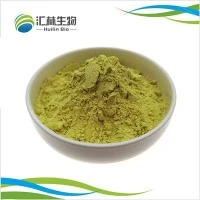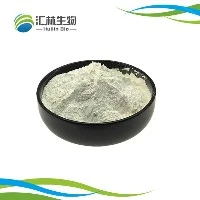


Xi'an Huilin Bio-Tech Co., Ltd. is one of the leading manufacturers and suppliers of methyl 4-aminobenzoate powder in China. With abundant experience, we are committed to providing high quality natural products with competitive price. Please feel free to wholesale bulk pure methyl 4-aminobenzoate powder for sale here from our factory.
Methyl 4-aminobenzoate (CAS 619-45-4), commonly written methyl PABA, is the methyl ester of 4-aminobenzoic acid and is supplied as a white to beige crystalline powder. Its formula is C8H9NO2 and its molecular weight is 151.16.
We supply methyl 4-aminobenzoate to formulators working with 4-aminobenzoate esters, to dye and pigment producers who need an aromatic amine that dissolves in organic media, and to synthesis groups using it as a protected form of the acid in ester-exchange steps.
The distinction that matters here is ester against acid, not one brand against another. The methyl ester dissolves where the free acid does not, melts sharply enough to be identified by melting range, and reacts by transesterification without the water that direct esterification would produce.
Specification
| Item | Specification | Test Method |
| Physical Description | / | / |
| Appearance | White to beige crystalline powder | Visual |
| Melting Range | 110 - 111 °C | Capillary method, USP Chapter 741 |
| Identification | Conforms to reference standard (retention time) | HPLC |
| Chemical Tests | / | / |
| Assay | ≥ 98.0% | HPLC, area normalization |
| Water | ≤ 0.5% | Karl Fischer |
| Residue on Ignition | ≤ 0.1% | Gravimetric, USP Chapter 281 |
| Heavy Metals | / | / |
| Heavy Metals (as Pb) | ≤ 10 ppm | ICP-MS |
The data above is for reference only. Please request the latest Certificate of Analysis (COA) for batch-specific data.
What the Methyl Ester Changes
4-Aminobenzoic acid carries a carboxylic acid group that hydrogen-bonds strongly, which is why the free acid is only sparingly soluble in most organic solvents and decomposes rather than melts cleanly at higher temperatures. Converting it to the methyl ester removes that hydrogen-bond donor. The result is a crystalline solid with a defined melting range, good solubility in ethanol, acetone and ethyl acetate, and a clean transesterification route to higher esters.
The aromatic amine is left untouched by esterification. It still accepts acyl and sulfonyl groups, still couples through diazonium chemistry, and still acts as the electron-donating half of a dye chromophore. In dye work this is the practical advantage over the free acid: the ester dissolves into the reaction medium before the coupling step, so the amine is available where the reaction is happening.
The ester is hydrolysed back to the acid by aqueous base. Formulations that contain water and a base will therefore drift toward the acid over time, which is why the material is normally kept out of aqueous systems until the point of use.
Purity, Melting Range and Identification
Assay is reported by HPLC at ≥ 98.0%. Because the molecule has a strong chromophore at 254 nm, reversed-phase HPLC resolves the ester from residual acid and from ring-substituted by-products without derivatisation.
Melting range is reported as 110 - 111 °C and is used as an identity check as much as a purity check. A pure crystalline batch melts over one or two degrees; a batch carrying residual acid or solvent melts across a wider window and starts lower. The range is reported per batch rather than as a pass-or-fail line, so the narrowing or widening is visible release to release.
Water is limited to ≤ 0.5% and residue on ignition to ≤ 0.1%. Heavy metals are screened by ICP-MS against lead at ≤ 10 ppm. Appearance is recorded as white to beige, because the aromatic amine oxidises slowly on exposure to light and air and a beige cast is normal for material that has been handled, without indicating a lower assay.
Methyl 4-Aminobenzoate, 4-Aminobenzoic Acid and Benzocaine
Three materials are routinely confused on specification sheets because they share the same benzene ring and the same amine. They are not the same substance and are not interchangeable by weight.
| Dimension | Methyl 4-aminobenzoate | 4-Aminobenzoic acid (PABA) | Benzocaine (ethyl ester) |
| Functional group | Methyl ester of the acid | Free carboxylic acid | Ethyl ester of the acid |
| Formula / MW | C8H9NO2 / 151.16 | C7H7NO2 / 137.14 | C9H11NO2 / 165.19 |
| Physical form | White to beige crystalline powder | White crystalline powder | White crystalline powder |
| Melting behaviour | Melts near 110 - 111 °C | Decomposes before a clean melt is reached | Melts near 88 - 90 °C |
| Solubility in organics | Good in ethanol, acetone, ethyl acetate | Limited; needs salt formation or a co-solvent | Good in ethanol and chloroform |
| Typical role | Intermediate for other esters and for dyes | Acid component in salts and buffers | Ethyl homologue; a pharmacopoeial article in its own right |
Choose the methyl ester when the next step is a transesterification or when the material has to dissolve in an organic phase before the amine reacts. Choose the free acid when an aqueous salt form is wanted and the carboxylic acid is the functional group of interest. Choose the ethyl ester when the specification calls for that exact homologue, since the methyl and ethyl esters differ in molecular weight by fourteen units and cannot be substituted without recalculating the charge.
Applications
Ester Intermediates - a starting point for transesterification to other 4-aminobenzoate esters, where the methyl group leaves as methanol and the amine stays free.
Dye and Pigment Synthesis - an aromatic amine that dissolves in organic media before diazotisation or coupling, so the chromophore is built in a single phase.
Organic Synthesis - a protected form of 4-aminobenzoic acid when the acid group has to stay masked through a sequence and be released later by hydrolysis.
Analytical Reference Work - a crystalline solid with a defined melting range, used as a retention-time and melting-point reference in method development.
Final performance depends on the solvent system, the base used and the water content of the medium; everything on this page describes the material as supplied, not a reaction outcome.
FAQ
Q: Is methyl 4-aminobenzoate the same as methyl PABA?
A: Yes. Methyl PABA, methyl 4-aminobenzoate and 4-aminobenzoic acid methyl ester are three names for the same compound, CAS 619-45-4. The abbreviation is common in dye and ester intermediate catalogues, while the systematic name is what appears on a regulatory file.
Q: How does it differ from 4-aminobenzoic acid?
A: The acid carries a free carboxylic acid group and hydrogen-bonds strongly, so it is only sparingly soluble in organic solvents and does not melt cleanly. The methyl ester removes that hydrogen-bond donor: it melts at 110 - 111 °C, dissolves in ethanol and acetone, and can be transesterified. The two differ by one methyl group and are not interchangeable by weight.
Q: Is it the same material as benzocaine?
A: No. Benzocaine is the ethyl ester, formula C9H11NO2 and molecular weight 165.19; this product is the methyl ester, C8H9NO2 and 151.16. They differ by one CH2 unit and by their melting ranges, and a charge calculated for one cannot be used for the other without recalculating the molar amount.
Q: Why is melting range reported per batch instead of as a pass-or-fail line?
A: Because the width of the range carries information. A pure crystalline batch melts within one or two degrees; residual acid or solvent widens the window and lowers the onset. Reporting the measured range keeps that change visible from release to release instead of hiding it behind a conforms statement.
Q: Which assay method is used, and why HPLC rather than titration?
A: Reversed-phase HPLC at 254 nm. The aromatic ring absorbs strongly at that wavelength, and the method separates the ester from residual acid and ring-substituted by-products. Titration would measure total amine and could not distinguish the ester from the acid.
Q: Does the colour change indicate a quality problem?
A: Not on its own. The aromatic amine oxidises slowly on exposure to light and air, and a beige cast is normal for material that has been handled. Assay, melting range and water are the release numbers; appearance is recorded for traceability.
Q: How should it be stored once the container is opened?
A: Cool, dry, tightly closed and away from light. The material is hygroscopic enough that an open container in a humid room will pick up water, and the ester hydrolyses slowly in the presence of moisture and base.
Q: What documentation is issued with a shipment?
A: A batch-specific Certificate of Analysis, a technical data sheet and a safety data sheet. Additional testing, such as a residual solvent panel under ICH Q3C, can be added to the release specification on request.
Supply, Documentation and Contact
Xi'an Huilin Bio-tech Co., Ltd. supplies methyl 4-aminobenzoate as a white to beige crystalline powder in 1 kg foil bags and 25 kg fibre drums. Each shipment carries a batch-specific COA, a TDS and an SDS, and the COA reports the items listed above with their measured values.
Custom specifications, including a tighter water limit, a residual solvent panel or a different pack size, are available on request. Documentation to support import requirements in your market is available on request.
Contact: sales@huilinbio-tech.com
The information on this page is provided for evaluation by qualified technical and regulatory personnel. Regulatory status and permitted uses must be confirmed against the regulation that applies to your product and your market.
Hot Tags: methyl 4-aminobenzoate powder, China, suppliers, manufacturers, factory, wholesale, buy, price, bulk, pure, natural, high quality, in stock, for sale