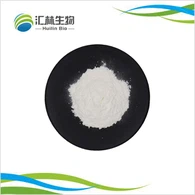



Xi'an Huilin Bio-Tech Co., Ltd. is one of the leading manufacturers and suppliers of hyocholic acid powder in China. With abundant experience, we are committed to providing high quality natural products with competitive price. Please feel free to wholesale bulk pure hyocholic acid powder for sale here from our factory.
Three Facts That Decide the Order
Most enquiries for this material come from one of two places. Either a laboratory is assembling a bile acid panel and this compound is the one still missing, or a buyer has been quoted "hyocholic acid" under a different name and wants to know what CAS 547-75-1 actually refers to.
Both questions are settled by three facts, and none of them is the assay figure.
The configuration. 3α, 6α, 7α. The 6α hydroxyl is what makes this compound itself; move it to C-12 and it becomes cholic acid - same formula, same mass, same nominal m/z.
The animal source. Porcine bile. Not a processing detail: for a bile acid it decides who can buy the material at all.
Whether your method can see the difference. Buyers ask this last and should ask it first. A ≥98.0% assay on a method that does not resolve the C-6/C-12 pair reports a clean peak and tells you nothing about which compound made it.
Nothing on this page is worth more than those three lines. The rest is documentation.
Where It Interferes
This compound has one serious interferent, and it is not a trace impurity - it is the other major trihydroxy bile acid in the same starting material.
| Interferent | Why it is there | When it co-elutes | How to exclude it |
|---|---|---|---|
| Cholic acid (CAS 81-25-4) | Both are trihydroxy C₂₄ bile acids in porcine and bovine bile. Same formula C₂₄H₄₀O₅, same mass 408.57 | On any C18 method not developed for the pair; on nominal-mass MS; on most MS/MS transitions | Chromatographic resolution, or periodate derivatisation - the vicinal 6α,7α diol of HCA is cleaved, the 7α,12α arrangement of cholic acid is not |
| γ-Muricholic acid (a name, not a substance) | Literature applies the label inconsistently to 6-hydroxylated bile acids | / | Not an analytical problem - an ordering problem. Specify CAS and configuration |
| UDCA / CDCA | Dihydroxy, 392.57, 16 Da lighter | Separable by mass; may still tail into the HCA window on a short run or a used column | Mass filter is usually sufficient; check tailing on aged columns |
| Matrix bile acids | Faecal and biliary matrices carry dozens of C₂₄ acids | Depends on clean-up | Labelled internal standard, and a gradient that spreads the trihydroxy region |
Two rows carry the weight. Cholic acid is the only interferent that can produce a wrong number with a clean chromatogram. The γ-muricholic acid row is not an interferent at all - it is why some buyers receive the wrong compound without anyone lying: the name is applied to more than one structure in the literature.
On the derivatisation route. Periodate cleaves vicinal diols. Hyocholic acid has one at C-6/C-7; cholic acid's hydroxyls sit at C-7/C-12 and do not undergo the same cleavage. The products differ in mass, so a pair that is isobaric as free compounds becomes resolvable as derivatives. If your method is currently losing this fight, that is the published way out, and it is worth reading before spending a month on gradient optimisation.
Specification
| Item | Specification | Test Method |
|---|---|---|
| Appearance | White to off-white crystalline powder | Visual |
| Identification | IR and HPLC retention time concordant with reference standard | FT-IR; HPLC |
| Assay (hyocholic acid) | ≥98.0% | HPLC |
| Cholic acid | Reported per batch | HPLC, or LC-MS/MS with chromatographic resolution |
| Other related bile acids | ≤1.0% total peak area | HPLC |
| Melting point | 188–189 °C | Capillary method |
| Loss on drying | ≤1.0% | USP Chapter 731 |
| Residue on ignition | ≤0.1% | Gravimetric |
| Total heavy metals (as Pb) | ≤10 mg/kg | ICP-MS |
| Lead | ≤1.0 mg/kg | ICP-MS |
| Arsenic | ≤1.0 mg/kg | ICP-MS |
| Cadmium | ≤1.0 mg/kg | ICP-MS |
| Mercury | ≤0.1 mg/kg | ICP-MS |
| Residual solvents | Within ICH Q3C limits for declared solvents | Headspace GC |
| Total aerobic count | ≤1,000 CFU/g | Plate count |
| Yeast and mould | ≤100 CFU/g | Plate count |
| E. coli | Absent per g | USP Chapter 2022 |
| Salmonella spp. | Absent per 25 g | USP Chapter 2022 |
| Conclusion | Conforms to Specification | / |
The limits above are the standard specification for this grade. Batch-specific measured results, including the cholic acid figure, are stated in the Certificate of Analysis issued with each lot.
Final specifications can be confirmed according to analytical application, destination market and purchasing requirements.
Note what is not in this table: a cholic acid limit. The line reads "reported" because the two compounds are isobaric, and a limit only controls something if the method separates it. A printed limit that nobody measures is worse than an honest gap.
Three Identities, One Page
Bile acids carry more than one regulatory identity, and this one carries three. Being clear about which you are buying prevents a customs conversation later.
As a research reagent - this page. Supplied to laboratories for analytical and in vitro work, with a lot COA, a TDS and an SDS.
As a feed additive - not this. Bile acid preparations are authorised as feed additives in China for defined species under a specific announcement and national standard. That authorisation attaches to registered feed-additive products, not to a research-grade material sold under CAS 547-75-1, and it does not travel to other jurisdictions.
As a supplement ingredient - not this either. Bile acids are sold as nutritional ingredients in some markets and this compound appears in that conversation. This grade carries no assessment for oral use and is not a dietary supplement ingredient.
Animal origin, stated up front. The material comes from porcine bile. Buyers with halal or kosher constraints, or whose customers impose them downstream, should treat that as a purchase-blocking fact rather than a documentation gap: no statement we can issue makes a porcine-derived bile acid compliant with those requirements. A BSE/TSE statement for the porcine starting material can be provided.
Hazard information. No GHS classification is asserted, because none was confirmed from the sources available to us. Handle as a fine organic powder - contain dust, weigh in a ventilated area, wear gloves and eye protection. The SDS issued with the lot governs.
What We Can and Cannot Put on Paper
For an animal-derived bile acid, the documentation question is usually the real question. This is the honest version of it.
| Document | Status |
|---|---|
| Certificate of Analysis, lot-specific | Yes, with every shipment |
| Technical Data Sheet | Yes |
| Safety Data Sheet, current revision | Yes |
| Heavy-metal summary | Yes, on request |
| Residual-solvent declaration | Yes, on request |
| Species of origin statement (porcine) | Yes, on request |
| BSE/TSE statement for starting material | Yes, on request |
| Halal certificate | No - porcine-derived; the claim cannot be made |
| Kosher certificate | No - same reason |
| GMP statement, DMF, active-substance dossier | No - this is not an active substance |
| Pharmacopoeial compliance statement | No - no monograph exists for this compound to comply with |
| Isotope-labelled HCA for internal standard use | Quoted separately on request |
The three "no" rows matter as much as the "yes" rows. A supplier who answers yes to every line is telling you the documents are not real.
Getting It Into Solution
The free acid will not dissolve in water. Adding it to water gives a suspension, and a suspension is not a standard. Three routes work, and they fail in different ways.
- DMSO stock - up to 42 mg/mL. Highest loading of the three. Keep the injection volume small, or the solvent front will distort peak shape; DMSO is stronger than most mobile phases.
- Ethanol - lower ceiling. The route to take when DMSO is excluded by the assay. Dissolve with brief sonication rather than prolonged heating.
- Sodium salt in aqueous alkali - the aqueous route. The one most often done wrong. Titrate with a measured equivalent of sodium hydroxide; do not add alkali until the cloudiness clears. Excess base shifts the pH, and bile acid salts are sensitive to it.
- After dissolution. Filter through 0.22 µm, keep the working solution cold, use it the same day. Bile acid solutions support microbial growth and are not preserved.
Benefits of Hyocholic Acid Powder in Analytical and Receptor Work
What a buyer gets from this grade is not a list of properties but three things that hold up when the auditor asks.
The configuration is stated and defended - 3α,6α,7α, with the C-6 position named explicitly rather than left to a trivial name that half the literature applies to something else.
The interferent is disclosed rather than limited away - cholic acid appears on the certificate as a measured value, so a laboratory can judge for itself whether its own method would have separated the pair.
The animal source is declared with a process route behind it - porcine bile, saponification through drying, and a BSE/TSE statement available for the starting material, which is what a sourcing review needs before it can close.
Beyond that: heavy metals held at ≤10 mg/kg total with lead, arsenic, cadmium and mercury individually bounded; a one-degree melting range at 188–189 °C; and two shelf-life figures, each tied to a temperature.
Whether a given procedure works with this lot depends on that procedure's own validation - column, mobile phase, matrix and acceptance limits.
Applications
- Filling a gap in a bile acid panel. A calibrant for the 6α-hydroxylated region of a bile acid profile in bile, serum or faeces, and the reference used when confirming that an unidentified trihydroxy peak is not simply cholic acid.
- In vitro receptor work. A defined bile acid ligand in cell-free binding and cell-based transactivation assays on the nuclear and membrane bile acid receptors, where the variable is a known concentration of a structurally characterised compound.
- Route work toward ursodeoxycholic acid. A starting material where the 6α-hydroxyl is removed or rearranged on the way to the 3α,7β target - a synthesis in which the regiochemistry of this starting material is the whole point.
- Enzyme and metabolism studies. Substrate or product standard in in vitro work on the enzymes that hydroxylate, conjugate and dehydroxylate bile acids, with chromatographic or mass-spectrometric detection downstream.
- One thing it is not for. An unlabelled internal standard. Hyocholic acid is endogenous and present in the matrices being analysed - adding it as an internal standard means adding the analyte. Use it as a calibrant; use a deuterated form where a true internal standard is required.
Frequently Asked Questions (FAQ)
Q: How do I tell hyocholic acid from cholic acid in a sample?
A: You cannot do it by mass. Both are C₂₄H₄₀O₅ at 408.57. Either resolve them chromatographically on a method built for the pair, or derivatise: periodate cleaves the vicinal 6α,7α diol of hyocholic acid and leaves the 7α,12α arrangement of cholic acid intact, so the products differ in mass and separate cleanly.
Q: My standard shows one clean peak at ≥98%. Is that enough?
A: Only if the method was shown to resolve cholic acid. A single peak on an unresolved method is one peak containing two compounds. Ask for the chromatogram, not the percentage.
Q: Is γ-muricholic acid the same compound?
A: The label is used for this structure in parts of the literature, which is why it appears as an alias here - buyers search for it. But the muricholic acid family is defined by 6β and 7β configurations, and the name is not applied consistently across sources. Order by CAS 547-75-1 and by the 3α,6α,7α configuration, not by trivial name.
Q: Why will it not dissolve in water?
A: Because the carboxyl is protonated at any ordinary pH. Three routes work: DMSO at up to 42 mg/mL, ethanol, or the sodium salt in aqueous alkali. Titrate with a measured equivalent of sodium hydroxide rather than adding base until it clears - excess alkali shifts the pH and bile acid salts are sensitive to it.
Q: Does the porcine origin restrict where I can sell it?
A: It restricts who will buy it. Porcine-derived material is not acceptable under halal or kosher requirements, and that constraint travels downstream to your customers. Resolve it before ordering. A BSE/TSE statement for the porcine starting material is available on request.
Q: Can you supply it as a feed additive or a supplement ingredient?
A: No. This is a research reagent. Bile acid preparations are authorised as feed additives in China for defined species, but that authorisation attaches to registered feed-additive products and not to material sold under this CAS, and it does not extend to other jurisdictions. The grade is not a dietary supplement ingredient and has not been assessed for oral use.
Q: What documents come with a lot, and what will you not issue?
A: Per shipment: lot COA, TDS, current SDS. On request: heavy-metal summary, residual-solvent declaration, species-of-origin statement, BSE/TSE statement. Not available: halal, kosher, GMP, DMF, or a pharmacopoeial compliance statement - the full table is in the section above.
Q: Can I get a different assay or a smaller pack?
A: A ≥99.0% grade and subdivided packs from 100 g can be quoted against a written specification. Note that a TLC purity figure is not equivalent to an HPLC assay - if a grade is described as ≥99%, ask what method produced the number.
Supplier
Xi'an Huilin Bio-Tech Co., Ltd. manufactures and exports phytochemical reference materials and biochemical research reagents from China. Hyocholic Acid Powder is produced from porcine bile to the specification above, released lot by lot against a Certificate of Analysis, and packed for a crystalline solid held at low temperature and protected from light.
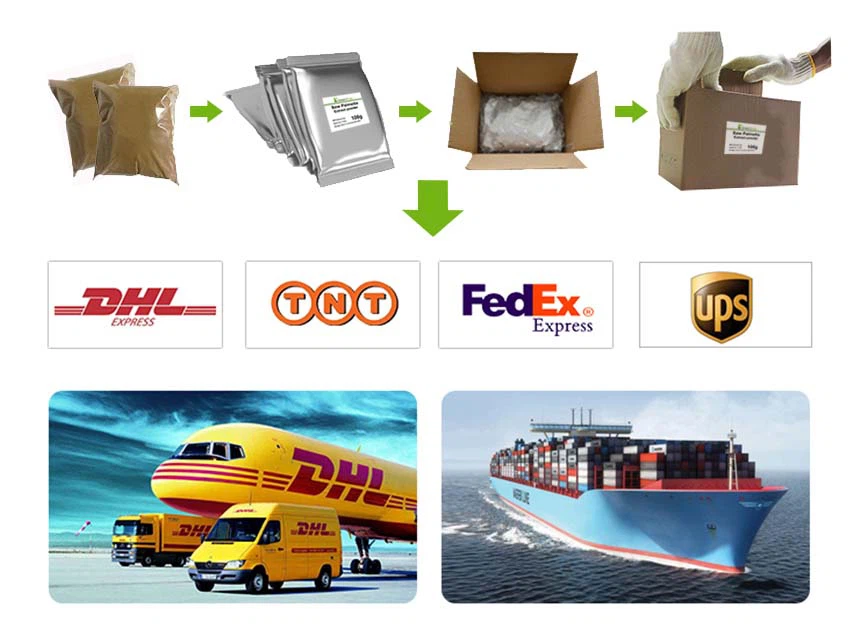
For pricing and lead time on a specific quantity, write to sales@huilinbio-tech.com or WhatsApp +86 189 9287 8573 and quote the CAS number. A sample COA from a previously shipped lot is supplied on request, before an order is placed. FOB, CIF and DDP terms are quoted with the shipping schedule at the time of order; the species of origin and the packing are confirmed with the proforma invoice together with the port and Incoterm.
For laboratory and analytical use only. Not for human or veterinary use. Not a dietary supplement, nutraceutical, feed additive, food, food ingredient, cosmetic ingredient, active substance or drug. Derived from porcine bile. The buyer is responsible for compliance with the laws and regulations of the destination country governing import, possession, handling and use of this substance.


Hot Tags: hyocholic acid powder, China, suppliers, manufacturers, factory, wholesale, buy, price, bulk, pure, natural, high quality, in stock, for sale