


Introduction: "Tea Polyphenols" Is a Specification, Not a Product Name
Search "tea polyphenols" and you will find a confusing mix of information - benefits for health, worries about caffeine, questions about pregnancy and pets, and comparisons between green, black, oolong, and matcha tea.
Here is the procurement reality: "tea polyphenols" describes a family of bioactive compounds, not a standardized ingredient. Under that name, suppliers sell powders ranging from 10% to 98% total polyphenols, with EGCG content from 40% to 98%, and caffeine content from 5–8% down to ≤1% in decaffeinated grades.
The grade you choose determines the formulation outcome. This guide covers what tea polyphenols are, how the grades differ, what the science says, and how to source the right specification for your application.
1. What Are Tea Polyphenols?
Tea polyphenols are the primary bioactive compounds in tea leaves (Camellia sinensis), concentrated through extraction and standardized to defined purity levels. They belong to the catechin family - a class of flavonoids with well-documented antioxidant activity.
The four major catechins in tea are:
| Catechin | Abbreviation | Share of Total Catechins |
|---|---|---|
| Epigallocatechin gallate | EGCG | 50–60% |
| Epigallocatechin | EGC | 15–20% |
| Epicatechin gallate | ECG | 10–15% |
| Epicatechin | EC | 5–10% |
EGCG is the most studied and biologically active catechin. It is the primary marker buyers should verify on a specification sheet, because it correlates most directly with the functional benefits associated with tea polyphenols.
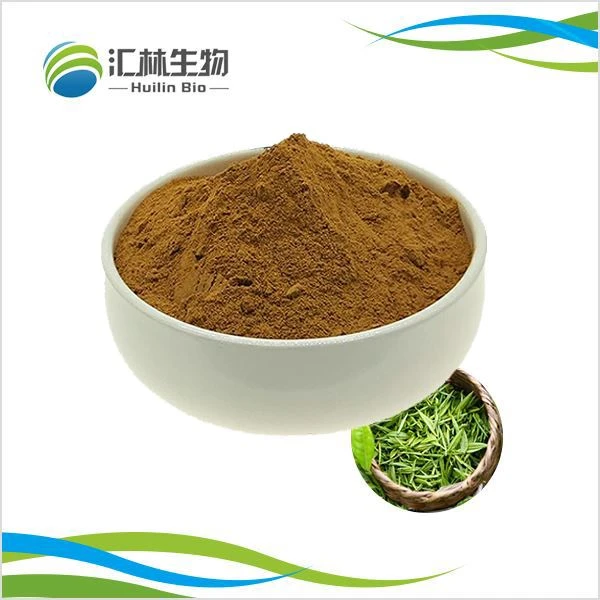
Tea polyphenols are water-soluble, light yellow to brownish-yellow in appearance, and available as a fine powder suitable for encapsulation, tableting, and beverage fortification.
2. Tea Polyphenols vs. Caffeine: What's the Difference?
One of the most common buyer questions is: "Does tea polyphenols have caffeine?"
The answer: tea polyphenols and caffeine are different compounds, but they co-exist in tea extract unless decaffeinated.
| Parameter | Tea Polyphenols | Caffeine |
|---|---|---|
| Chemical class | Flavonoids (catechins) | Alkaloid (xanthine) |
| Primary function | Antioxidant, metabolic support | Central nervous system stimulant |
| Taste contribution | Astringency, bitterness | Bitterness |
| Health role | Cellular protection, metabolic health | Alertness, energy |
In a standard tea polyphenol powder, caffeine is a co-extracted impurity. At the 80% polyphenol grade, caffeine content is typically 5–8%. At the 98% grade, caffeine drops to ≤1%. Decaffeinated grades are available for applications where caffeine content must be minimized or labeled.
The practical implication: If your formulation targets sleep support, children's products, or caffeine-sensitive consumers, specify a decaffeinated or low-caffeine grade - do not assume "tea polyphenols" means caffeine-free.
3. Tea Polyphenols Benefits: What the Science Supports
Tea polyphenols are among the most studied natural compounds in nutrition science. Here is what the evidence supports - in plain terms:
-
Antioxidant Support
Tea polyphenols protect cells from oxidative stress caused by free radicals, supporting overall cellular health and healthy aging. This is the foundational benefit on which most other effects are built.
-
Metabolic Health & Weight Management
Green tea polyphenols are widely used in weight management products. They support normal fat metabolism and healthy blood sugar levels already within the normal range. Research has linked tea polyphenol intake to reduced body fat and improved metabolic markers.
-
Cardiovascular Wellness
Tea polyphenols support healthy blood vessels, maintain healthy cholesterol levels, and promote overall cardiovascular function. Epidemiological studies associate habitual tea consumption with reduced cardiovascular risk.
-
Gut & Immune Support
Recent research shows tea polyphenols support gut health by strengthening the epithelial barrier and modulating gut microbiota. They also exhibit anti-inflammatory and immunomodulatory properties, with studies linking tea polyphenol intake to reduced risk of inflammatory conditions.
-
Skin Health
In cosmetic applications, tea polyphenols provide antioxidant protection and help soothe and refresh the skin. Green tea polyphenols, particularly EGCG, have been studied for anti-photoaging, whitening, and anti-inflammatory effects in skincare.

4. Tea Polyphenols Foods: Where They Appear
Tea polyphenols are not limited to supplements. They are increasingly used as functional food ingredients:
- Beverages: Ready-to-drink teas, functional waters, and fortified juices
- Meat & seafood: Natural antioxidant for preserving quality during freeze-thaw cycles
- Bakery & snacks: Extending shelf life and adding antioxidant value
- Emulsion systems: Tea polyphenols improve emulsion stability when complexed with proteins, supporting delivery of sensitive ingredients like omega-3 fatty acids
- Cosmetics & personal care: Anti-aging creams, serums, and sun-care products
5. Tea Polyphenols Tablet & Supplement Applications
Tea polyphenol tablets are one of the fastest-growing supplement formats. A typical tea polyphenols tablet delivers 250 mg of total polyphenols per serving, equivalent to approximately half a liter of brewed green tea.
For buyers formulating supplements, the key considerations are:
- Standardization level: 40% polyphenols is common for consumer tablets; 80–98% is used for high-potency capsules
- EGCG content: Verify the EGCG percentage on the COA - this is the primary bioactive marker
- Caffeine content: Specify decaffeinated grades for sensitive populations
- Tableting properties: High-purity powders may require flow agents or granulation for efficient tableting
6. Tea Polyphenols Side Effects & Daily Limit
Tea polyphenols are well-tolerated at typical usage levels. However, high-dose supplementation warrants caution.
-
Safety Thresholds
| Source | Recommended Limit |
|---|---|
| Korean Health Functional Food system | ≤300 mg EGCG/day |
| Derived safe intake (70 kg adult) | ~322 mg EGCG/day (solid bolus, fed conditions) |
| Green tea beverage equivalent | Up to 704 mg EGCG/day (as beverage) |
| Upper caution threshold | Avoid exceeding 800 mg EGCG/day from supplements |
Potential side effects at high doses: Gastrointestinal discomfort (nausea, abdominal pain), elevated creatinine, and in rare cases, liver stress at doses exceeding 800 mg EGCG/day.
The practical rule: Standardized tea polyphenol powder at typical supplement doses (250–500 mg total polyphenols per serving) falls well within safe limits. The risk zone is high-dose EGCG supplementation above 800 mg/day - a threshold rarely reached through food-grade tea polyphenol powder at recommended usage rates.
7. Tea Polyphenols and Pregnancy: A Safety Note
Pregnant women should consult a healthcare professional before using high-dose tea polyphenol supplements.
Recent animal research published in 2025 found that tea polyphenols and EGCG intake during pregnancy induced preeclampsia-like symptoms in rats - including hypertension, proteinuria, and fetal growth restriction - by inhibiting COMT activity and reducing 2-methoxyestradiol levels.
This does not mean moderate tea consumption is unsafe during pregnancy. The finding relates to high-dose EGCG supplementation, not dietary tea intake. However, for supplement products, a pregnancy warning label is appropriate, and formulators should be aware of this research when developing products for prenatal or general women's health markets.
8. Tea Polyphenols for Cats: Not Recommended
Tea polyphenols are not recommended for cats.
Cats are highly sensitive to caffeine and oxalate - both present in tea extracts. Even decaffeinated tea polyphenol products may contain residual compounds that can cause vomiting, diarrhea, and allergic reactions in felines.
While green tea catechins have shown some tolerance in beagle studies at controlled doses, feline safety data is limited, and the risk profile - especially from caffeine - makes tea polyphenol supplementation in cats inadvisable without veterinary supervision.
For pet supplement formulators: do not position tea polyphenols for feline applications. For dogs, safety depends on dose and caffeine content - consult a veterinary nutritionist.
9. Tea Polyphenols in Different Teas: A Quick Comparison
Which tea has the most polyphenols? The answer depends on processing method:
| Tea Type | Polyphenol Profile | Key Characteristic |
|---|---|---|
| Green tea | Highest catechins (EGCG, EGC) | Unfermented; highest EGCG content |
| Matcha | Very high total polyphenols | Whole-leaf powder; EGCG availability up to 137× greater than steeped green tea |
| Oolong tea | Moderate catechins | Partially fermented; some catechin conversion |
| Black tea | Lower catechins, higher theaflavins | Fully fermented; catechins oxidize to theaflavins |
| Rooibos | Different polyphenols (aspalathin) | Not from Camellia sinensis; no caffeine |
| Hibiscus | Anthocyanins + phenolic acids | Different polyphenol class entirely |
For buyers: If your specification targets EGCG content, green tea and matcha are the source materials. If the target is total polyphenols with a different profile, oolong or black tea extracts may be appropriate. Rooibos and hibiscus are not sources of tea catechins - they contain different polyphenol classes.
10. Sourcing Tea Polyphenols Powder from Huilin
Xi'an Huilin Bio-tech Co., Ltd. supplies standardized tea polyphenols powder derived from green tea leaf (Camellia sinensis), available in multiple specifications to match your application.
Specification summary:
| Grade | Total Polyphenols | EGCG Content | Caffeine |
|---|---|---|---|
| 80% | ≥80% | 40–50% | 5–8% |
| 90% | ≥90% | 50–60% | 3–5% |
| 95% | ≥95% | 60–70% | 1–3% |
| 98% | ≥98% | 70–98% | ≤1% |
For inquiries, quotations, or sample requests, please contact: sales@huilinbio-tech.com