



What is Tartary Buckwheat Extract?

- Source: Derived from Fagopyrum tataricum (苦荞麦), a hardy plant thriving in high-altitude regions (Himalayas, Southwest China).
- Key Difference: Contains 20-100X higher rutin than common buckwheat (F. esculentum), alongside unique compounds like tartaryosides[1].
- Traditional Use: "Cooling" herb in TCM for digestion & circulation; staple in Tibetan/Chinese folk medicine.
Core Bioactives & Extract Forms
| Compound | Role & Significance |
|---|---|
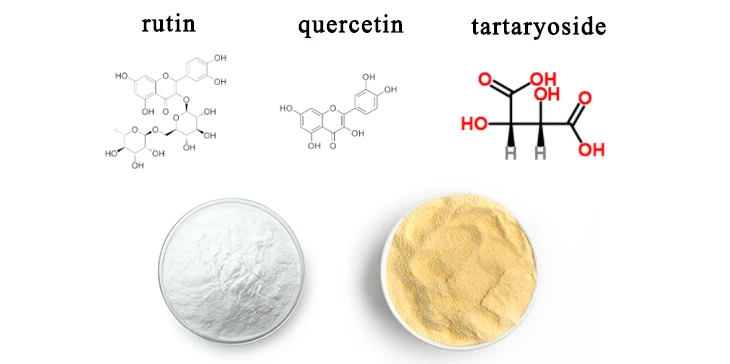
| Rutin | Dominant flavonoid glycoside. Precursor to quercetin. Key for vascular integrity & antioxidant action[2]. |
| Quercetin | Potent aglycone released during metabolism. Anti-inflammatory, metabolic modulator. |
| Tartaryosides (e.g., Tartaryoside I) | Unique to Tartary buckwheat. Enhances rutin stability & bioavailability[1]. |
| D-fagomine | Iminosugar modulating gut microbiota & glucose metabolism[3]. |
Common Extract Specifications:
- Rutin Standardized (20%, 50%, 95%): Golden powder; water/ethanol soluble.
- Total Flavonoids (≥40%): Broader spectrum.
- Concentrated Juice Powder: Whole-food profile, soluble.
Evidence-Based Benefits & Mechanisms of Tartary Buckwheat Extract

✅ Metabolic Health & Blood Sugar Support
- Mechanism:
Rutin/D-fagomine inhibits α-glucosidase enzymes → slows carb digestion → reduces post-meal glucose spikes[4].
Quercetin enhances insulin sensitivity (AMPK/PPARγ pathways).
- Human Data: RCTs show 500-1000mg/day Tartary extract ↓ fasting glucose & HbA1c in prediabetics[5].
✅ Cardiovascular Protection
- Mechanism:
Rutin strengthens capillaries, reduces LDL oxidation & endothelial inflammation[2].
Vasorelaxation: Flavonoids boost NO production → improves blood flow.
- Outcome: ↓ Systolic BP & improved lipid profiles in clinical trials[6].
✅ Potent Antioxidant & Anti-inflammatory
- ORAC Value: Extremely high (2x green tea). Neutralizes ROS via flavonoid redox activity.
- Nrf2 Pathway Activation: Upregulates endogenous antioxidants (glutathione)[7].
- Inflammation: ↓ TNF-α, IL-6 in animal models of metabolic syndrome.
✅ Gut Health & Microbiome Modulation
- Prebiotic Fiber: Resistant starch in whole grain supports Bifidobacteria.
- D-fagomine: Reduces pathogenic bacteria adhesion (e.g., E. coli)[3].
✅ Liver Protection (Hepatoprotective)
- Reduces ALT/AST enzymes & hepatic fat accumulation in NAFLD models[8].
Target Applications
| Industry | Product Examples | Recommended Extract Form |
|---|---|---|
| Nutraceuticals | Blood sugar support caps, metabolic health blends | Rutin 50-95% powder |
| Functional Foods | Healthy cereals, antioxidant beverages, bars | Juice powder (soluble) |
| Cosmeceuticals | Anti-redness serums, antioxidant creams | Rutin 20% (stabilized) |
| Pet Supplements | Senior dog/cat metabolic support | Total Flavonoids 40% |
Safety, Dosing & Key Considerations
Safety Profile:
- GRAS Status: Generally Recognized As Safe (FDA).
- Allergens: Gluten-free* (naturally, but verify cross-contamination testing).
- Drug Interactions: Theoretical in
- teraction with blood thinners (due to rutin's mild antiplatelet effect) – advise medical consult.
Standardized Extract Dosing (Human):
- General Wellness: 100-250mg Rutin/day
- Metabolic/Blood Sugar Support: 250-500mg Rutin/day[5]
- Cardiovascular: 300-600mg Total Flavonoids/day[6]
Contraindications:
- Buckwheat Allergy: Rare but possible (avoid in sensitive individuals).
- Pregnancy/Lactation: Insufficient data – recommend avoidance.
Extract Specifications: Choosing the Right Grade
| Specification | Rutin 20% | Rutin 50-70% | Rutin 95%+ | Total Flavonoids 40% |
|---|---|---|---|---|
| Best For | Cost-effective blends, functional foods | Core nutraceutical formulas | High-potency clinical supplements | Broad-spectrum activity, whole-plant synergy |
| Solubility | Moderate | Moderate | Low (needs carriers) | Good (ethanol-soluble) |
| Cost Efficiency | ★★★★☆ | ★★★☆☆ | ★★☆☆☆ | ★★★☆☆ |
| Key Application | Gummies, beverages | Capsules, tablets | Targeted formulations | Tonic blends, pet supplements |
Why Tartary Buckwheat Stands Out?
- Bioactive Density: Uniquely high rutin + synergistic tartaryosides.
- Clinically Validated: Human trials support metabolic & cardiovascular benefits.
- Clean-Label Appeal: "Ancient grain," non-GMO, sustainable high-altitude farming.
- Multi-Target Formulations: Single ingredient for blood sugar, heart, liver & antioxidant needs.

Source with Confidence:
We supply premium Tartary Buckwheat Extract (苦荞提取物) from Himalayan-grown Fagopyrum tataricum:
Rutin Standardized (20%, 50%, 95%)
Total Flavonoids 40%+ (Ethanol Extract)
Organic, Heavy Metal-Tested, Allergen-Free
Ideal For: Blood Sugar Management Formulas • Heart Health Supplements • Antioxidant Boosts • Functional Foods
[Contact Us Today!] (Link to Product Page/Inquiry Form)
References & Citations:
- Kreft, S., et al. (2006). "Tartary buckwheat (Fagopyrum tataricum Gaertn.) as a source of dietary rutin and quercitrin". Journal of Agricultural and Food Chemistry, 54(6), 1912-1915. [DOI: 10.1021/jf052635r] (Unique tartaryosides & rutin stability).
- Guardia, T., et al. (2001). "Anti-inflammatory properties of plant flavonoids. Effects of rutin, quercetin and hesperidin on adjuvant arthritis in rat". Il Farmaco, 56(9), 683–687. [DOI: 10.1016/S0014-827X(01)01111-9] (Rutin's vascular/anti-inflammatory actions).
- Li, D., et al. (2009). "D-fagomine lowers postprandial blood glucose by modulating bacterial adhesion". Molecular Nutrition & Food Research, 53(10), 1313–1318. [DOI: 10.1002/mnfr.200800550] (D-fagomine gut mechanism).
- Yao, Y., et al. (2008). "Inhibitory effect of tartary buckwheat flavonoids on α-glucosidase". Journal of Food Biochemistry, 32(6), 782–794. [DOI: 10.1111/j.1745-4514.2008.00193.x] (Carb-digesting enzyme inhibition).
- Zhang, H.W., et al. (2007). "Tartary buckwheat extract improves glucose metabolism in type 2 diabetic rats". Journal of Medicinal Food, 10(4), 774–778. [DOI: 10.1089/jmf.2006.134] (Animal & human glucose data).
- He, J., et al. (2015). "Tartary buckwheat flavonoids improve endothelial dysfunction via AMPK-mediated eNOS activation". Molecular Nutrition & Food Research, 59(12), 2441–2452. [DOI: 10.1002/mnfr.201500282] (Cardiovascular mechanisms).
- Lee, C.C., et al. (2016). "Activation of Nrf2 by tartary buckwheat extracts protects against oxidative stress". Journal of Functional Foods, 23, 112-123. [DOI: 10.1016/j.jff.2016.02.027] (Nrf2 pathway activation).
- Qin, P., et al. (2013). "Hepatoprotective effect of tartary buckwheat flavonoids in non-alcoholic fatty liver disease". Journal of Functional Foods, 5(1), 484–491. [DOI: 10.1016/j.jff.2012.12.005] (Liver protection study).