



Introduction
Sclareolide is a naturally occurring sesquiterpene lactone derived from the plant Salvia sclarea (clary sage). As a bicyclic organic compound, it has garnered significant attention across multiple industries for its diverse biological activities and excellent safety profile.
In the flavor and fragrance industry, Sclareolide is valued for its characteristic woody, ambergris-like, and tobacco-toned aroma, with subtle notes of moss and cedar . It is widely used as a flavoring agent (FEMA 3794) in baked goods, beverages, dairy products, and savory applications, as well as a fragrance ingredient in fine perfumery and personal care products [3].
Beyond its sensory applications, recent scientific research has unveiled Sclareolide's remarkable pharmacological potential. Studies demonstrate its efficacy as an antifungal agent against Cryptococcus neoformans, an antiviral agent against Ebola virus, an anti-inflammatory compound inhibiting nitric oxide production, and a chemosensitizer enhancing gemcitabine efficacy in pancreatic cancer cells [1]. Most notably, a 2025 clinical trial confirmed that a sunscreen containing Sclareolide and niacinamide significantly prevents post-inflammatory hyperpigmentation (PIH) in skin of color, supporting its use in advanced dermatological formulations [2].
Physical & Chemical Parameters
| Parameter | Specification / Value | Notes / Reference |
|---|---|---|
| Physical State (20°C) | Solid | Crystalline powder |
| Color | White to off-white | |
| Purity (GC) | ≥98% | |
| Melting Point | 120-126°C | Literature: 124-127°C |
| Boiling Point | 341.9°C (estimated) | EPI Suite calculation |
| Flash Point | >93°C (>200°F) | Closed cup |
| Log KOW (Octanol-Water) | 3.86 | EPI Suite calculation |
| Water Solubility | 11.99 mg/L (estimated) | EPI Suite calculation |
| Vapor Pressure | 0.0000159 mm Hg at 20°C | EPI Suite calculation |
| Optical Rotation | +43.0° to +51.0° (c=2, CHCl₃) | |
| UV Spectra | No absorbance 290-700 nm | Molar absorption coefficient <1000 L·mol⁻¹·cm⁻¹ |
| Solubility | Soluble in organic solvents; insoluble in water | |
| Storage Conditions | -20°C under nitrogen | Long-term storage |
| Shelf Life | 1460 days (4 years) | Under recommended storage |
Mechanism of Action
Sclareolide exerts its diverse biological effects through multiple molecular mechanisms, reflecting its potential as a multi-functional bioactive compound.
1. Antifungal Mechanism [1]
Against Cryptococcus neoformans, Sclareolide (MIC = 16 µg/mL) acts through:
- Disruption of membrane integrity: Propidium iodide accumulation assays show a significant reduction in membrane integrity (6.62 ± 0.18% after treatment)
- Induction of oxidative stress: Significantly increases reactive oxygen species (ROS) production
- Mitochondrial dysfunction: Reduces mitochondrial membrane potential (MMP), indicating mitochondrial damage
- Non-apoptotic cell death: Does not induce caspase-dependent apoptosis
2. Anti-Inflammatory and Pigment-Regulating Mechanism [2]
In dermatological applications, Sclareolide functions through:
- Inhibition of pro-inflammatory mediators: Suppresses PGE₂ and IL-1α biosynthesis
- Nitric oxide reduction: Inhibits NO production in LPS-stimulated BV-2 cells (IC₅₀ = 20.3 μM)
- Melanin inhibition: Modulates PIH-associated gene expression and reduces melanin synthesis in melanocytes and human skin ex vivo
- Antioxidant activity: Reduces oxidative stress pathways that stimulate melanocyte activity
3. Antiviral Activity
Sclareolide acts as an Ebola virus entry inhibitor, reducing infection of HEK293T cells by an HIV-based virus system pseudotyped with Ebola virus glycoprotein (EC₅₀ = 8 μM) .
4. Anticancer and Chemosensitizing Effects
In gemcitabine-resistant pancreatic cancer cells (PANC-1 and AsPC-1), Sclareolide (5-20 μM) enhances gemcitabine-induced cell death, suggesting potential as a chemosensitizing agent.
5. Antifungal Activity Against Phytopathogens
Sclareolide inhibits mycelial growth in various phytopathogenic fungi at 100 μg/mL: Fusarium coeruleum (67.14%), Fusarium graminearum (46.22%), Curvularia lunata (27.04%), Botrytis cinerea (33.93%), and Alternaria brassicae (32.48%) .
Key Benefits & Advantages
- Multi-Functional Bioactivity: Exhibits antifungal, anti-inflammatory, antiviral, anticancer, and pigment-regulating activities, making it a versatile research tool and functional ingredient [1][2].
- Clinically Validated Dermatological Efficacy: A 2025 randomized clinical trial demonstrated that a sunscreen containing Sclareolide significantly prevents post-inflammatory hyperpigmentation, with protected skin showing +5.96 ΔITA° improvement versus -9.88 ΔITA° in unprotected skin (net protection ~16 ITA°, p < 0.001) [2].
- Excellent Safety Profile: RIFM safety assessment confirms no concern for genotoxicity; JECFA concluded "no safety concern at current levels of intake" as a flavoring agent; no toxicity observed in Galleria mellonella at 128 µg/mL [1][3].
- Superior Sensory Properties: Delivers a distinctive woody, ambergris-like, and tobacco-toned aroma with moss and cedar nuances, prized in fine fragrances and flavor formulations .
- Regulatory Acceptance: Approved as a flavoring agent (FEMA 3794) with established use levels across multiple food categories; listed in EU flavoring substances (FL No. 16.055) .
- High Purity & Stability: Available at ≥98% purity with defined stereochemistry (3aR configuration) and excellent stability under recommended storage conditions .
Primary Applications
| Industry / Sector | Application Examples | Functional Role & Benefit |
|---|---|---|
| Skincare & Cosmetics | Anti-aging serums, brightening creams, sunscreens, post-procedure formulations | Prevents post-inflammatory hyperpigmentation; reduces inflammation and oxidative stress; inhibits melanin synthesis [2] |
| Flavor Industry | Baked goods, dairy products, beverages, savory flavors, confectionery | Imparts woody, ambergris, and tobacco notes; FEMA 3794 approved at typical levels (1-3 mg/kg) |
| Fragrance Industry | Fine perfumes, personal care products, home fragrances | Provides distinctive woody-mossy base notes with excellent tenacity [3] |
| Pharmaceutical Research | Antifungal drug development; antiviral research; cancer research | Investigational agent for cryptococcosis; Ebola virus entry inhibitor; chemosensitizer for pancreatic cancer [1] |
| Agricultural Research | Crop protection studies; antifungal agent development | Inhibits phytopathogenic fungi affecting crops |
| Anti-Inflammatory Research | Inflammation models; cytokine regulation studies | Inhibits NO production and pro-inflammatory mediator synthesis [2] |
Typical Use Levels (Flavor Industry):
- Baked goods: 2.0-3.0 mg/kg
- Frozen dairy: 1.0-3.0 mg/kg
- Soft candy: 1.0-3.0 mg/kg
- Soft drinks: 1.0-5.0 mg/kg
- Meat products: 1.0-4.0 mg/kg
- Snack foods: 2.0-4.0 mg/kg
Formulation & Handling Reference
Solubility Guidance: Sclareolide is insoluble in water but soluble in organic solvents such as ethanol, DMSO, and chloroform. For cosmetic formulations, pre-dissolve in the oil phase or in compatible solvents before incorporation [3].
Typical Research Concentrations:
Antifungal studies: 16-128 µg/mL (MIC: 16 µg/mL against C. neoformans) [1]
Anti-inflammatory studies: 5-20 µM (IC₅₀ for NO inhibition: 20.3 μM)
Antiviral studies: EC₅₀ = 8 μM against Ebola pseudovirus
Dermatological applications: As formulated in sunscreen products (0.1-1% range typical) [2]
Storage of Solutions: Prepare fresh solutions whenever possible. For stock solutions in DMSO or ethanol, aliquot and store at -20°C protected from light. Avoid repeated freeze-thaw cycles.
Handling Precautions: Use with adequate ventilation. Wear appropriate personal protective equipment (gloves, safety glasses). Not classified as hazardous material for transport . Refer to Safety Data Sheet (SDS) for complete handling and emergency information.
Formulation Compatibility: Compatible with common cosmetic ingredients including niacinamide (shown synergistic in clinical study), emollients, emulsifiers, and sunscreen filters [2].
FAQ: Frequently Asked Questions
Q: What is the odor profile of Sclareolide?
A: Sclareolide has a characteristic woody, ambergris-like, and tobacco-toned aroma with subtle notes of moss, cedar, and musk. At 1% concentration, it exhibits strong aromatic woody and mossy characteristics .
Q: Is Sclareolide safe for use in skincare?
A: Yes. A 2025 clinical trial demonstrated excellent tolerability with no adverse events reported in participants using a sunscreen containing Sclareolide [2]. RIFM safety assessment confirms its safety for use in cosmetic and fragrance applications [3].
Q: What is the difference between Sclareolide and Sclareol?
A: Sclareolide is the lactone derivative of Sclareol, formed through oxidation. While both are diterpenes from clary sage, Sclareolide exhibits enhanced stability and different biological activities, including more potent anti-inflammatory and antifungal properties.
Q: How should Sclareolide powder be stored for long-term stability?
A: For maximum shelf life (up to 4 years), store Sclareolide powder at -20°C under nitrogen atmosphere, protected from light and moisture. Keep container tightly sealed when not in use .
Q: Does Sclareolide have any known drug interactions?
A: Sclareolide has been shown to enhance gemcitabine-induced cell death in pancreatic cancer cells, suggesting potential chemosensitizing effects. However, no significant CYP450 interactions have been reported; ADMET predictions indicate it is a non-inhibitor of major CYP enzymes .
Q: Is Sclareolide naturally occurring?
A: Yes, Sclareolide is a natural phytochemical found in clary sage (Salvia sclarea) and is also present in tobacco. The commercially available product is nature-identical and may be derived from natural sources or produced synthetically .
Q: What are the main regulatory approvals for Sclareolide?
A: Sclareolide is approved as a flavoring agent with FEMA number 3794. It is listed in the EU Flavourings Database (FL No. 16.055) and has been evaluated by JECFA, which concluded "no safety concern at current levels of intake." RIFM has completed a comprehensive fragrance ingredient safety assessment [3].
Q: Can Sclareolide be used in "natural" labeled products?
A: Regulatory definitions vary by region. Sclareolide derived from natural sources (e.g., clary sage extraction) may qualify for natural labeling in some jurisdictions. Please consult with regulatory experts for your target market.
Act Now
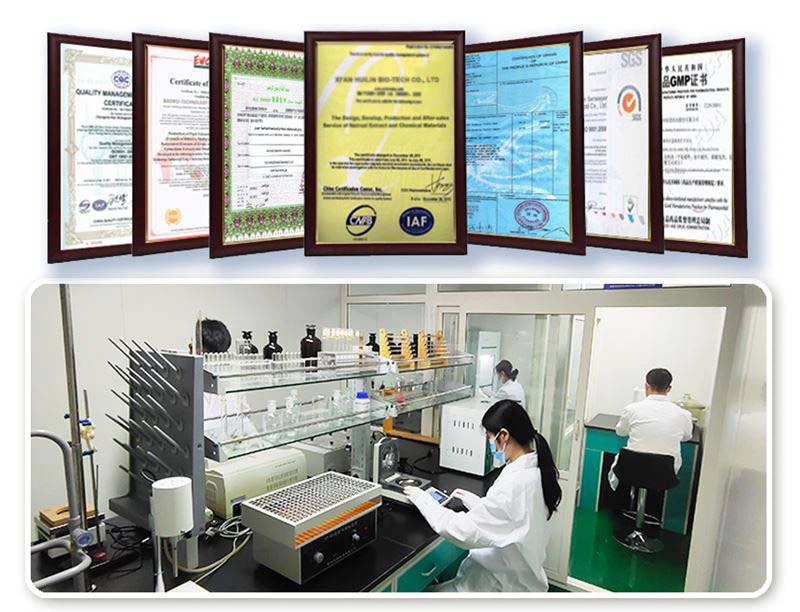
Elevate your skincare, flavor, or pharmaceutical research projects with our high-purity Sclareolide powder. Backed by rigorous quality control, comprehensive analytical documentation, and a growing body of scientific evidence supporting its diverse bioactivities, it is the trusted choice for innovators worldwide.
Contact our technical sales team today to:
- Request a sample for your formulation development and evaluation.
- Receive a competitive quotation for R&D, pilot-scale trials, or bulk production needs.
- Obtain comprehensive documentation, including Certificate of Analysis (CoA) and Safety Data Sheet (SDS).
Please contact us at ella.zhang@huilinbio-tech.com.


References
- Ganeshkumar, A., Lima, P. M. N. d., Haribabu, J., et al. (2024). Sclareolide as Antifungal Strategy Against Cryptococcus neoformans: Unveiling Its Mechanisms of Action. Microorganisms, 12(11), 2324.
- Passeron, T., Piquero-Casals, J., Brown, A., et al. (2025). An Investigator-Blinded, Randomized Trial of a Broad-Spectrum Sunscreen Containing Sclareolide and Niacinamide for the Prevention of Post-inflammatory Hyperpigmentation in Skin of Color. Dermatology and Therapy.
- Research Institute for Fragrance Materials (RIFM). (2022). RIFM fragrance ingredient safety assessment, sclareolide, CAS Registry Number 564-20-5. Food and Chemical Toxicology.
Disclaimer: This product information is intended for business-to-business (B2B) use by qualified professionals in the cosmetic, flavor, and research industries. The statements contained herein are based on current scientific literature and supplier documentation and are provided for informational purposes only. This product is for research and manufacturing use only. Not for direct consumer use. It is the sole responsibility of the finished product manufacturer to ensure compliance with all applicable local, national, and international regulations. Specifications are subject to change without notice; always request the latest Certificate of Analysis prior to order placement.
Hot Tags: sclareolide powder, China, suppliers, manufacturers, factory, wholesale, buy, price, bulk, pure, natural, high quality, in stock, for sale, Honokiol Powder, Naringin Powder, Pterostilbene Powder, L Dopa Powder, Resveratrol Powder 98 , Herb Extracts


