


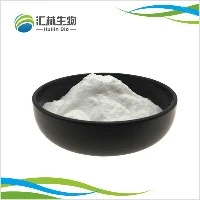


The L-arginine dosage question has three answers depending on who is asking, and the buyer has to choose. For 99% L-arginine powder the trial range runs from 3 g to 11 g per day. Before working out how much L-arginine per day fits your label, decide which endpoint you can legally claim - that decision sets the number.
1. The Number Comes From the Endpoint, Not From the Ingredient
There is no single L-arginine dosage, because each trial dosed for a different endpoint in a different population. How much L-arginine per day you print is therefore a legal question before it is a scientific one, and reading the trials side by side is the only way to see which number is defensible for your claim.
| Population | Dose used | Duration | What it measured |
| Adults, mostly hypertensive (7 meta-analyses) | Up to 11 g/day | 3–5 weeks | Pooled systolic −2.2 to −5.4 mmHg; heterogeneity significant in 5 of 7 |
| 12 lean adults with type 2 diabetes | 9 g/day (3 g three times) | 1 month | Glucose disposal during clamp +34%; not normalised against controls |
| 144 adults with impaired glucose tolerance | 6.4 g/day | 18 months | No significant change in diabetes incidence |
| Adults with type 2 diabetes on a diet and exercise programme | 8.3 g/day | 21 days | Fasting and postprandial glucose improved alongside the programme |
Two things follow. First, the effective range in the literature clusters between 6 and 9 g per day, not the 2–3 g that circulates in consumer copy. Second, every one of those endpoints sits in a clinical or near-clinical population, which is why the L-arginine dosage you can print is usually governed by a structure/function claim rather than by a trial result.
2. Where the Ceiling Is: About 9 Grams Per Serving
The binding constraint on L-arginine dosage is not efficacy, it is the gut. An umbrella review of seven meta-analyses records that intakes above 9 g per day are associated with gastrointestinal discomfort, nausea and diarrhoea, which is why the trial protocols that went higher also split the dose. It is also why how much L-arginine per day a sachet carries is a tolerance question before it is a marketing one.
Piatti and colleagues split the L-arginine dosage into 3 g three times daily rather than 9 g at once, and that pattern is the practical template for a finished product. Splitting does two things at once: it keeps each serving under the tolerance threshold, and it turns one large dose into a habit the consumer can actually keep.
› 3 g per serving fits a stick pack with room for flavour and acid balance
› 6 g per serving needs real masking; free-base arginine is saline and slightly bitter
› 6 g in capsules is roughly 12 size-0 caps, which no one takes twice a day
› Above 9 g per serving, the label becomes a tolerability warning rather than a benefit
3. Timing: What Is Documented and What Is Folklore
The empty-stomach rule is repeated in every L-arginine dosage guide and cited in almost none of them. What the pharmacokinetic work actually shows is more useful: the vehicle you choose matters more than the clock you follow.
Oral arginine is heavily metabolised on its first pass through the gut and liver, so plasma arginine rises less than the dose implies. Schwedhelm and colleagues compared oral citrulline with oral arginine directly and found that citrulline produced the larger increase in plasma arginine, because it bypasses that first-pass loss and is converted in the kidney. That is a formulation finding, not a timing one.
For a label, the L-arginine dosage instruction "take 30 minutes before training" is a behaviour instruction, not a pharmacokinetic conclusion. It is legitimate to print, and it helps adherence. It is not something to build a technical dossier around, and it is not a reason to claim better absorption than a competitor.
4. Stacking: Four Pairings and What Each One Rests On
Most of the L-arginine dosage advice about stacking is inference rather than evidence. The table sorts the pairings you will be asked about by what actually supports them, so you can decide which ones earn a place in the formula and which are only there for the story.
| Pairing | What it rests on | Verdict |
| Citrulline | Documented pharmacokinetic advantage over oral arginine for raising plasma arginine | Supported - but it is a substitute, not an add-on |
| Beta-alanine | Muscle carnosine buffering, a pathway independent of nitric oxide | Both work; no synergy data for the pair |
| BCAA | Muscle protein synthesis, unrelated to the nitric oxide route | No interaction, no established synergy |
| Selenomethionine | Antioxidant role via selenoproteins | No published evidence that it lowers blood pressure more with arginine than alone |
| Alpha-ketoglutarate | The "shared gut transporter" separation rule circulating online | Unsupported - and contradicted by the product category itself |
That last row is worth spelling out, because the advice to separate arginine from alpha-ketoglutarate by one to two hours is common and has no source. AAKG powder is arginine and alpha-ketoglutarate sold as a single molecule while we also supply calcium alpha-ketoglutarate and AKG powder separately. If the two genuinely blocked each other at the transporter, AAKG would be the worst-selling form in the category instead of a standard one.
The pairings with a real basis sit in the same amino acid range and behave differently: L-citrulline DL-malate 2:1 powder for nitric oxide formats, Beta-Alanine Powder for high-intensity work, BCAA (2:1:1) Powder for protein-side positioning, and L-Selenomethionine Powder when the story is antioxidant rather than vascular.
5. The 99% Question: Assay, Salt Form and Label Maths
The purity figure on a spec sheet is the least consequential number in any L-arginine dosage discussion, and the salt form is the most. That is where L-arginine dosage turns into a labelling error rather than a formulation one.
L-arginine free base has a molecular weight of 174.20; the hydrochloride salt is 210.66, which makes the salt 82.7% arginine by weight. So a label declaring 5 g of L-arginine needs 6.05 g of arginine hydrochloride, or it under-delivers by roughly a gram. Both materials are sold as "L-arginine", and the COA is the only place the difference shows.
The claim that budget material is 50–70% pure is a strawman. Commercial arginine is routinely 98–99%; the real variance sits in salt form, water content, mesh and heavy metals. Ask whether the assay is reported on a dried basis or as-is, and whether it is area normalisation from an HPLC trace, because those three answers explain most of the price gap.
| Parameter | Specification | Why it matters for dosing |
| Form | Free base, CAS 74-79-3, C6H14N4O2 | 1 g on the label is 1 g of arginine, not 0.83 g |
| Assay | 99%, HPLC and UV | Overages are calculated from this number |
| Mesh | 95% pass 80 mesh | Dissolution speed in a stick pack |
| Solubility | ≈148.7 g/L at 20 °C | A 6 g serving needs about 40 mL of water |
| Packing and MOQ | 1 kg bag, 25 kg drum; MOQ 1 kg | Trial batch to commercial run |
| Shelf life | 24 months, cool and dry | Sets the earliest best-before you can print |
6. What the Label Can Say About the Dose
An L-arginine dosage statement is not itself a claim, but the sentence wrapped around it usually is. In the United States a structure/function claim must carry the FDA disclaimer and be notified within 30 days of marketing; in the European Union only claims listed in the EU Register may be used at all.
So "6 g of L-arginine per serving" is a fact, and "6 g to support nitric oxide production" is a claim that needs a substantiation file behind it. The gap between those two sentences is where the L-arginine dosage discussion actually becomes a commercial decision.
We do not write contraindication panels and we do not draft claims. What we will do is supply the specification, the batch COA and the assay chromatogram that your regulatory lead needs in order to write both. The vascular interaction to flag in this category - blood-pressure medication - is a matter for that lead and your medical reviewer, not for a supplier.
7. Frequently Asked Questions
Q: What Is The Standard L-Arginine Dosage Per Day?
A: Between 6 and 9 g per day is where the human trials cluster, which is the honest answer to how much L-arginine per day a label should carry. The blood pressure meta-analyses went up to 11 g; the glucose studies used 6.4 to 9 g; no trial in that set used the 2–3 g figure that consumer articles repeat. Above 9 g per day, gastrointestinal side effects become the limiting factor.
Q: How Much L-Arginine Per Day Can Go In One Serving?
A: Practically, the L-arginine dosage that fits one serving is about 3 g. Splitting the daily total into two or three servings keeps each one under the tolerance threshold and matches how the trials dosed. Six grams in a single serving is possible in a stick pack but needs flavour work; six grams in capsules is roughly twelve capsules, which consumers will not sustain.
Q: Should It Be Taken On An Empty Stomach?
A: That L-arginine dosage advice is widely repeated and poorly sourced. Oral arginine does lose a substantial share to first-pass metabolism, which blunts the plasma rise, but no trial we can find shows that fasting improves an outcome. The better-supported lever is the molecule: oral citrulline raises plasma arginine further than oral arginine does.
Q: Is 99% Purity Meaningfully Better Than 98%?
A: Rarely, on its own. What matters more is the salt form, whether the assay is on a dried basis, the water content and the heavy metal results. A 98% material specified and tested properly will usually serve a supplement better than a 99% headline with no supporting data behind it.
Q: Can I Combine It With Beta-Alanine Or Citrulline?
A: Yes, and the two cases differ. Citrulline is a substitute for arginine on the nitric oxide route rather than an addition, because it raises plasma arginine more efficiently. Beta-alanine works through muscle carnosine buffering, a separate pathway, so the pair is compatible but has no synergy data behind it.
Q: Do You Sell Retail Packs?
A: No. We supply 99% L-arginine powder in bulk, from a 1 kg sample to 25 kg drums, to supplement brands, contract manufacturers and distributors. We do not sell single servings, we do not operate a consumer store, and we do not advise end users on their personal L-arginine dosage.
Sources
1. McRae MP. Journal of Chiropractic Medicine. 2016;15(3):184-189. doi:10.1016/j.jcm.2016.06.002
2. Schwedhelm E, Maas R, Freese R, et al. Pharmacokinetic and pharmacodynamic properties of oral L-citrulline and L-arginine: impact on nitric oxide metabolism. British Journal of Clinical Pharmacology. 2008.
3. Piatti PM, Monti LD, Valsecchi G, et al. Diabetes Care. 2001;24(5):875-880. doi:10.2337/diacare.24.5.875
4. Monti LD, Setola E, Lucotti PC, et al. Diabetes, Obesity and Metabolism. 2012;14(10):893-900. doi:10.1111/j.1463-1326.2012.01615.x
5. Lucotti P, Setola E, Monti LD, et al. American Journal of Physiology - Endocrinology and Metabolism. 2006;291(5):E906-E912. doi:10.1152/ajpendo.00002.2006
6. US Food and Drug Administration. Structure/function claims. fda.gov
7. Regulation (EC) No 1924/2006 on nutrition and health claims made on foods. EUR-Lex
Published by Xi'an Huilin Bio-tech Co., Ltd. - bulk supplier of 99% L-arginine powder, botanical extracts, amino acids and food ingredients. This page is written for trade buyers and is not medical advice.