



Xi'an Huilin Bio-Tech Co., Ltd. is one of the leading manufacturers and suppliers of betaine hydrochloride powder in China. With abundant experience, we are committed to providing high quality natural products with competitive price. Please feel free to wholesale bulk pure betaine hydrochloride powder for sale here from our factory.
Why Buyers Ask for the Hydrochloride, Not the Free Base
Betaine hydrochloride powder carries a counter-ion, and that single fact reorganises every number a buyer has to check. The assay printed on the certificate describes the salt. The betaine sitting inside that salt is a smaller quantity - 76.3 % of it - and no quotation sheet will tell you so unless you ask.
Three situations lead a purchase order to this grade rather than to the free base:
The buyer is filling a feed premix line, where the salt's low moisture pick-up keeps the blend free-flowing through a dosing screw that opens to air several times an hour. The buyer has an existing regulatory filing that names the hydrochloride and cannot substitute the free base without reopening the file. Or the buyer simply needs betaine at the lowest cost per delivered kilogram and accepts the acidity that comes with it.
What that costs is worth stating plainly, because it is where most substitutions go wrong. A 98 % salt delivers 74.7 % betaine. On a one-for-one weight swap against a 98 % anhydrous grade, the batch runs a quarter short on betaine and simultaneously gains an acid load it never had before.
Specification and Release Basis
| Item | Specification | Test Method |
| Assay, as betaine hydrochloride, dried basis | 98.0 – 100.5 % | Non-aqueous titration, perchloric acid |
| Betaine equivalent, calculated | ≥ 74.7 % | 117.15 / 153.61 × assay |
| Chloride, calculated | 23.1 % | 35.45 / 153.61 |
| Loss on drying | ≤ 0.5 % USP release; ≤ 2.0 % technical release | Gravimetric, 105 °C |
| pH, aqueous solution | 0.8 – 1.2 | Potentiometric |
| Heavy metals, as Pb | ≤ 10 mg/kg | Colorimetric or ICP-MS |
| Arsenic | ≤ 2 mg/kg | ICP-MS |
| Residue on ignition | Reported per batch | Gravimetric |
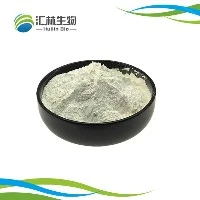
| Appearance | White crystalline powder | Visual |
| Total plate count | Reported per batch | Plate count |
| Conclusion | Conforms when tested by the stated methods | / |
Tested per batch - see Certificate of Analysis. Tighter limits and USP release are available on request. Batch number, production date, report number and authorised signature are issued with the shipment, never pre-printed on a page.
Regulatory Position by Market
Start with what we will not put in writing, because the omission is the useful part.
We do not describe this material as food grade. China has no food additive national standard for betaine hydrochloride, so a "food grade" label on this salt has nothing behind it but a supplier's own paper. Suppliers in this trade cite a feed additive standard in the GB 7300 series; we have not obtained the text and therefore quote none of its limits.
We do not describe it as GRAS. Betaine hydrochloride is sold in the United States as a dietary supplement ingredient, and no general GRAS affirmation covers it for food use.
What remains is a verifiable position. In the European Union, betaine is authorised as a feed additive, and its use in food and supplements runs through the novel food framework - where the salt and the free base are separate questions, and the route depends on the finished product and the member state. In China it is traded as a feed additive and as a technical or pharmaceutical raw material. Elsewhere, the determination is your regulatory team's; ours is to supply the specification, the batch certificate and a statement of composition that your filing can attach.
Converting Between Salt and Free Base
The conversion is short enough to do on a quotation sheet, which is why there is no excuse for getting it wrong.
| Starting point | Factor | Result |
| 1 kg of this grade at 98 % assay | × 0.747 | 0.747 kg betaine |
| 1 kg of betaine required | ÷ 0.747 | 1.34 kg of this grade |
| 1 kg of betaine required | ÷ 0.980 | 1.02 kg of a 98 % anhydrous grade |
The 0.747 is 98.0 × 0.7626, and the 0.7626 is 117.15 ÷ 153.61 - the betaine molecule over the salt molecule. Anyone quoting a hydrochloride at "98 % betaine" is quoting something the molecule cannot deliver: the ceiling is 76.3 %, before any assay loss.
What the Salt Form Changes on the Line
Cost per kilogram of betaine becomes a calculation rather than a negotiation, because the factor is printed above and does not depend on which supplier is talking.
Weighing and storage get simpler than they are with the free base. This salt behaves like an ordinary crystalline solid in a sealed drum; it does not demand humidity-controlled dispensing, which matters on a line that opens the same drum eight times a shift.
Acid contact becomes a design input. At pH 0.8 – 1.2 in solution, the material decides for you whether it can meet mild steel, an alkaline carrier, or an acid-sensitive active - better to learn that from a page than from a batch that fails on the bench.
And the two release grades share one identity. Technical and USP release run the same CAS and the same titration, so changing grade does not force your QC to revalidate a method.
Where This Grade Fits
Supplement manufacturing. Sold as a raw material to manufacturers who have already specified the salt. The positioning and the label claim of the finished product belong to the brand; what we owe is the material and the documentation behind it.
Feed premixes. Betaine serves as a methyl donor in animal nutrition, sparing part of the methionine inclusion. The salt's low hygroscopicity is the reason this form dominates that channel - premix lines punish moisture pickup.
Acid-tolerant dry blends. Any system where a low-pH betaine source is acceptable and the free base's moisture sensitivity is not.
Not for cosmetic emulsions. At pH 0.8 – 1.2 this salt has no place in a typical personal care formula. The site lists a separate grade for that work.
What Ships With an Order
Four documents travel with every batch, and one of them is the reason buyers stay:
• Certificate of analysis - assay, loss on drying, pH, heavy metals and arsenic, each against the method named in the specification above.
• Specification sheet - the same table, signed, for your supplier file.
• Safety data sheet - carrying the H318 serious eye damage classification this salt earns from its acidity. It is on the page rather than on request because your warehouse needs it before the drum arrives, not after.
• Statement of composition - for filings that ask what the material is, in the language a regulator accepts.
Anything further that your market requires is prepared on request; we would rather be asked than guess at your filing.
Questions Before the First Order
Q: What exactly does the 98 % on the certificate measure?
A: The salt, on a dried basis. It is not a betaine figure, and it cannot be - the betaine ceiling in this molecule is 76.3 %.
Q: Can I substitute this for the anhydrous grade at the same weight?
A: No. You would run 23 % short on betaine and add acidity at the same time. Work the conversion above before the trial batch, not after.
Q: Why does the specification fix a pH range instead of a single value?
A: Because the number is a property of the solution, not of the powder. 0.8 – 1.2 is where an aqueous solution of this salt sits; a formulator needs the range to judge compatibility, and QC needs it as a release window.
Q: Is there any cosmetic use for this grade?
A: Not in a typical emulsion. The acidity rules it out, and the site carries a separate betaine grade for personal care.
Q: Which document settles an incoming inspection dispute?
A: The batch certificate, read against the methods in the specification. That is why both name the titration rather than saying "in-house method".
Q: What changes if I move from technical to USP release?
A: The loss on drying window tightens from ≤ 2.0 % to ≤ 0.5 %. The assay window, the CAS and the titration stay the same, so your method does not change.
Supplier
Betaine hydrochloride powder ships from Xi'an Huilin Bio-Tech Co., Ltd. with per-batch documentation against the methods above. The anhydrous grade is available from the same source, which means a buyer running both forms reconciles one supplier's certificates rather than two.
Lead time and freight terms are quoted with the order; FOB, CIF and DDP are all workable by destination.
This page describes a raw material for industrial and manufacturing use. It is not a finished consumer product, and nothing here is a statement about the effect of any finished product on any person. Regulatory status differs by market and is the buyer's determination; we supply the documentation a filing requires.
Hot Tags: betaine hydrochloride powder, China, suppliers, manufacturers, factory, wholesale, buy, price, bulk, pure, natural, high quality, in stock, for sale


