


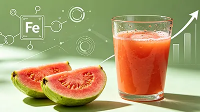
A pooled analysis of 17 Indonesian studies suggests that pairing guava juice with iron supplementation can increase hemoglobin levels by an additional 1.29 g/dL compared to iron alone, potentially shifting individuals from mild or moderate anemia into the non‑anemic range.
For millions of women and adolescent girls in low- and middle-income countries, iron deficiency anemia remains a persistent public health challenge. Now, a newly published systematic review and meta-analysis in the open-access journal BMJ Nutrition Prevention & Health suggests that a simple, affordable, and culturally accepted dietary addition-guava juice-could help bridge the gap.
Pooled data from 12 quantitative studies involving 235 female participants showed that consuming guava juice led to an average hemoglobin increase of 1.71 g/dL overall. The benefit was even more pronounced in pregnant women (1.84 g/dL) than in adolescent girls (1.52 g/dL).
Most importantly, in five studies directly comparing iron supplementation alone versus iron plus guava juice (102 participants in each group), the combination produced hemoglobin levels that were on average 1.29 g/dL higher than iron alone.

Why guava juice may help
Guava fruit (Psidium guajava) is exceptionally rich in vitamin C, containing up to four times more per 100 g than oranges-a nutrient well established to enhance non‑heme iron absorption from plant‑based sources and supplements. Vitamin C facilitates iron uptake by reducing ferric (Fe³⁺) to ferrous (Fe²⁺) iron in the gastrointestinal tract, converting it into a form that is more readily absorbed.
Beyond vitamin C, guava also provides folate, vitamin A, dietary fiber, and modest amounts of iron-nutrients that collectively support red blood cell production and overall health. This nutrient profile positions guava juice as a compelling adjunct to conventional iron therapy.
A vulnerable population
Iron deficiency anemia disproportionately affects females in low-resource settings. Research cited in the analysis indicates that approximately 48.9 % of pregnant women and 32 % of adolescent girls suffer from anemia, with long-term consequences including fatigue, impaired cognitive function, pregnancy complications, and increased mortality risk.
The researchers note that adding guava juice to iron supplementation may serve as a natural, low-cost adjunct to iron therapy, particularly appealing in regions where affordability and accessibility are key barriers. "Integrating guava juice into school nutrition programmes, antenatal care packages, or community health initiatives could represent a feasible approach to address mild-to-moderate anaemia, aligning with the United Nations' Decade of Action on Nutrition (2016–2025), which emphasises dietary diversification and locally sourced nutrient‑rich foods," the researchers suggest.

Clinical significance
An increase of 1–2 g/dL in hemoglobin can shift an individual from mild or moderate anemia into the non‑anemic category, with meaningful improvements in fatigue, cognitive function, and daily productivity.
Limitations and cautious interpretation
However, the authors emphasize several important limitations. All included studies were conducted exclusively in Indonesia, raising questions about generalizability to other regions with different dietary patterns, guava cultivars, and environmental factors. There was considerable heterogeneity in study design, intervention duration, juice dosage, and participant characteristics. The predominance of quasi‑experimental designs (15 of 17 studies) restricts causal inference, and the lack of long‑term follow‑up precludes assessment of the sustainability of hemoglobin improvements.
Commenting on the findings, Professor Sumantra Ray, chief scientist and executive director of the NNEdPro Global Institute for Food, Nutrition and Health (which co‑owns the journal), noted: "This study builds on the established role of dietary sources high in vitamin C to enhance iron absorption and improve the effectiveness of iron supplementation. But quasi‑experimental research, the wide variation in study design, small sample sizes, and limited follow‑up mean that we need caution in interpretation."
He added that before guava juice can be recommended as a routine alternative or adjunct for populations at risk of iron deficiency anemia, more rigorous studies are needed to determine optimal dosage and duration of use.
Takeaway
While the evidence is promising, the current meta-analysis should be viewed as generating hypotheses rather than providing definitive clinical guidance. For supplement retailers and public health planners, guava juice represents a potentially low-cost, culturally acceptable dietary support strategy worthy of further investigation-but not yet a substitute for evidence-based anemia management protocols.
Reference
🩸 Related Products - Iron Absorption & Blood Health
While the meta-analysis above specifically examined guava juice combined with iron supplementation, the following ingredients from our collection provide key nutrients that support iron absorption, red blood cell formation, and overall blood health - including vitamin C (a well-established iron absorption enhancer), vitamin B12, and traditional botanicals used in hematinic support.
- ✓ L-Ascorbic Acid Powder (Vitamin C) - Pure, standardized vitamin C. Facilitates the reduction of ferric iron (Fe³⁺) to ferrous iron (Fe²⁺), significantly improving non-heme iron absorption.
- ✓ Kakadu Plum Extract Powder - One of the world's richest natural sources of vitamin C (up to 3,000–5,000 mg/100g). Provides bioflavonoids that work synergistically with vitamin C to enhance iron uptake.
- ✓ Citrus Limon Fruit Extract - A gentle, naturally sourced vitamin C extract from lemon. Supports iron absorption while adding a mild citrus flavor profile.
- ✓ Pure Vitamin B12 Powder (Cyanocobalamin) - Essential for healthy red blood cell formation and maturation. Iron deficiency can sometimes mask concurrent B12 deficiency; including both nutrients provides comprehensive anemia support.
- ✓ Angelica Sinensis Extract (Dong Quai) - A classic botanical in traditional wellness systems for supporting healthy blood circulation and hematinic function.
- ✓ Astragalus Polysaccharide Powder - Derived from Astragalus membranaceus, traditionally used to support vital energy (Qi) and immune function, complementing iron formulas for overall vitality.
- ✓ Black Goji Berry Powder - Rich in anthocyanins, naturally occurring vitamin C, and iron. Offers antioxidant protection and supports nutrient utilization. Ideal for functional beverages.
The information provided in this article is for educational and informational purposes only and is not intended as medical advice. It does not replace professional medical consultation, diagnosis, or treatment. Always seek the advice of a qualified healthcare provider with any questions you may have regarding a medical condition or before starting any new supplement regimen.
The products and ingredients mentioned are not intended to diagnose, treat, cure, or prevent any disease.