


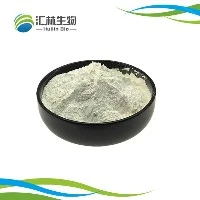
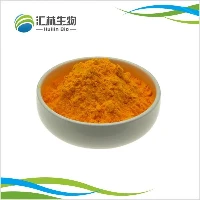

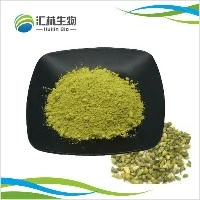
Skin firmness depends on two layers: the connective tissue of the dermis, where collagen and elastin fibres provide support, and the subcutaneous fat beneath it. Both thin with age, and both respond to substantial changes in body weight. Formulators working on skin elasticity after weight change usually start with Centella asiatica extract, hydrolyzed collagen peptides and hyaluronic acid.
1. What Changes In Skin When Body Weight Changes
Body weight change alters skin appearance through the dermis and the subcutaneous layer, not through the surface. MedlinePlus describes the dermis as the layer whose connective tissue carries collagen fibres for support and elastin fibres for flexibility, and records that changes in that tissue reduce the skin's strength and elasticity. The same entry notes that the subcutaneous fat layer thins, removing volume and padding. Weight change acts on both layers at once, which is why skin elasticity and contour can shift together.


MedlinePlus attributes skin change to environmental exposure, genetic makeup and nutrition, and identifies sun exposure as the largest single factor. That framing matters for a buyer: an ingredient brief aimed at skin elasticity cannot promise an outcome that sun protection and formulation also govern.
Three ingredient classes appear repeatedly in formulas built for skin elasticity, and each acts at a different point. Centella asiatica extract is used for its triterpenoid fraction and its effect on dermal fibroblasts. Hydrolyzed collagen peptides supply short peptide sequences and are used both topically and orally. Hyaluronic acid is a humectant whose behaviour follows its molecular weight.
| Ingredient | INCI Name | Key Marker Compound | Primary Evidence Base |
| Centella asiatica extract | Centella Asiatica Extract | Asiaticoside, madecassoside | In vitro fibroblast studies; cosmetic reviews |
| Hydrolyzed collagen peptides | Hydrolyzed Collagen | Gly-Pro-Hyp tripeptide sequence | Oral supplementation trials; systematic review |
| Hyaluronic acid powder | Hyaluronic Acid | Molecular weight band | Skin penetration studies; oral trials |
The table separates what each ingredient is from what has been measured on it. That distinction decides whether two quotations are comparable: two suppliers can both list "Centella asiatica extract" while shipping extracts whose triterpenoid content differs several-fold.
2. Centella Asiatica Extract: Triterpenoid Content Sets The Evidence Bar
Centella asiatica extract is specified by its triterpenoid content, and that assay - not the extract percentage - determines whether a formula can be compared with published work.
› Asiaticoside and madecassoside are the two triterpenoids most often used as markers.
› Bylka and colleagues reviewed the plant's use in cosmetology in Postępy Dermatologii i Alergologii, covering its triterpenoid fraction and topical applications.
› Gohil and colleagues published a review of the plant's active constituents in the Indian Journal of Pharmaceutical Sciences.

› Lee and colleagues reported increased fibroblast proliferation and collagen synthesis in cultured human skin fibroblasts.
That last study is an in vitro result. It shows activity on cultured cells and does not by itself establish what happens on intact skin, so for skin elasticity briefs it belongs in the mechanistic column rather than the efficacy column. When a brief cites it for skin elasticity, the citation should say so.
For skin elasticity sourcing, ask for the combined asiaticoside and madecassoside assay by HPLC, the plant part used, and the country of origin. Leaf and whole-herb material do not carry the same triterpenoid profile, and an extract standardized on one marker can sit well below the total triterpenoid figure quoted in a brochure.
3. Hydrolyzed Collagen Peptides: Molecular Weight Decides Performance
Hydrolyzed collagen peptides are judged by molecular weight distribution, because the low-mass fraction is the part that is absorbed and the part that shapes mouthfeel in a powder blend.
Choi and colleagues published a systematic review in the Journal of Drugs in Dermatology that surveyed oral collagen supplementation across dermatological applications. Proksch and colleagues ran a double-blind, placebo-controlled trial of oral collagen peptides and reported measurable changes in skin physiology. Both lines of work concern ingested peptides, so neither transfers automatically to a topical claim.
› Request a distribution table by kDa band rather than a single average molecular weight.
› Declare the source species: marine, bovine or porcine.
› Type I and Type III are the collagens usually quoted for skin applications.
› Oral and topical grades differ in mesh size and solubility; confirm which one the price refers to.

The route split is the practical trap. A material bought for a drink mix and a material bought for a serum are usually the same chemistry at different specifications, and a quotation that names only "hydrolyzed collagen" leaves the buyer to guess. For skin elasticity work in a topical format, the peptide is there for surface hydration and film formation; for an oral format, the low-mass fraction is the relevant one.
4. Hyaluronic Acid: Molecular Weight Bands Do Different Jobs
Hyaluronic acid is not one ingredient. High, medium and low molecular weight bands behave differently in formulation, and the grade decides which route the material can be sold into.
Papakonstantinou and colleagues described hyaluronic acid as a key molecule in skin ageing in Dermato-Endocrinology, covering its role in the extracellular matrix. Essendoubi and colleagues used Raman spectroscopy to compare human skin penetration across molecular weights and found the bands do not behave identically. Oe and colleagues ran a 12-week double-blind, placebo-controlled study of oral hyaluronan and reported changes in wrinkle appearance and skin dryness scores.
› Declare the molecular weight range in kDa, not just "high" or "low".
› State cosmetic or food grade; the two are not interchangeable for export paperwork.
› Water-binding capacity depends on the band and on the surrounding humectant system.
In skin elasticity formulas the band and the electrolyte load are usually checked together, since hyaluronic acid is an anionic polymer and its viscosity falls as salt concentration rises. A grade that performs well in a simple aqueous serum can thin noticeably in a high-electrolyte system, which is why pilot batches beat paper comparisons here.
5. Specification Checklist Before You Order
Four specification items decide whether a skin elasticity quotation is comparable. Ask for them in writing before the sample stage, because they are cheap to supply and expensive to discover after a bulk order lands.
| Parameter | What To Request | Why It Changes The Result |
| Centella triterpenoid content | HPLC assay stated as combined asiaticoside and madecassoside | A bare extract percentage cannot be compared with published work |
| Collagen molecular weight distribution | Distribution table by kDa band, not a single average | Absorption and mouthfeel both follow the low-mass fraction |
| Hyaluronic acid grade | Cosmetic or food grade, with the molecular weight range declared | Grade sets the permitted route; mass sets penetration and feel |
| Batch documentation | COA, MSDS, specification sheet, heavy-metal and microbiological limits | Determines whether the material clears your own supplier audit |
Vitamin C belongs in the same conversation. Pullar and colleagues reviewed its role in skin health in Nutrients, covering collagen synthesis and antioxidant defence. A skin elasticity formula pairing these three ingredients with ascorbic acid needs its pH and stability checked, because the peptide and triterpenoid fractions are the sensitive parts and they fail quietly rather than visibly.
6. Sourcing All Three From One Supplier
Xi'an Huilin Bio-tech Co., Ltd. supplies all three materials from one quality system, which shortens the documentation loop when a skin elasticity formula needs a matched COA set.
Centella asiatica extract is available standardized to triterpenoid content; hydrolyzed collagen peptides in marine, bovine and porcine types; and hyaluronic acid powder in cosmetic and food grades with the molecular weight range declared on the specification sheet. Each shipment carries a COA, MSDS and specification sheet. Samples are available before a bulk order, and the technical team can quote against a target triterpenoid or peptide specification rather than a catalogue number.
7. Frequently Asked Questions
Q: How Much Centella Asiatica Extract Goes Into A Serum?
A: For skin elasticity work, use level follows the triterpenoid assay, not the extract weight. Fix the target triterpenoid concentration first, then calculate the extract dose from the COA, and confirm the result in a pilot batch. Two extracts at the same percentage can differ several-fold in asiaticoside content, so a dose copied from another formula is not transferable without the assay. Ask the supplier for the HPLC figure per batch.
Q: Does Collagen Peptide Molecular Weight Change The Result?
A: It changes both absorption and mouthfeel. Short peptides in the low-kilodalton range are the fraction usually associated with absorption, while higher-mass fractions contribute viscosity and body. Ask for a distribution table by band rather than a single average, because one average can hide a very different profile. For oral formats the low-mass fraction is also what keeps a drink from tasting gelatinous.
Q: Can These Three Be Combined In One Emulsion?
A: Yes, with sequencing, and skin elasticity formulas usually tolerate all three. Add the hyaluronic acid to the water phase early for hydration, disperse the Centella extract after the emulsion has cooled, and add the collagen peptides last to limit heat exposure. Check pH before and after each addition. The peptide and triterpenoid fractions are the sensitive components, so heat and pH excursions show up there first.
Q: Can Centella Asiatica Extract Go Into A Rinse-Off Cleanser?
A: It can, but the contact time changes the brief. A rinse-off format leaves little residence time, so the triterpenoid dose has to justify itself against cost, and surfactant systems can shift the pH away from the range where the extract is most stable. Most formulators keep the standardized extract for leave-on products and use lower-cost botanical material in cleansers.
Q: What Documents Should I Request Before Ordering?
A: For any skin elasticity brief: a batch COA with the assays named above, an MSDS, a specification sheet, and a heavy-metal and microbiological limit statement. For export, ask for allergen and country-of-origin declarations at quotation stage rather than at shipment. A supplier who cannot produce a distribution table for collagen, or a triterpenoid assay for Centella, is quoting a description rather than a material.
Q: Is Hyaluronic Acid Powder Available In Food Grade?
A: Yes. Cosmetic and food grades are both supplied, and the grade must be stated on the quotation because it sets the permitted route and the export paperwork. The molecular weight range should be declared alongside the grade. For oral formats, confirm the band used in whichever trial you intend to cite, since penetration and hydration behaviour differ across bands.
Sources
-
1. MedlinePlus (NIH). Aging changes in skin. https://medlineplus.gov/ency/article/004014.htm
-
2. Bylka W, et al. Centella asiatica in cosmetology. Postępy Dermatologii i Alergologii. 2013;30(1):46-49. https://www.ncbi.nlm.nih.gov/pmc/articles/PMC3834700/
-
3. Gohil KJ, et al. Pharmacological review on Centella asiatica: a potential herbal cure-all. Indian Journal of Pharmaceutical Sciences. 2010;72(5):546-556. https://www.ncbi.nlm.nih.gov/pmc/articles/PMC3116297/
-
4. Lee J, et al. Efficacy of Centella asiatica on human skin fibroblast proliferation and collagen synthesis in vitro. Journal of Medicinal Food. 2006;9(2):305-310. https://www.liebertpub.com/doi/10.1089/jmf.2006.9.305
-
5. Choi FD, et al. Oral collagen supplementation: a systematic review of dermatological applications. Journal of Drugs in Dermatology. 2019;18(1):9-16. https://jddonline.com/articles/dermatology/S1545961619P0009X
-
6. Proksch E, et al. Oral supplementation of specific collagen peptides has beneficial effects on human skin physiology: a double-blind, placebo-controlled study. Skin Pharmacology and Physiology. 2014;27(1):47-55. https://karger.com/spp/article/27/1/47/228720
-
7. Papakonstantinou E, et al. Hyaluronic acid: a key molecule in skin aging. Dermato-Endocrinology. 2012;4(3):253-258. https://www.tandfonline.com/doi/full/10.4161/derm.21923
-
8. Oe M, et al. Oral hyaluronan relieves wrinkles and improves dry skin: a 12-week double-blinded, placebo-controlled study. Journal of Cosmetic Dermatology. 2017;16(4):520-526. https://onlinelibrary.wiley.com/doi/10.1111/jocd.12335
-
9. Essendoubi M, et al. Human skin penetration of hyaluronic acid of different molecular weights as probed by Raman spectroscopy. Skin Research and Technology. 2015;22(1):55-62. https://onlinelibrary.wiley.com/doi/abs/10.1111/srt.12228
-
10. Pullar JM, et al. The roles of vitamin C in skin health. Nutrients. 2017;9(8):866. https://www.ncbi.nlm.nih.gov/pmc/articles/PMC5579659/