


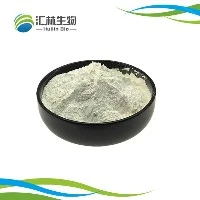

Buying bisphenol S is a documentation exercise before it is a price negotiation. The same CAS number covers industrial, polymer and analytical grades that differ in assay, in the method used to qualify them, and in what the certificate states, and the regulatory questions a bisphenol S buyer has to answer change with the grade on the order. Bisphenol S powder sits in our biochemical research range.
1. One CAS Number, Three Commercial Grades
The three grades are not marketing tiers. They differ in what is measured and in what the certificate is willing to state, which is why two quotations at the same percentage can describe different materials.
| Grade | Assay | Method on our sheet | Typical use | Ask for |
| Industrial | 98.0% minimum | HPLC or GC | Thermal paper developer, resin intermediate | Related-substance profile |
| Polymer | 99.0% minimum | HPLC or GC | PES and PSU synthesis | Metal residues, melt colour |
| Analytical | 99.0% minimum | HPLC or GC | LC-MS/MS calibration, method development | Chromatographic purity, water content, identity confirmation |
A quotation that names only a percentage has not told you which grade of bisphenol S it is. Two of the three share the same headline figure, so the discriminator is the qualification method and what the certificate reports beyond the main component, not the assay.
2. The Identifiers A Purchase Order Should Carry
Bisphenol S carries more synonyms than most monomers, and a mismatched name is the most common reason two quotes cannot be compared. The names are not wrong, but only one of them is unambiguous.
| Name type | Value | Where it has to appear |
| CAS number | 80-09-1 | Order, certificate, safety data sheet, label |
| Molecular formula | C12H10O4S | Certificate and technical data sheet |
| Systematic name | 4-(4-hydroxyphenyl)sulfonylphenol | Identity line of the certificate |
| Trade synonyms | 4,4'-sulfonyldiphenol; diphone A, C and D; BS 3; SDP | Cross-reference only, never on its own |
PubChem resolves CAS 80-09-1 to molecular formula C12H10O4S and a molecular weight of 250.27, with the systematic name 4-(4-hydroxyphenyl)sulfonylphenol. Commercial paperwork also uses 4,4'-sulfonyldiphenol, bis(4-hydroxyphenyl) sulfone, diphone A, diphone C and diphone D.
Two suppliers can quote the same substance under different names, and the reverse happens as well. Put the CAS number, the formula and the grade on the order, then require the certificate to repeat all three.
3. Purity Is A Method, Not A Number
An assay figure without a method and a basis is not a specification. The same lot can read differently by HPLC area normalisation and by titration, and neither reading is wrong.
For a monomer, the number that decides reproducibility is often not the main-component assay. Ask what else the certificate reports: related substances from the sulfonylation step, water by Karl Fischer, and inorganic residues from neutralisation. Those are the lines that decide whether a polymerisation runs the same way twice, and they are the lines a short-form certificate leaves out.
The assay basis matters more than the assay value when the two sides use different conventions. A specification written on an as-is basis and one written on a dried basis can differ by the water content of the lot, which for bisphenol S is small but not zero. State the basis on the purchase order and the argument disappears before it starts.
4. Documentation That Should Arrive With The Drum
Six documents decide whether a shipment can be received without a hold, and each has a specific failure mode when it is missing.
› Safety data sheet in the destination language, current revision, matching the label
› Certificate of analysis for the actual batch, with the analytical method named
› Batch number and manufacturing date traceable to a retained sample
› Proposition 65 statement, dated, covering the endpoint your article exposes
› REACH registration status for the tonnage band being imported
› Transport classification, stated even where the material is not regulated
5. Food Contact Use Hinges On The Harmonised Classification
Food contact is the question that most often stops a bisphenol S order, and the scope of the restriction is narrower and more specific than most summaries suggest.
Commission Regulation (EU) 2024/3190 covers bisphenol A and other bisphenols and bisphenol derivatives with a harmonised classification for specific hazardous properties in materials and articles intended to come into contact with food. Read that scope carefully: the restriction attaches to the classification, not to the name printed on the drum.
The first document to check is therefore the harmonised classification in Annex VI of Regulation (EC) No 1272/2008, and the second is that entry as amended. Where the classification the regulation refers to is present, the food contact route closes for that substance. Where it is not, the position depends on the specific entry and on migration requirements for the finished article, which is the converter's assessment and not the raw material supplier's.
Our material is supplied for industrial and research use. It is not sold as a food additive, and we do not qualify it for direct food contact.
6. Reference Standard Use Is A Different Purchase Again
Analytical buyers are not buying a monomer; they are buying a calibrant, and the requirements diverge at every line of the certificate.
For LC-MS/MS method development the useful certificate reports chromatographic purity, an identity confirmation by mass spectrometry and a water content, because a hygroscopic solid changes concentration every time the vial is opened. Where the standard ships as a solution, the solvent, the concentration and the expiry all move onto the certificate as well.
Ask whether the material is qualified against a certified reference material or only against an in-house standard. That answer sets what your uncertainty budget can claim. Where the same lot serves both roles, buy bisphenol S once against the tighter of the two specifications rather than twice against different ones.
7. Storage And Qualified Life In Your Own Warehouse
The material leaves here stable. What happens next depends on the container and on the room it sits in.
› Keep the container sealed and store it cool and dry, away from strong oxidisers
› Water solubility rises as pH rises, because the phenolic group deprotonates
› Analytical grade carries a shorter qualified life than industrial grade; date the vial when opened
The technical data sheet for bisphenol S powder carries the storage conditions and the packaging options per grade. Ask for the version that matches the grade on your order, because bulk bags and fibre drums are not qualified identically.
8. Comparing Two Quotations Across Grades
The price gap between 98.0% and 99.0% is small per kilogram and can be large per batch, and neither figure identifies the cheaper option for a given application.
The arithmetic is the usual one: price per kilogram multiplied by charge level, divided by the yield of the step it feeds. For a monomer the yield dominates, which is why one assay point matters in a polycondensation and much less in a thermal coating. Run that calculation with your own yields before the sample request, not after the first production batch. Two grades of bisphenol S at the same price per kilogram are therefore not the same cost, and the cheaper line is the one that removes a reprocessing step.
| Application | Grade to quote | Why | Verify before the batch |
| Thermal paper developer | Industrial, 98.0% | Assay is unlikely to be the limiting variable at this step | Melt colour after ageing |
| PES or PSU synthesis | Polymer, 99.0% | Metal residues and colour disturb a polycondensation | Metal residues, melt colour |
| LC-MS/MS calibration | Analytical, 99.0% | Purity and water content set the concentration you weigh | Water content, chromatographic purity |
| Leather syntan precursor | Industrial, 98.0% | The downstream sulfonation dominates the outcome | Sulfonation yield on your own line |
| Textile dye fixing | Industrial, 98.0% | Cost dominates at this position in the formula | Solubility in the dyebath |

Frequently Asked Questions
Q: What Is The CAS Number And Molecular Weight Of Bisphenol S?
A: CAS 80-09-1. PubChem gives the formula C12H10O4S and a molecular weight of 250.27, with the systematic name 4-(4-hydroxyphenyl)sulfonylphenol. Commercial documents also use 4,4'-sulfonyldiphenol and several diphone designations, so match the CAS number and formula on the certificate rather than the trade name on the quotation.
Q: Which Grade Should A Polymer Producer Order?
A: Polymer grade at 99.0% and above. The extra point of assay is not the reason; this grade is qualified for the impurities that disturb a polycondensation, principally metal residues and colour. Ask for both on the certificate, and make sure the grade name appears on the quotation rather than only the percentage.
Q: Is Bisphenol S Permitted In Food Contact Materials?
A: It depends on the harmonised classification, not on the name. Regulation (EU) 2024/3190 covers bisphenol A and other bisphenols with a harmonised classification for specific hazardous properties in food contact materials. Check Annex VI of Regulation (EC) No 1272/2008 and the amended entry, then assess migration for the finished article. We supply for industrial and research use only.
Q: Can Industrial Grade Be Used As An Analytical Standard?
A: Not for quantitative work. Industrial grade is qualified on assay by HPLC or GC, which is not the same as chromatographic purity, water content and identity confirmation stated together. A calibrant needs all three, and a hygroscopic powder needs its water content stated as well, because that figure sets the concentration you actually weigh out.
Q: What Documentation Should Accompany A Shipment?
A: Six items: a current safety data sheet in the destination language, a batch certificate of analysis naming the method, a batch number and manufacturing date traceable to a retention sample, a dated Proposition 65 statement, REACH registration status for the tonnage band, and a transport classification even where the material is not regulated.
Q: What Shelf Life Should I Plan For?
A: Our documentation states it per grade and the grades differ: industrial and polymer carry a stated period on the technical data sheet, while analytical grade is dated on the label rather than in a table. Ask for the figure on the lot you are quoted, and re-test after opening if the container has been exposed to humid air.
Xi'an Huilin Bio-tech Co., Ltd. supplies bisphenol S in industrial, polymer and analytical grades from the biochemical research range, with certificate of analysis, safety data sheet and specification support on request.
Sources
1. Commission Regulation (EU) 2024/3190 of 19 December 2024 on the use of bisphenol A and other bisphenols and bisphenol derivatives with harmonised classification for specific hazardous properties in certain materials and articles intended to come into contact with food. EUR-Lex. https://eur-lex.europa.eu/eli/reg/2024/3190/oj
2. Regulation (EC) No 1272/2008 on classification, labelling and packaging of substances and mixtures (CLP Regulation), Annex VI. EUR-Lex. https://eur-lex.europa.eu/eli/reg/2008/1272/oj
3. Regulation (EC) No 1907/2006 concerning the Registration, Evaluation, Authorisation and Restriction of Chemicals (REACH). EUR-Lex. https://eur-lex.europa.eu/eli/reg/2006/1907/oj
4. Bisphenol S, CID 6626. PubChem, U.S. National Library of Medicine. https://pubchem.ncbi.nlm.nih.gov/compound/6626
5. The Proposition 65 List. Office of Environmental Health Hazard Assessment, California Environmental Protection Agency. https://oehha.ca.gov/proposition-65/proposition-65-list