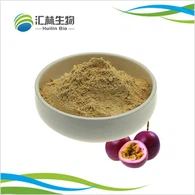


Xi'an Huilin Bio-Tech Co., Ltd. is one of the leading manufacturers and suppliers of chasteberry extract powder in China. With abundant experience, we are committed to providing high quality natural products with competitive price. Please feel free to wholesale bulk pure chasteberry extract powder for sale here from our factory.
Introduction
Chasteberry Extract is derived from the dried mature fruit of Vitex agnus-castus L., a Mediterranean shrub belonging to the Lamiaceae (formerly Verbenaceae) family. Traditionally known as "monk's pepper" due to its historical use in monastic communities, chasteberry has been utilized for centuries to support women's reproductive health and hormonal balance.
The fruit contains a rich array of bioactive compounds including iridoid glycosides (agnuside, aucubin), flavonoids (casticin, orientin, isovitexin, vitexin), and essential oils. Among these, agnuside and casticin are recognized as key marker compounds for quality standardization.

Modern scientific research has validated the traditional uses of chasteberry, with numerous clinical trials demonstrating its efficacy in alleviating symptoms of premenstrual syndrome (PMS) and supporting hormonal equilibrium.
Our Chasteberry Extract Powder is manufactured through ethanol/water extraction followed by spray-drying, ensuring consistent marker delivery and batch-to-batch reproducibility. We offer multiple specifications-including ratio-based extracts (4:1–20:1) and content-based specifications (Agnuside 0.5–2%; Vitexin 5%; Casticin 0.3–0.5%; Total Flavonoids)-to meet diverse application requirements across nutraceutical, food, and cosmetic industries.
Technical Information
| Parameter | Specification / Information |
|---|---|
| Latin Name | Vitex agnus-castus L. |
| Plant Part Used | Dried mature fruit |
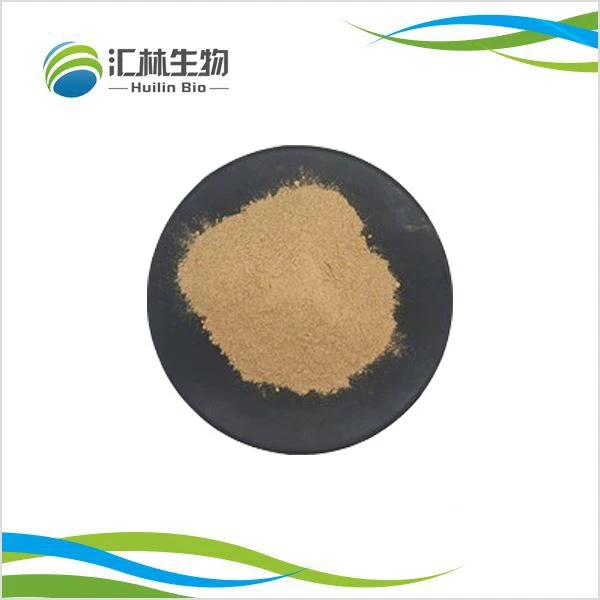
| Appearance | Brown-yellow to brown fine powder |
| Odor & Taste | Characteristic, slightly bitter |
| Particle Size | 80 mesh (D90 < 250 μm) |
| Solubility | Partially soluble in water; soluble in ethanol |
| Loss on Drying | ≤ 5.0% |
| Ash Content | ≤ 5.0% |
| pH (1% solution) | 4.5–6.5 |
| Bulk Density | 0.40–0.65 g/mL |
| Active Markers | Agnuside (0.5–2% HPLC), Vitexin (5% UV), Casticin (0.3–0.5% HPLC), Total Flavonoids |
| Carrier | Maltodextrin (optional; carrier‑free available) |
| Heavy Metals | Pb ≤ 2 ppm; As ≤ 1 ppm; Cd ≤ 1 ppm; Hg ≤ 0.1 ppm |
| Microbiological | TPC ≤ 1,000 cfu/g; Yeast & Mold ≤ 100 cfu/g; E. coli & Salmonella: negative |
| Shelf Life | 24 months |
| Storage | Cool, dry, light‑protected; reseal promptly |
| Regulatory Status | Permitted as food and supplement ingredient in major markets (USA, EU, China) |
Benefits
Vitex Agnus-Castus extract offers a range of health benefits, supported by clinical research and traditional use:
- Hormonal Balance Support – Helps regulate the menstrual cycle and supports natural hormonal equilibrium. Clinical studies have shown that chasteberry extract normalizes both menstrual cycle patterns and levels of prolactin and progesterone hormones.
- Premenstrual Syndrome (PMS) Relief – A meta‑analysis of double‑blind randomised controlled trials confirmed that Vitex agnus‑castus preparations are effective in reducing PMS symptoms, with women taking VAC being 2.57 times more likely to experience symptom remission compared to placebo. A landmark randomised, placebo‑controlled study (n=170) demonstrated significant improvement in irritability, mood alteration, anger, headache, and breast fullness (P<0.001), with a responder rate of 52% for active treatment vs. 24% for placebo.
- Premenstrual Dysphoric Disorder (PMDD) Support – Clinical trials have demonstrated that Vitex agnus‑castus extract is effective for the treatment of PMDD, with some studies showing equivalence to fluoxetine.
- Cyclical Mastalgia (Breast Pain) Relief – Double‑blind, placebo‑controlled studies have shown that Vitex agnus‑castus extract significantly reduces cyclical breast pain and tenderness.
- Polycystic Ovary Syndrome (PCOS) Support – A randomized, double‑blind controlled clinical trial (2026) investigated the efficacy of standardized Vitex agnus‑castus extract in managing PCOS features, including oxidative stress markers, lipid profile, and insulin resistance. Additional studies have evaluated its effects on inflammatory markers in women with PCOS.
- Anti‑Inflammatory Activity – Agnuside exhibits selective COX‑2 inhibition, contributing to reduced inflammation and associated discomfort.
- Skin Health – Applied in skincare products for soothing and balancing effects.
- Versatile Formulation – Available in multiple ratio (4:1–20:1) and content specifications (Agnuside 0.5–2%; Vitexin 5%; Casticin 0.3–0.5%) to suit different product needs.
Specifications & Applications Guide
| Specification | Concentration / Content | Recommended Applications | Key Considerations |
|---|---|---|---|
| Ratio 4:1 – 10:1 | Low–medium concentration | Standard dietary supplements, capsules, tablets | Mild concentration; broader phytochemical retention; cost‑effective |
| Ratio 10:1 – 20:1 | Medium–high concentration | High‑potency supplements, functional beverages | Higher concentration; reduced dosage volume |
| Agnuside 0.5% | HPLC standardized | Standardized supplements, capsules, tablets | Industry baseline specification; USP reference |
| Agnuside 1% – 2% | HPLC standardized | Premium supplements, high‑potency formulations | Higher agnuside content for enhanced bioactivity |
| Vitexin 5% | UV/HPLC | Standardized supplements, functional foods | Key flavonoid marker; well‑studied bioactivity |
| Casticin 0.3% – 0.5% | HPLC | High‑purity formulations, pharmaceutical research | Major flavonoid; considered key active constituent |
| Total Flavonoids | UV (custom levels) | Antioxidant formulations, wellness products | Broad flavonoid profile for comprehensive activity |
| Custom | Customizable | Tailored formulations | Available upon request; flexible specifications |
Frequently Asked Questions (FAQ)
Q: Is chasteberry extract safe for long‑term use?
A: Yes. Clinical studies have demonstrated that chasteberry extract is well‑tolerated with a favorable safety profile. In a 3‑month randomised controlled trial, only mild adverse events were reported (four in the active group, three in the placebo group), none of which caused discontinuation of treatment.
Q: What is the recommended daily intake of chasteberry extract?
A: The recommended dosage varies by specification and intended application. For standardized extracts, typical dietary supplement dosages range from 150–400 mg/day. For Agnuside 0.5% standardized extract, one tablet daily is commonly used. We recommend consulting with a formulation specialist for application‑specific guidance.
Q: How does chasteberry extract work for hormonal balance?
A: Chasteberry extract acts on D₂ dopamine receptors in the hypothalamus, inhibiting excessive prolactin secretion. By reducing prolactin levels, it helps restore the balance between estrogen and progesterone, which is often disrupted in PMS and menstrual irregularities. Agnuside and other compounds also exhibit estrogen‑like activity.
Q: Is chasteberry extract suitable for use during pregnancy?
A: Chasteberry extract is not recommended during pregnancy or breastfeeding. Due to its hormonal activity, it should be avoided during these periods unless specifically advised by a healthcare professional.
Q: Can chasteberry extract interact with medications?
A: Chasteberry extract may interact with dopamine‑related medications (including antipsychotics and Parkinson's disease medications) due to its dopaminergic activity. It may also interact with hormonal contraceptives and hormone replacement therapy. Patients taking these medications should consult their healthcare provider before use.
Q: Does chasteberry extract have a strong taste?
A: Yes. Chasteberry extract has a characteristic slightly bitter taste. Bitterness can vary between lots even at the same marker target if peak ratios shift. For taste‑sensitive applications such as gummies and beverages, flavor‑masking systems may be employed.
Q: What is the difference between ratio specifications and content specifications?
A: Ratio specifications (e.g., 10:1, 20:1) indicate the concentration ratio of raw fruit to final extract powder. Content specifications (e.g., Agnuside 0.5%, Vitexin 5%) indicate the standardized percentage of specific active markers, ensuring consistent potency regardless of raw material variation.
For inquiries, quotations, or sample requests, please contact: sales@huilinbio-tech.com
1. Schellenberg R. Treatment for the premenstrual syndrome with agnus castus fruit extract: prospective, randomised, placebo controlled study. BMJ. 2001;322(7279):134-137. doi:10.1136/bmj.322.7279.134. PMID: 11159568. Key finding: Agnus castus extract significantly improved PMS symptoms (P<0.001) with a responder rate of 52% vs. 24% for placebo.
Link: https://pubmed.ncbi.nlm.nih.gov/11159568/
2. Csupor D, et al. Vitex agnus-castus in premenstrual syndrome: A meta-analysis of double-blind randomised controlled trials. Complement Ther Med. 2019 Dec. PMID: 31780016. Key finding: Women taking VAC were 2.57 times more likely to experience PMS symptom remission compared to placebo.
Link: https://pubmed.ncbi.nlm.nih.gov/31780016/
3. Pillarisetti P, et al. Identification and characterization of agnuside, a natural proangiogenic small molecule. Eur J Med Chem. 2018;160:193-206. doi:10.1016/j.ejmech.2018.10.009. PMID: 30340142. Key finding: Agnuside binds VEGFR2 with strong affinity; increases HUVEC proliferation (EC₅₀ = 1.376 μg/mL).
Link: https://pubmed.ncbi.nlm.nih.gov/30340142/
4. Suksamrarn A, Kumpun S, Kirtikara K, Yingyongnarongkul B, Suksamrarn S. Iridoids with anti-inflammatory activity from Vitex peduncularis. Planta Med. 2002 Jan;68(1):72-3. doi: 10.1055/s-2002-20048. PMID: 11842334.
Link: https://pubmed.ncbi.nlm.nih.gov/11842334/
5. Hu Y, Hou TT, Zhang QY, Xin HL, Zheng HC, Rahman K, Qin LP. Evaluation of the estrogenic activity of the constituents in the fruits of Vitex rotundifolia L. for the potential treatment of premenstrual syndrome. J Pharm Pharmacol. 2007 Sep;59(9):1307-12. doi: 10.1211/jpp.59.9.0016. PMID: 17883902.
Link: https://pubmed.ncbi.nlm.nih.gov/17883902/
6. Hatami A, et al. The Effect of Vitex Agnus-Castus Plant on Some Markers of Oxidative Stress, Lipid Profile and Insulin Resistance in Women with Polycystic Ovary Syndrome: A Randomized, Double-Blind Controlled Clinical Trial Study. JBRA Assist Reprod. 2026;30(1):70-78. doi:10.5935/1518-0557.20250165. PMID: 41428718.
Link: https://pubmed.ncbi.nlm.nih.gov/41428718/
Hot Tags: Chasteberry Extract Powder, China, suppliers, manufacturers, factory, wholesale, buy, price, bulk, pure, natural, high quality, in stock, for sale, Astragalus Polysaccharide Powder, Kelp Extract Powder, Puerarin Powder, Shitake Mushroom Extract Powder, Tongkat Ali Root Extract Powder, Wild Lettuce Extract Powder