


Xi'an Huilin Bio-Tech Co., Ltd. is one of the leading manufacturers and suppliers of hals 770 powder in China. With abundant experience, we are committed to providing high quality natural products with competitive price. Please feel free to wholesale bulk pure hals 770 powder for sale here from our factory.
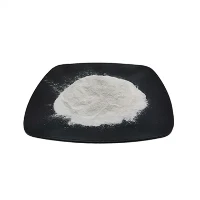
HALS 770 (CAS 52829-07-9) is a hindered amine light stabiliser, not a UV absorber. It is the sebacic acid diester of 2,2,6,6-tetramethyl-4-piperidinol, supplied as a white to almost white crystalline powder, C28H52N2O4, molecular weight 480.7, melting at 82 - 85 °C.
Compounders add it to polypropylene and impact-modified PP, to styrenics such as ABS and SAN, to polyurethane and to EPDM, wherever a part has to survive outdoor exposure rather than a single UV dose.
The distinction matters commercially: an absorber and a hindered amine solve different halves of the same problem, and the two are often bought together. This page is about the amine half.
Specification
| Item | Specification | Test Method |
| Physical Description | / | / |
| Appearance | White to almost white crystalline powder | Visual |
| Melting Range | 82 - 85 °C | Capillary method, USP Chapter 741 |
| Identification | Conforms to reference standard (retention time) | GC |
| Chemical Tests | / | / |
| Assay | ≥ 98.0% | GC, area normalization |
| Water | ≤ 0.5% | Karl Fischer |
| Residue on Ignition | ≤ 0.1% | Gravimetric, USP Chapter 281 |
| Heavy Metals | / | / |
| Heavy Metals (as Pb) | ≤ 10 ppm | ICP-MS |
These limits define the grade; a batch report is issued with each delivery.
It Does Not Absorb the Light
A UV absorber works before the photon reaches the polymer: the molecule takes the energy, dissipates it as heat, and returns to its ground state. A hindered amine does nothing of the kind. It intercepts the radical chain that starts after the polymer has already absorbed the light and begun to oxidise.
The active species is a nitroxyl radical, formed in situ from the amine. It couples with alkyl radicals to give an alkoxyamine, and that intermediate reacts further to regenerate the nitroxyl - a cycle rather than a single event. That is why loadings are low relative to an absorber: the molecule is not consumed stoichiometrically.
One practical consequence separates the two classes. Absorption depends on path length, so an absorber protects only as deep as the light penetrates, and thick sections are protected at the surface. A radical scavenger has no such geometry: its effectiveness does not fall off with thickness, which is why HALS grades are chosen for fibres, films and tapes as readily as for thick mouldings.
Molecular Weight, Migration and the Choice of Grade
At 480.7 this is a low-molecular-weight HALS. Low molecular weight means good dispersion and fast action, and it also means the molecule can migrate to the surface and be lost to washing, abrasion or contact with another material. Higher-molecular-weight and polymeric HALS grades exist for exactly that reason.
The melting point of 82 - 85 °C is a processing consideration rather than an identity curiosity: the powder melts below typical polyolefin processing temperatures, so it disperses as a liquid in the melt. That helps distribution but also means the additive is mobile during processing, which is one reason the loading and the compounding step are usually fixed together.
Water solubility at 18.8 mg/L and a calculated partition coefficient near 0.35 place the molecule at the boundary between water and oil - neither strongly hydrophobic nor water-soluble. In a thin film exposed to rain, that balance is part of why leaching is measured rather than assumed.
Two Classes, One Job
The table contrasts the two ways a polymer is protected from light. It is not a ranking: most outdoor formulations carry both, because they act at different points in the failure sequence.
| Aspect | Hindered amine (this product) | UV absorber |
| Point of action | After absorption, on the radical chain | Before absorption reaches the polymer |
| Consumed? | Regenerated in a cycle | Progressively transformed by the energy it takes |
| Thickness dependence | Effectiveness does not fall off with section thickness | Protects only as deep as the light penetrates |
| Typical loading | Lower, because of the regenerative cycle | Higher, since it works stoichiometrically in the light path |
| Failure mode | Can migrate and be extracted at low molecular weight | Can photodegrade itself and lose absorption |
Reading the rows together: an absorber without an amine eventually leaves the polymer unprotected once it has been consumed, and an amine without an absorber starts work only after damage has begun. Neither substitutes for the other.
Applications
Polypropylene and TPO - the classic use: thick sections where surface protection matters, and impact-modified grades where the rubber phase needs its own stabilisation.
Styrenics - ABS, SAN and impact polystyrene, where the aromatic content shifts which wavelengths do the damage.
Polyurethane and Elastomers - cast and RIM systems processed at temperatures where the additive is already liquid.
Films, Tapes and Fibres - thin sections where an absorber cannot protect through the thickness and a radical scavenger can still act.
How long a part lasts outdoors depends on the polymer, the loading, the section and the exposure; the description here is of the additive as supplied.
FAQ
Q: Is this a UV absorber?
A: No. It absorbs essentially nothing in the UV range that matters. It works on the radical chain that runs after the polymer has taken the light, through a nitroxyl radical that is regenerated in the process. An absorber and a hindered amine are usually used together rather than as alternatives.
Q: Why does the molecular weight matter so much here?
A: Because low molecular weight cuts both ways. At 480.7 the additive disperses easily and acts quickly, but it can also migrate to the surface and be washed or abraded away. Higher-molecular-weight and polymeric HALS grades exist for long-life articles where extraction is the limiting factor.
Q: What does melting at 82 - 85 °C mean in a compounder?
A: That the powder melts below normal polyolefin processing temperatures, so it dissolves into the melt rather than staying as particles. Distribution is good as a result, but the additive is mobile while the polymer is fluid, which is why loading and feeding point are usually fixed together.
Q: Why is effectiveness said to be independent of thickness?
A: Because the mechanism is chemical rather than optical. An absorber protects only where light reaches, so a thick part is protected at the surface. A radical scavenger works wherever the radicals are formed, so films and tapes are protected as thoroughly as thick mouldings.
Q: What are the main impurities on the certificate?
A: Residual 2,2,6,6-tetramethyl-4-piperidinol and the mono-ester from incomplete reaction. Both elute separately on a GC run, which is why the assay is reported by area normalisation rather than by titration of the amine.
Q: How should it be stored?
A: Between 2 and 30 °C, sealed, dry and away from light. The powder is stable at ambient temperature, but the piperidine ring is the reactive part of the molecule and prolonged exposure to light and moisture is not helpful.
Q: Can a higher-molecular-weight grade be supplied?
A: Yes, on request. Polymeric and oligomeric HALS grades are available for applications where migration is the limiting factor; the specification is written per product because molecular weight distribution, not just assay, decides performance.
Supply, Documentation and Contact
HALS 770 ships as a white to almost white crystalline powder, 1 kg to a foil bag and 25 kg to a fibre drum, filled after release so the label and the certificate carry the same lot number.
Higher-molecular-weight grades, a tighter water limit or a different pack size can be arranged per order rather than held as stock. Import paperwork is put together per destination on request.
Contact: sales@huilinbio-tech.com
Written for technical review. Permission to use the material is a matter for the importing market.
Hot Tags: hals 770 powder, China, suppliers, manufacturers, factory, wholesale, buy, price, bulk, pure, natural, high quality, in stock, for sale