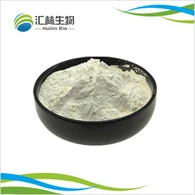


Xi'an Huilin Bio-Tech Co., Ltd. is one of the leading manufacturers and suppliers of 5-octanoylsalicylic acid powder in China. With abundant experience, we are committed to providing high quality natural products with competitive price. Please feel free to wholesale bulk pure 5-octanoylsalicylic acid powder for sale here from our factory.
5-Octanoylsalicylic acid powder, also called capryloyl salicylic acid or LHA, is salicylic acid carrying an eight-carbon acyl group at the 5-position: a white to off-white crystalline powder, C15H20O4 at 264.32 g/mol, CAS 78418-01-6, released at 98.0 % minimum by HPLC.
The part worth understanding before anything else is where that acyl group sits. The same formula and the same molecular weight describe a second molecule - the ester at the phenol - and the two behave differently in a formula, in a certificate and in a hydrolysis study. Everything below turns on that distinction.
What follows covers the two isomers, what the chain changes, why a 98 % assay cannot tell them apart, and where the material sits relative to the salicylates it is confused with.
One Formula, Two Molecules
C15H20O4 at 264.32 g/mol is not a unique address. Two different compounds answer to it.
The one on this page, CAS 78418-01-6, is 2-hydroxy-5-octanoylbenzoic acid: the octanoyl group is attached to the ring by a carbon–carbon bond, making the linkage an aryl ketone. It melts at 117 °C from cyclohexane, and its calculated density is 1.144 g/cm3.
The other, CAS 70424-62-3, is 2-[(1-oxooctyl)oxy]benzoic acid: the same eight-carbon chain, but joined through the phenolic oxygen, making the linkage an ester. Its calculated density is 1.108 g/cm3 and its calculated boiling point is lower, 396.7 °C against 454.8 °C for the ketone.
The difference is one bond. It decides whether the material can hydrolyse back to salicylic acid, how it partitions, and which of the two a buyer actually has - and an assay alone will not answer the question.
What the Octanoyl Chain Changes
Salicylic acid is 138.12 g/mol and melts at 157 to 159 °C. Adding an eight-carbon acyl group and losing one water gives 138.12 + 144.21 − 18.02 = 264.31, which is the 264.32 on the certificate.
Two things change and one does not. The molecule becomes far more lipophilic, which is the entire point of the derivative: it moves from the aqueous phase into oils and emollients. The melting point falls from 157 to 117 °C. What does not change is the carboxylic acid - the molecule is still an acid, still neutralisable, and still capable of the surface chemistry the parent is used for.
The mass also tells a formulator something practical. The salicylic acid core accounts for 52.3 % of the molecule by mass (138.12 ÷ 264.32); the rest is the chain. A gram of this powder is not a gram of salicylic acid, and a substitution made by mass rather than by mole will overstate the acid by nearly a factor of two.
The Assay, and What It Leaves Out
The assay runs by HPLC with ultraviolet detection. The salicyl ring provides the chromophore, so the measurement is direct - no derivatisation, no refractive index - and a 98.0 % figure is straightforward to obtain.
What the figure does not say is which isomer the peak belongs to. Both compounds share the same chromophore and much of the same retention behaviour, so a method validated on one can accept the other without flagging it. Identity therefore has to be established separately: infrared spectroscopy reads the carbonyl environment differently for a ketone and an ester, and a hydrolysis test settles it outright - the ester returns salicylic acid, the ketone does not.
There is a second figure that matters more than the assay for this molecule, and it is usually absent: free salicylic acid. It is the unreacted parent, and on the ester isomer it is also the hydrolysis product. A certificate that carries only an assay figure describes the main peak, not the parent content. Where a limit is required, it is written into the specification and released against it.
Specification and Release Basis
The table below is the release specification for this grade. Every row is tested per batch; the results travel on the certificate for the lot rather than on this page.
| Item | Specification | Test Method |
| Appearance | White to off-white crystalline powder | Visual |
| Assay (C15H20O4) | ≥ 98.0 % | HPLC, UV detection |
| Identification | IR spectrum and retention time correspond to reference | IR; HPLC |
| Melting point | 117 °C reference; reported per batch | Capillary method |
| Water content | ≤ 0.5 % | Karl Fischer |
| Residue on ignition | ≤ 0.1 % | Gravimetric |
| Heavy metals (as Pb) | ≤ 10 mg/kg | ICP-MS |
| Arsenic | ≤ 2 mg/kg | ICP-MS |
| Total aerobic count | ≤ 1,000 CFU/g | Plate count, 35 °C |
| Yeast and mould | ≤ 100 CFU/g | Plate count, 25 °C |
| E. coli | Absent in 1 g | Culture |
| Salmonella | Absent in 25 g | Culture |
The melting point is given as a reference with the per-batch value reported, because a single literature point should not be turned into a window by guesswork. Where a free salicylic acid limit, a residual solvent screen or a tighter melting range is required, each is written as a separate specification and released against it.
What It Is Not
Three substances are routinely confused with this one, and the first is a different molecule with the same formula.
| Substance | CAS | Key figures | Practical difference |
| 5-Octanoylsalicylic acid | 78418-01-6 | 264.32, mp 117 °C | Aryl ketone at C5; the article on this page |
| Octanoyl salicylic acid, ester | 70424-62-3 | 264.32, density 1.108 | Same formula; ester at the phenol; hydrolyses to salicylic acid |
| Salicylic acid | 69-72-7 | C7H6O3, 138.12, mp 157–159 °C | The parent acid; water-soluble at neutral pH |
| Octyl salicylate | 118-60-5 | C15H22O3, 250.33 | Ester with 2-ethylhexyl alcohol; a liquid; a different product family |
Octyl salicylate is the name that causes the most trouble in a catalogue, because it sounds like this one and shares the C15 count. It is an ester of salicylic acid with a branched eight-carbon alcohol, it is a liquid at room temperature, and it contains one oxygen fewer. It is not a substitute and not a variant.
Where It Comes From
The molecule is assembled from salicylic acid and an eight-carbon acyl source, and the mass balance states it plainly: 138.12 + 144.21 − 18.02 = 264.31. The 5-position is the one that reacts, which is why the product is the 5-isomer and not a mixture of ring positions.
What this page specifies is the output of that route, not the route itself; the manufacturing details for a given lot are stated on request. What can be said without qualification is that the product is a single defined compound, not a plant extract, and that it carries none of the crop variability that an extract page would have to declare.
Handling, Colour and Stability
The powder is a phenolic acid, and phenols oxidise. Colour drift from white towards off-white or pale tan is the visible sign, and it is the reason the storage note names light and air before temperature.
It is practically insoluble in water and freely workable in ethanol and in the oil phase. In formulation the material is usually dissolved into the oil phase or into a co-solvent before the aqueous phase is added; adding the powder directly to water gives a dispersion that looks uniform and is not.
Dry, sealed and protected from light, the solid is stable for the shelf life stated on the certificate. The ester isomer is the one with a hydrolysis liability; the ketone on this page does not have that pathway, which is one practical reason to know which one is in the drum.
Where It Is Used
Exfoliating formulations. As a lipophilic hydroxy acid, the material is used where a salicylic acid function is wanted in an oily or emulsified base. It is supplied as the free acid; the finished product, its claims and its permitted levels belong to the formulator.
Emulsifiable concentrates. The combination of a carboxylic acid head and an eight-carbon tail gives the molecule surfactant-like behaviour at an interface, which is useful in concentrate design.
Research on acyl salicylic acids. Structure–property work on ring-acylated salicylic acids uses the 5-isomer as a defined reference compound.
Analytical reference. Identity work on the two C15H20O4 isomers needs both, and this is one of them.
Regulatory Position
The material is supplied as a cosmetic raw material against the specification above. It is not a finished product, and no claim about its effect on skin is made on this page.
The cosmetic ingredient name for this article is capryloyl salicylic acid, and LHA is the abbreviation used for the lipophilic hydroxy acid class. Because registry records attach closely similar names to both C15H20O4 isomers, the name on a customer's file should be read against the CAS number on the certificate: 78418-01-6 is this article, and the ester at 70424-62-3 is a different one.
Certificate of analysis, technical data sheet and safety data sheet travel with the lot. Documentation to support import requirements in the destination market is available on request.
Questions Buyers Ask Before the First Order
Q: Is this the same as octyl salicylate?
A: No. Octyl salicylate, CAS 118-60-5, is C15H22O3 at 250.33 - an ester of salicylic acid with 2-ethylhexyl alcohol, liquid at room temperature. This product is C15H20O4 at 264.32 and melts at 117 °C.
Q: What is the difference between 78418-01-6 and 70424-62-3?
A: The position of the same octanoyl chain. 78418-01-6 is the 5-acyl ketone; 70424-62-3 is the ester at the phenolic oxygen. Same formula, same mass, different linkage - and only the ester hydrolyses back to salicylic acid.
Q: Is this an ester?
A: No. The octanoyl group is joined to the ring by a carbon–carbon bond, so the linkage is an aryl ketone. The ester version is a different CAS number and a different product.
Q: Why does a 98 % assay not tell the two isomers apart?
A: They share the same chromophore and similar retention, so an HPLC assay measures the main component without establishing which isomer it is. Infrared spectroscopy and a hydrolysis test are what separate them.
Q: How much salicylic acid is in it?
A: The salicylic acid core is 52.3 % of the molecular mass, from 138.12 ÷ 264.32. Free salicylic acid is a separate figure entirely, and it belongs in the specification rather than in an assumption.
Q: Does it dissolve in water?
A: Practically not. It goes into ethanol and into the oil phase; adding the powder to water gives a dispersion, not a solution.
Q: What is the melting point?
A: 117 °C from cyclohexane for the 5-acyl ketone. The ester isomer at 70424-62-3 has no comparable melting point in the registry record, which is itself a useful check.
Q: What does the certificate test?
A: Appearance, assay by HPLC, identification by IR and retention time, melting point, water, residue on ignition, heavy metals, arsenic and the microbiological set in the table, with the assay route stated alongside the result.
Supplier
Xi'an Huilin Bio-tech Co., Ltd. supplies 5-octanoylsalicylic acid powder at 98.0 % minimum by HPLC, alongside salicylic acid, octyl salicylic acid and potassium 4-methoxysalicylate from Shaanxi. Material is bought against a written specification rather than a catalogue entry, and each batch leaves with the certificate that carries the figures shown above.
Sealed, dry and protected from light, the powder holds its specification for 24 months in unopened packaging.
This page describes a raw material supplied to manufacturers for cosmetic and industrial use. It is not a finished product and it is not a medicinal product. Final application and the regulatory determination in the destination market belong to the manufacturer of the finished product.
Hot Tags: 5-octanoylsalicylic acid powder, China, suppliers, manufacturers, factory, wholesale, buy, price, bulk, pure, natural, high quality, in stock, for sale, Arbutin Powder, Copper Peptide Powder, Cosmetic Raw Material, D Panthenol Powder, Mandelic Acid Powder, Sepiwhite MSH Powder