




1. What Are Plant Extracts?
Plant extracts are bioactive compounds derived from natural plants through advanced scientific methods such as solvent extraction, distillation, or supercritical fluid extraction. These extracts concentrate specific phytochemicals-such as alkaloids, flavonoids, and terpenoids-responsible for the plant's therapeutic properties. They are commercially available in various forms, including vegetable oils, liquid extracts, powders, and lenses, tailored to diverse industrial applications.
2. Industry Development and Market Outlook
The herbal extract industry has demonstrated remarkable growth, transitioning from a niche market to a mainstream component across multiple global industries. According to Grand View Research, the market was valued at USD 29.86 billion in 2023 and is projected to reach USD 53.43 billion by 2030, advancing at a CAGR of 8.2% from 2024 to 2030. This sustained expansion reflects the growing consumer shift toward natural, plant-based solutions in personal care, food and beverages, nutraceuticals, and pharmaceuticals.
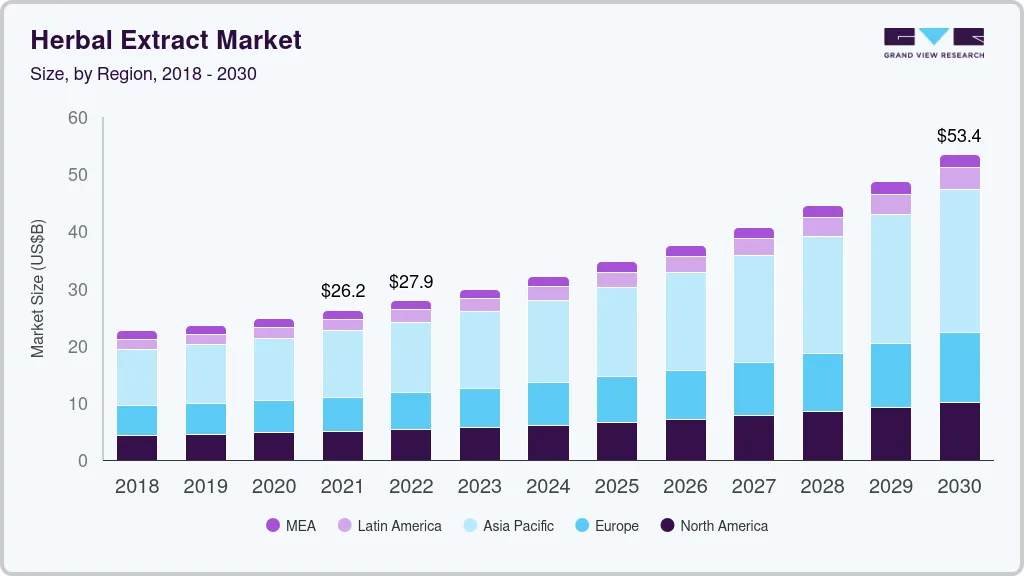
Figure: Global herbal extract market valuation and forecast (2023–2030). Source: Grand View Research, 2023.
Summary of this market research on herbal extracts[1]
Market Drivers & Regional Landscape
Asia-Pacific Dominance: The region led the market in 2023 (44.7% revenue share), with India projected for the highest growth, fueled by biodiversity, traditional knowledge, and government support (e.g., India's Atma Nirbhar Bharat initiative).
01
Leading Product Segments
Cherry Extract: Top product in 2023 (11% revenue share), prized for its anti-aging skincare benefits.
Curcumin: The most lucrative segment, driven by its anti-inflammatory and antioxidant properties, and enhanced by bioavailability innovations like nano-formulations.
02
Key Application Areas
Personal Care & Cosmetics: The largest application segment (30.8% revenue share), as brands shift from synthetic to herbal ingredients.
Food & Beverages: A rapidly growing segment, propelled by demand for clean-label, preservative-free products where extracts act as natural flavors, colors, and preservatives.
03
Future Outlook & Strategic Imperatives
Growth Levers: The industry will benefit from rising health consciousness, supportive regulations, and advanced extraction technologies.
Key Challenges: Raw material scarcity and lack of standardized production processes remain constraints.
Success Strategy: Companies must invest in R&D, sustainable sourcing, and consumer education to capitalize on future opportunities.
04
3. Key Drivers of Rapid Industry Growth
a) Shift Toward Natural and Preventive Healthcare
Rising consumer awareness of lifestyle-related diseases has fueled demand for natural alternatives. Plant extracts, with their proven efficacy in supporting immunity, metabolism, and mental well-being, align with the global trend toward preventive healthcare.
b) Regulatory Support and Scientific Validation
Stringent regulations ensuring product safety (e.g., FDA and EFSA guidelines) coupled with evidence-based research on phytochemical efficacy have bolstered consumer trust. For instance, clinical studies on curcumin (from turmeric) demonstrate anti-inflammatory properties, driving its adoption in supplements.
c) Cosmetic and Functional Food Innovations
The cosmetics industry leverages plant extracts like green tea polyphenols and aloe vera for their antioxidant and moisturizing benefits. Similarly, functional foods fortified with extracts (e.g., ginseng in energy drinks) cater to health-conscious consumers.
4. Top-Selling Plant Extracts and Their Applications
The market's demand is concentrated on extracts with well-documented health benefits. Key examples include:
- Ginkgo Biloba Extract: Enhances cognitive function and circulation.
- Rhodiola Rosea Extract: Adaptogenic properties for stress resilience.
- Grape Seed Extract: Rich in proanthocyanidins for antioxidant support.
- American Ginseng Extract: Boosts energy and immune response.
- Centella Asiatica (Asiaticoside): Promotes skin repair and anti-aging.
Among these, anti-aging and antioxidant extracts dominate the nutraceutical and cosmetic sectors, reflecting consumers' pursuit of longevity and vitality.

5. Future Prospects and Strategic Insights
The plant extract industry is poised for a new era of innovation-led growth, fueled by converging trends in personalized nutrition, eco-friendly cosmetics, and integrative medicine. To lead in this evolving landscape, forward-thinking companies must pivot towards a strategy that balances cutting-edge science with sustainability and consumer trust.
Strategic Imperatives for Success:
- R&D Innovation: Move beyond standard extracts by isolating novel compounds and leveraging advanced research into synergistic effects, often referred to as the "entourage effect," to develop superior, clinically-validated products.
- Sustainable Sourcing & Production: Adopt green extraction technologies (e.g., supercritical CO2, water-based) to minimize environmental footprint. Implementing transparent and ethical sourcing protocols is no longer optional but a core consumer expectation.
- Science-Backed Market Education: Bridge the knowledge gap by communicating the scientific benefits of plant extracts through transparent branding, clear documentation, and educational content that empowers informed consumer choices.
As a leader in advanced plant extraction technologies, our company is committed to being your strategic partner in this journey. We provide high-purity, clinically-researched extracts that form the foundation of next-generation health and wellness products.
Boost your next product with our plant extracts.
Contact our technical experts today for a complimentary consultation. Let us help you navigate the vast potential of plant extracts with tailored solutions that meet your specific formulation and branding goals.
[Schedule Your Free Consultation Now]
References