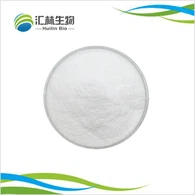


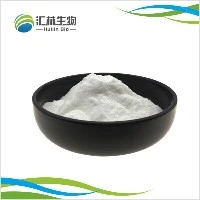


Xi'an Huilin Bio-Tech Co., Ltd. is one of the leading manufacturers and suppliers of monocalcium phosphate (anhydrous) powder in China. With abundant experience, we are committed to providing high quality natural products with competitive price. Please feel free to wholesale bulk pure monocalcium phosphate (anhydrous) powder for sale here from our factory.
Introduction
Monocalcium Phosphate Anhydrous (MCP-A) is a highly versatile and essential inorganic phosphate salt. As the anhydrous form of calcium dihydrogen phosphate, it is characterized by its high solubility in aqueous environments and its role as an effective source of both bioavailable calcium and phosphorus. Predominantly recognized in the food industry as a fast-acting leavening acid in baking powders, its applications extend far beyond, serving critical functions in animal nutrition as a mineral supplement, in agriculture as a highly efficient fertilizer component, and in advanced fields like bioceramics for bone repair [1]. This product detail outlines its specifications, mechanism of action, and diverse industrial uses in compliance with global regulatory standards.

Biochemical & Physical Parameters
| Parameter | Specification / Value | Remarks / Test Method |
|---|---|---|
| Physical State | White crystalline powder | Granular powder or scales |
| Molecular Weight | 234.05 g/mol | - |
| Ca/P Molar Ratio | 0.5 | Key identifier among calcium phosphates |
| Solubility in Water | ~18 g/L at 25°C | Highly soluble compared to other phosphates |
| pH Stability Range | 0.0 – 2.0 | Stable in highly acidic aqueous solutions |
| Density | ~2.22 g/cm³ | - |
| Loss on Drying | ≤ 14% (at 105°C) | For anhydrous grade |
| Purity (Assay) | ≥ 95% (on dried basis) | Expressed as Ca(H₂PO₄)₂ |
| P₂O₅ Content | 55.5 – 61.1% | On anhydrous basis |
| Heavy Metals (Pb) | ≤ 1 mg/kg | Food grade specification |
| Fluoride (as F) | ≤ 30 mg/kg | Food grade specification |
Distinguishing Anhydrous from Monohydrate
A key point of clarification is the difference between the anhydrous form and its monohydrate counterpart.
| Feature | Monocalcium Phosphate (Anhydrous) - MCP-A | Monocalcium Phosphate Monohydrate - MCPM |
|---|---|---|
| CAS Number | 7758-23-8 | 10031-30-8 |
| Chemical Formula | Ca(H₂PO₄)₂ | Ca(H₂PO₄)₂·H₂O |
| Molecular Weight | 234.05 g/mol | 252.08 g/mol |
| Key Characteristic | Non-hygroscopic, more stable under dry storage. | Contains one water molecule; properties are very similar but may react slightly faster in some wet applications. |
| Primary Consideration | Preferred for dry blends where long-term flowability and stability are critical (e.g., some dry baking mixes, feed premixes). | Commonly used in food and feed applications; its behavior in final use is often comparable to the anhydrous form. |
Mechanism of Action
The functionality of MCP-A across industries stems from its fundamental chemical behavior in the presence of water and its ionic dissociation.
1. Acidification and Leavening:
In aqueous environments, MCP-A readily dissociates to release hydrogen ions (H⁺), effectively lowering the pH of the system. This is the cornerstone of its action as a leavening acid. When combined with a bicarbonate source (like sodium bicarbonate) in a moist dough or batter, the following reaction occurs rapidly:
Ca(H₂PO₄)₂ + 2 NaHCO₃ → CaHPO₄ + Na₂HPO₄ + 2 CO₂↑ + 2 H₂O
The generation of carbon dioxide (CO₂) gas creates bubbles, causing the mixture to expand and "rise," resulting in a light, porous texture in baked goods.

2. Bioavailable Mineral Source:
Upon dissolution, MCP-A provides a high concentration of both calcium ions (Ca²⁺) and phosphate ions (H₂PO₄⁻/HPO₄²⁻), which are in forms readily absorbed by biological systems. The low Ca:P ratio (0.5:1) and high solubility ensure efficient delivery of these essential minerals for bone formation, cellular metabolism, and other physiological processes in animals and, in biomedical contexts, for promoting osteoconduction.
3. Fertilizer Action:
In soil, the released phosphate ions are directly available for plant uptake. The accompanying acidity helps to solubilize micronutrients in the rhizosphere, enhancing overall nutrient availability. Its high water solubility makes it an immediate source of phosphorus for plants.
Key Benefits & Applications
Food & Beverage Industry
Fast-Acting Leavening Agent: Provides initial "kick" of gas in baking powders for cakes, muffins, pancakes, and self-rising flours, ensuring good volume and texture.
Acidity Regulator: Used to control pH in beverages, jellies, and cheese products.
Mineral Fortification: Serves as a source of calcium and phosphorus for nutritional enrichment.
Animal Feed & Nutrition
Highly Bioavailable Mineral Supplement: An excellent source of digestible phosphorus and calcium for livestock, poultry, and aquaculture, supporting skeletal development, eggshell quality, and overall health.
Acidifier: Helps in lowering gut pH in young animals, improving digestive efficiency and inhibiting pathogens.
Agricultural Applications
Water-Soluble Fertilizer: A key component in high-analysis fertilizers (e.g., triple superphosphate), providing immediately available phosphorus to promote root development and crop growth[2].
Pharmaceutical & Technical Uses
Tablet Excipient: Can be used as a diluent or source of minerals in solid dosage forms.
Biomaterial Precursor: Investigated for use in artificial bone grafts and calcium phosphate cements due to its reactivity and high solubility, which can facilitate the formation of other calcium phosphate phases in vivo.
Frequently Asked Questions (FAQ).
Q: What is the Safety Data Sheet (SDS) classification for MCP-A?
A: MCP-A is generally regarded as safe with low toxicity. However, in its pure powdered form, it may be classified as an irritant to eyes, respiratory system, and skin (R36/37/38). Always consult the specific SDS provided by your supplier for detailed handling, storage, and personal protective equipment (PPE) requirements.
Q: How does MCP-A differ from other calcium phosphates like DCP or TCP?
A: The primary differences are the Calcium-to-Phosphorus (Ca:P) ratio and solubility. MCP-A has a Ca:P of 0.5 and is highly soluble in water. Dicalcium Phosphate (DCP, Ca:P=1.0) and Tricalcium Phosphate (TCP, Ca:P=1.5) have progressively lower solubilities and are neutral or basic, making them unsuitable as acidulants but useful as slow-release mineral supplements or abrasive agents.
Q: Is Monocalcium Phosphate (Anhydrous) safe for consumption?
A: Yes. It is approved as a food additive (E 341(i)) in the European Union and is generally recognized as safe (GRAS) by the FDA in the United States for use in accordance with good manufacturing practice.
Q: What is the recommended storage condition?
A: Store in a cool, dry, and well-ventilated place in tightly closed containers. Although the anhydrous form is less prone to caking than the monohydrate, it should still be protected from prolonged exposure to high humidity to maintain its flowability and reactivity.
Contact Us
Ready to enhance your formulations with high-quality, versatile Monocalcium Phosphate Anhydrous? Whether you are developing new baked goods, optimizing animal feed, or innovating in technical fields, our product meets stringent food and pharmaceutical-grade specifications.
Contact us today to:
- Request a free sample for your R&D trials.
- Discuss your specific application needs and receive technical support.
- Obtain a detailed Certificate of Analysis and competitive pricing.
E-mail: ella.zhang@huilinbio-tech.com.
References
- Agrawal, K., et al. Materials. 2021. Table listing applications of various calcium phosphates, including MCP-A for artificial bone grafts
- Wikipedia contributors. "Monocalcium phosphate." Wikipedia, The Free Encyclopedia
Hot Tags: monocalcium phosphate (anhydrous) powder, China, suppliers, manufacturers, factory, wholesale, buy, price, bulk, pure, natural, high quality, in stock, for sale, Amygdalin Powder, Honokiol Powder, Genistein Powder, Naringin Powder, Resveratrol Powder 98 , 98 Ferulic Acid Powder