


If you've ever taken a medicine for cancer or heard about a new antibiotic, there's a small chance that a tiny molecule called 2‑aminopyrimidine was part of the story. It sounds complicated, but it's actually a simple, ring‑shaped chemical that scientists love to use as a building block for making drugs and other useful compounds.
So, what exactly is 2‑aminopyrimidine?
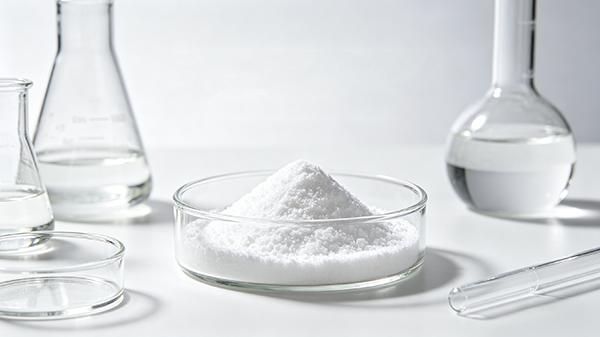
Chemically speaking, 2‑aminopyrimidine is a six‑membered ring containing four carbon atoms and two nitrogen atoms (that's the "pyrimidine" part), with an extra amino group (–NH₂) attached at the number 2 position. Its molecular formula is C₄H₅N₃. In real life, it looks like a white to light‑yellow crystalline powder that dissolves easily in water. Because of its stable ring structure and the reactive amino group, it can easily be modified into thousands of different variants. That's why researchers call it a "privileged scaffold" – a starting shape that keeps showing up in successful drug molecules [1][2].
What can it do in medicine?
The most exciting work with 2‑aminopyrimidine happens in cancer research. Because its ring structure is so easy to modify, scientists can attach different chemical groups to create compounds that block specific enzymes called kinases. Many cancers happen when certain kinases become overactive and tell cells to grow out of control. By blocking those kinases, 2‑aminopyrimidine derivatives can slow down or even kill cancer cells.
Here's what this tiny molecule can do in medicine today:
Block tumor blood vessel growth (VEGFR‑2 inhibition)
A 2025 study in the European Journal of Medicinal Chemistry designed a series of bicyclic 2‑aminopyrimidine compounds that strongly inhibit VEGFR‑2, a protein that helps tumors grow new blood vessels. By cutting off the tumor's blood supply, these compounds showed strong anti‑cancer activity [4].
Attack colorectal cancer from a new angle (IKKβ inhibition)
Another 2025 study, published in the Journal of Medicinal Chemistry, reported a new 2‑aminopyrimidine derivative that potently inhibits an enzyme called IKKβ. This enzyme is a key driver of colorectal cancer. The new compound (named LP46) was highly selective and worked well in both cell and animal models [3].
Reverse drug resistance in chemotherapy (MRP1 inhibition)
A third 2025 paper in the European Journal of Medicinal Chemistry found that the 2‑aminopyrimidine ring can serve as a scaffold for blocking MRP1 – a protein that pumps chemotherapy drugs out of cancer cells. When MRP1 is overactive, old chemotherapies stop working. By inhibiting MRP1, 2‑aminopyrimidine derivatives could restore the effectiveness of those drugs [5].
Beyond cancer – While cancer is the main focus, 2‑aminopyrimidine derivatives have also shown the ability to inhibit the growth of common bacteria such as E. coli and Staphylococcus aureus [1][2].

What else can it do – from bacteria to agriculture?
2‑Aminopyrimidine isn't only about cancer. Its simple, modifiable structure makes it useful in several other fields as well. Here's a quick breakdown:
Fight bacterial infections
Derivatives of 2‑aminopyrimidine have been shown to stop the growth of common bacteria, including E. coli and Staphylococcus aureus. A comprehensive 2021 review in Tetrahedron highlighted the antimicrobial potential of aminopyrimidines alongside their anti‑cancer activity [2].
Protect crops (agriculture)
Outside of medicine, 2‑aminopyrimidine is used to make herbicides and fungicides that help farmers protect their crops from weeds and fungal diseases. This agricultural application is an important part of its commercial demand [5][6].
Create new materials (materials science)
Researchers are studying how 2‑aminopyrimidine derivatives form crystals and polymers. Understanding these molecular interactions could lead to new types of biodegradable implants, electronic materials, or advanced coatings. A 2025 study in CrystEngComm examined the crystal structures of amide‑substituted 2‑aminopyrimidines, revealing key hydrogen and halogen bonding patterns that control their solid‑state properties [6].

Where can you get high‑quality 2‑aminopyrimidine powder?
For researchers and labs, having pure 2‑aminopyrimidine (typically ≥98 %) is essential for getting reproducible results. Whether you need a few grams for a screening experiment or kilograms for scale‑up, choose a supplier that provides clear purity certificates and stable packaging – the powder can degrade if exposed to light for too long. Reliable sources also offer different particle sizes and custom packaging to fit your workflow.
A tiny molecule with a big future
2‑Aminopyrimidine may never become a household name, but inside chemistry labs and pharmaceutical companies, it's quietly helping to create the next generation of cancer drugs, antibiotics, and smart materials. Its simple structure hides an extraordinary ability: to be modified into countless shapes, each with a precise job. Next time you see a headline about a new targeted therapy, there's a good chance this little powder played a part behind the scenes.
References
[1] Lúcia, K. M. A., et al. "Synthetic approaches and anticancer activity of aminopyrimidines – a review." Tetrahedron 98 (2021): 132423.
[2] Jadhav, S. Y., et al. "Pyrimidine scaffold as a promising template for Aurora kinase and Polo‑like kinase inhibitors: a review." Molecules 26.9 (2021): 2627.
[3] Wang, K., et al. "Discovery and structural optimization of novel 2‑aminopyrimidine derivatives as potent and selective IKKβ inhibitors for the treatment of colorectal cancer." Journal of Medicinal Chemistry 68.3 (2025): 2450–2470.
[4] Siddique, A., et al. "Bicyclic 2‑aminopyrimidine derivatives as potent VEGFR‑2 inhibitors and apoptosis inducers." European Journal of Medicinal Chemistry 293 (2025): 117726.
[5] Čičak, M., et al. "The 2‑aminopyrimidine ring as a new scaffold for potent MRP1 inhibitors." European Journal of Medicinal Chemistry 302 (2025): 118364.